
Last updated October 30, 2026
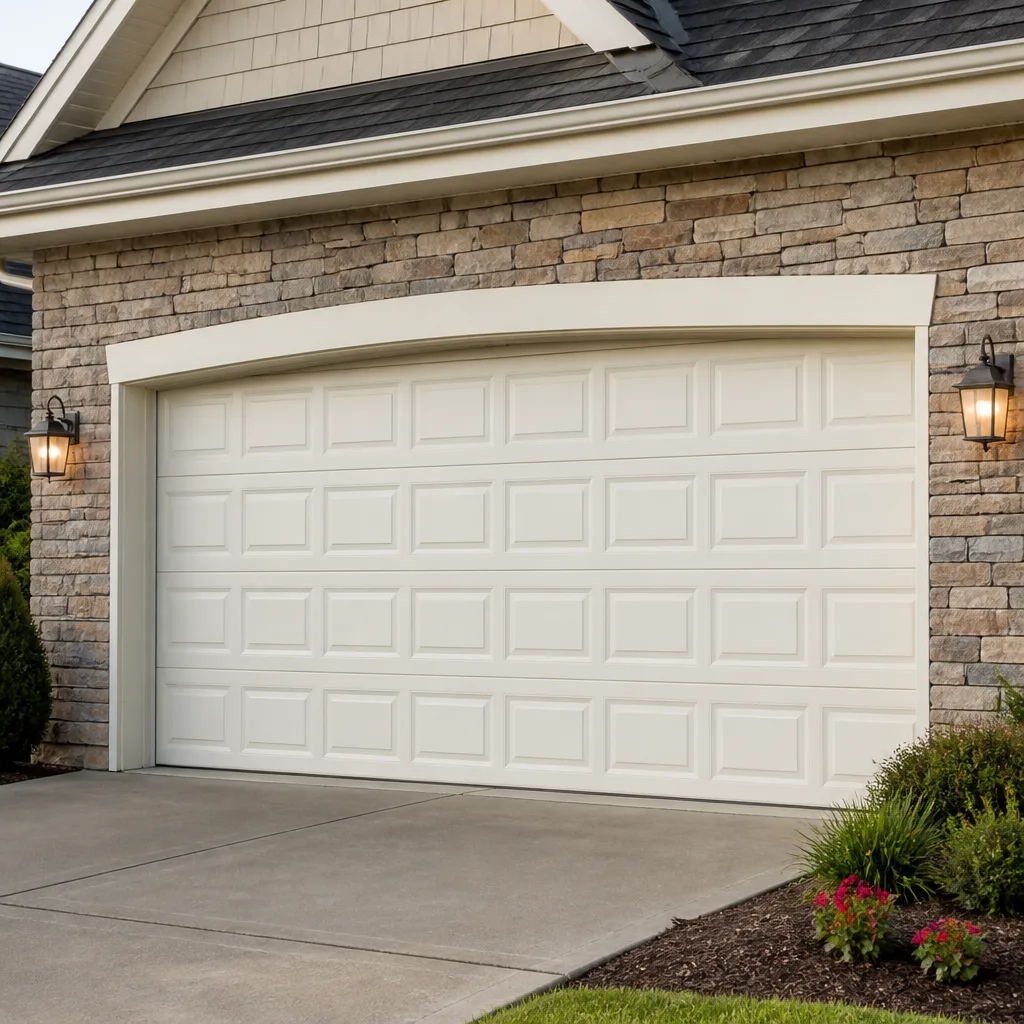 Raised-panel steel
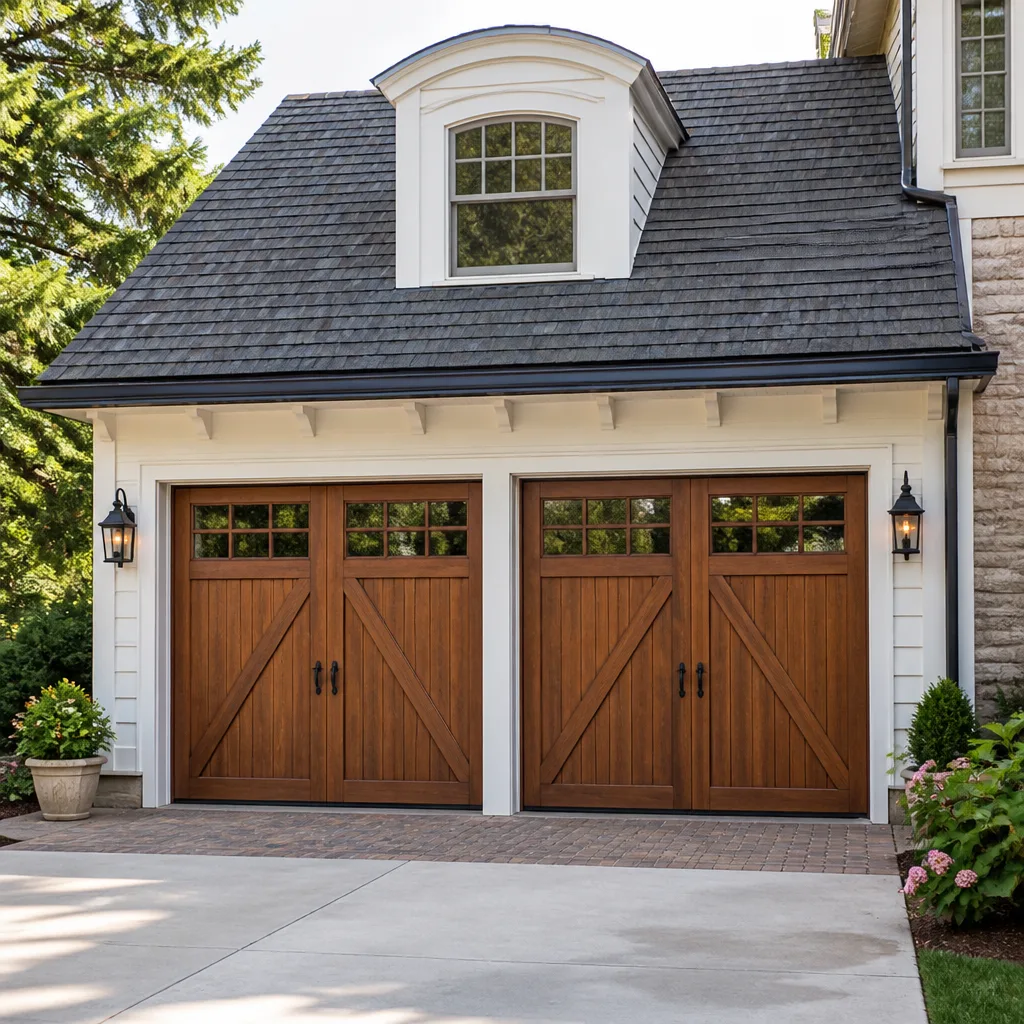 Carriage house
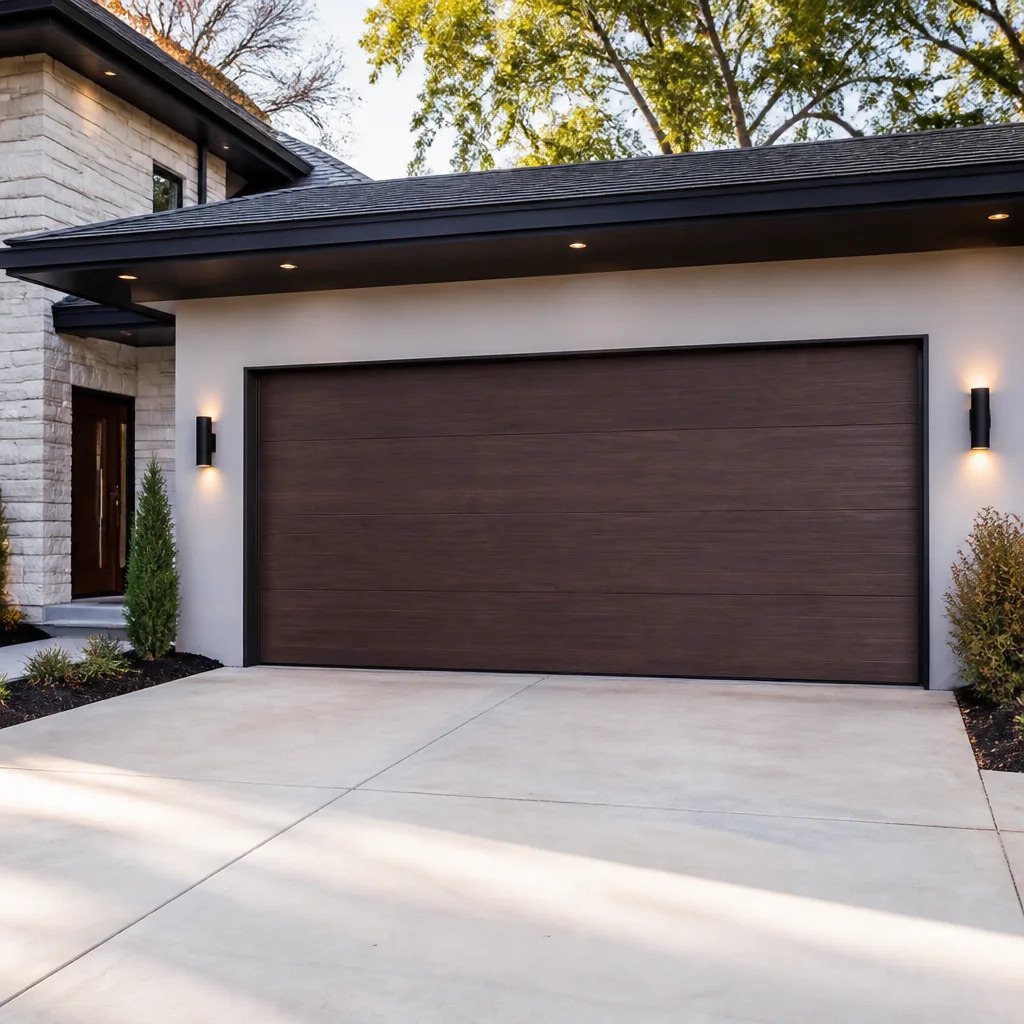 Modern flush
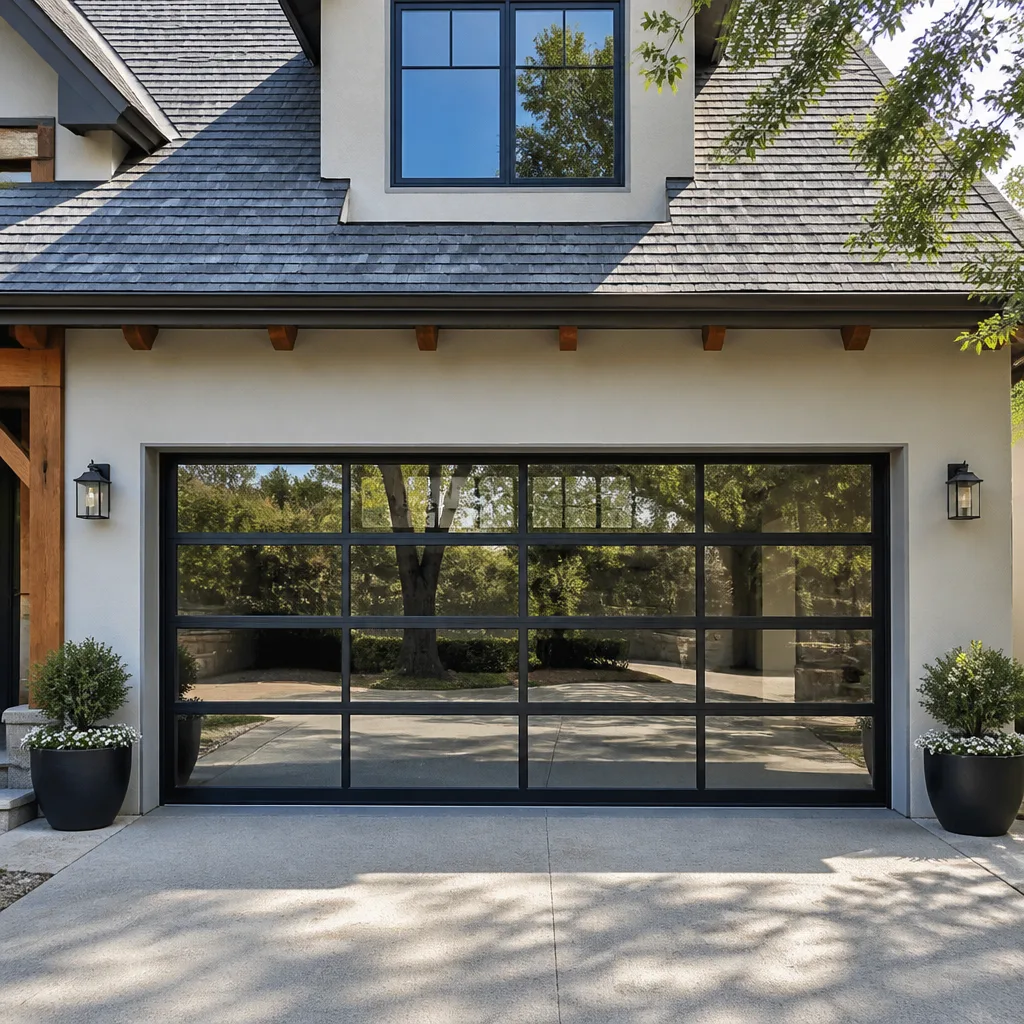 Full-view glass
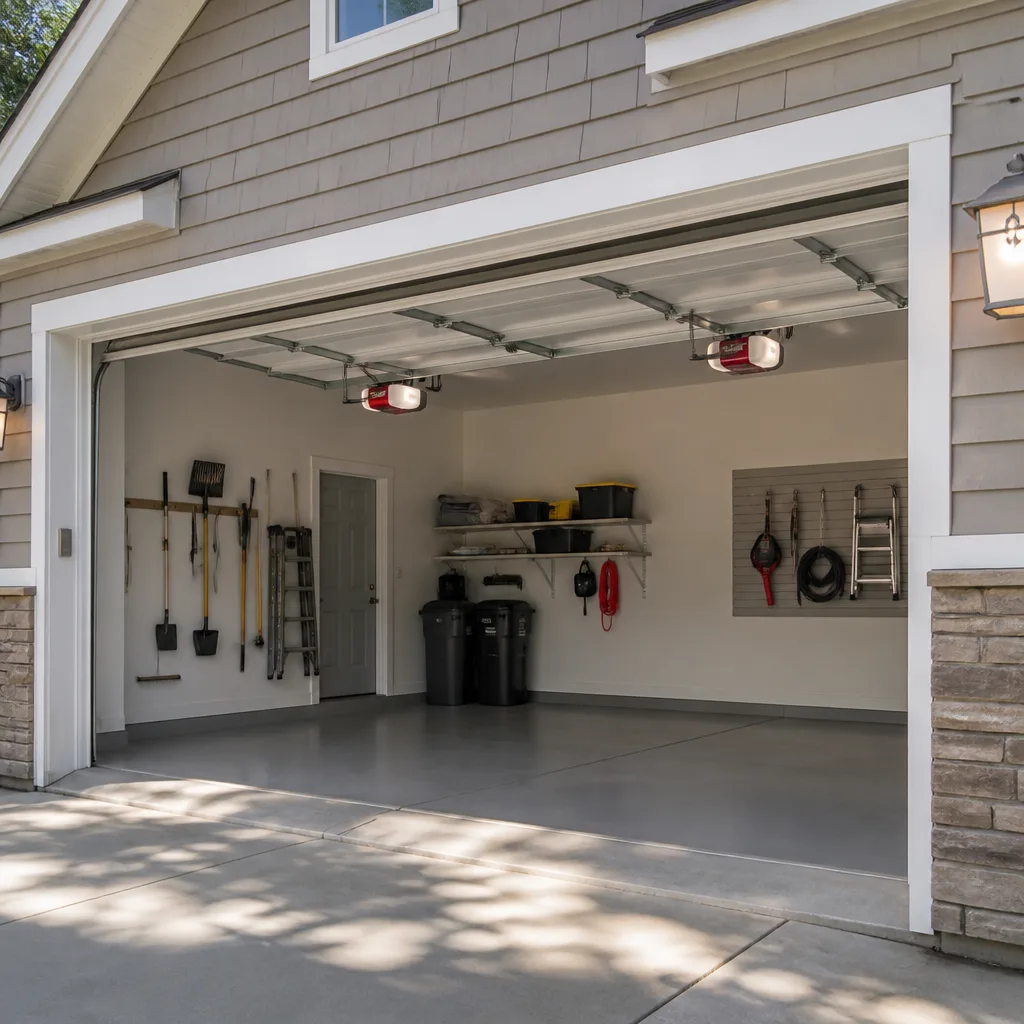 LiftMaster openers
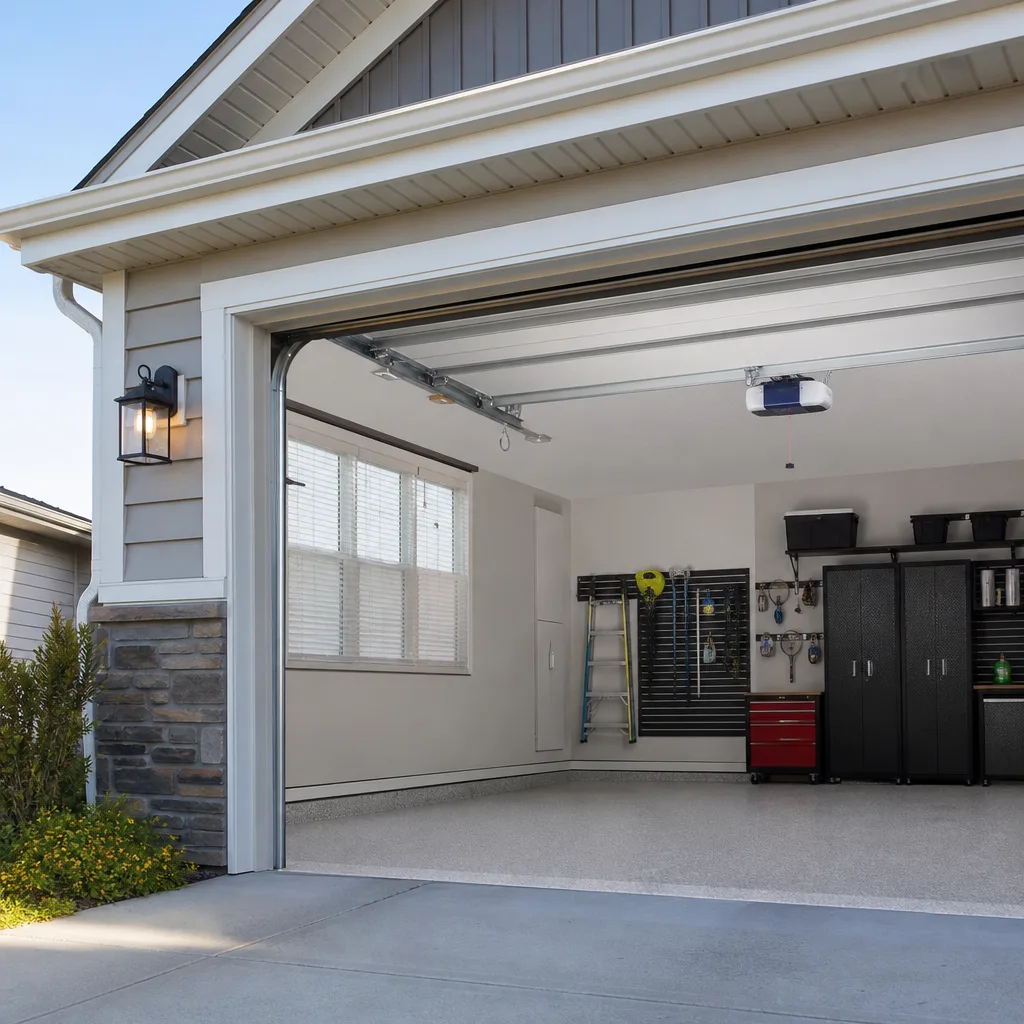 Chamberlain openers
Full 25-point door and opener safety check with every visit - springs, cables, rollers, tracks, and your LiftMaster or Chamberlain opener included
You get a price before we start. It does not change when the truck arrives.
Get your free estimateDIY vs Professional Garage Door: The Orlando Homeowner’s Decision Guide
A garage door torsion spring at full wind stores enough potential energy to throw a two-pound steel bar across a two-car garage with lethal force. That’s not a scare statistic. It’s basic physics, and it’s the reason the line between what a homeowner should and shouldn’t touch isn’t drawn by skill level alone. In Orlando, where humidity swells wooden doors and afternoon thunderstorms knock out opener sensors, knowing which tasks are genuinely safe and which ones carry real risk saves money, time, and potentially a trip to the emergency room. This guide walks through every common garage door task, what tools each one actually requires, what Orlando-specific conditions change, and exactly where the professional line sits.
Styles & brands we work with
Quick Answer
Most garage door maintenance tasks, like lubricating rollers, tightening hardware, and cleaning or aligning photo-eye sensors, are safe for a capable Orlando homeowner with basic tools and take under an hour. But anything involving torsion springs, extension spring cables, drum alignment, or full door replacement requires professional training and specialty tools because the stored energy in these components can cause serious injury. For the risk-heavy work, hiring a multi-brand professional in Orlando typically costs $180 to $340, while genuine DIY-safe work costs under $40 in parts. See our Garage Door Cost Breakdown: The Orlando Homeowner’s Reference for 2026 for detailed pricing.
Table of Contents
- The Physics of Danger: Why Springs Are Different
- The Task Matrix: What’s Safe, What’s Questionable, What’s Off-Limits
- Why Orlando’s Climate Changes the Calculation
- The Real Cost Comparison: DIY Parts vs. Professional Flat-Rate Pricing
- Pre-Diagnosis Work: How to Cut Your Service Call Time Before You Call
- Insurance and Liability: What Happens When DIY Goes Wrong
- Common Mistakes to Avoid
- When to Call a Professional
- Frequently Asked Questions
- The Bottom Line
The Physics of Danger: Why Springs Are Different
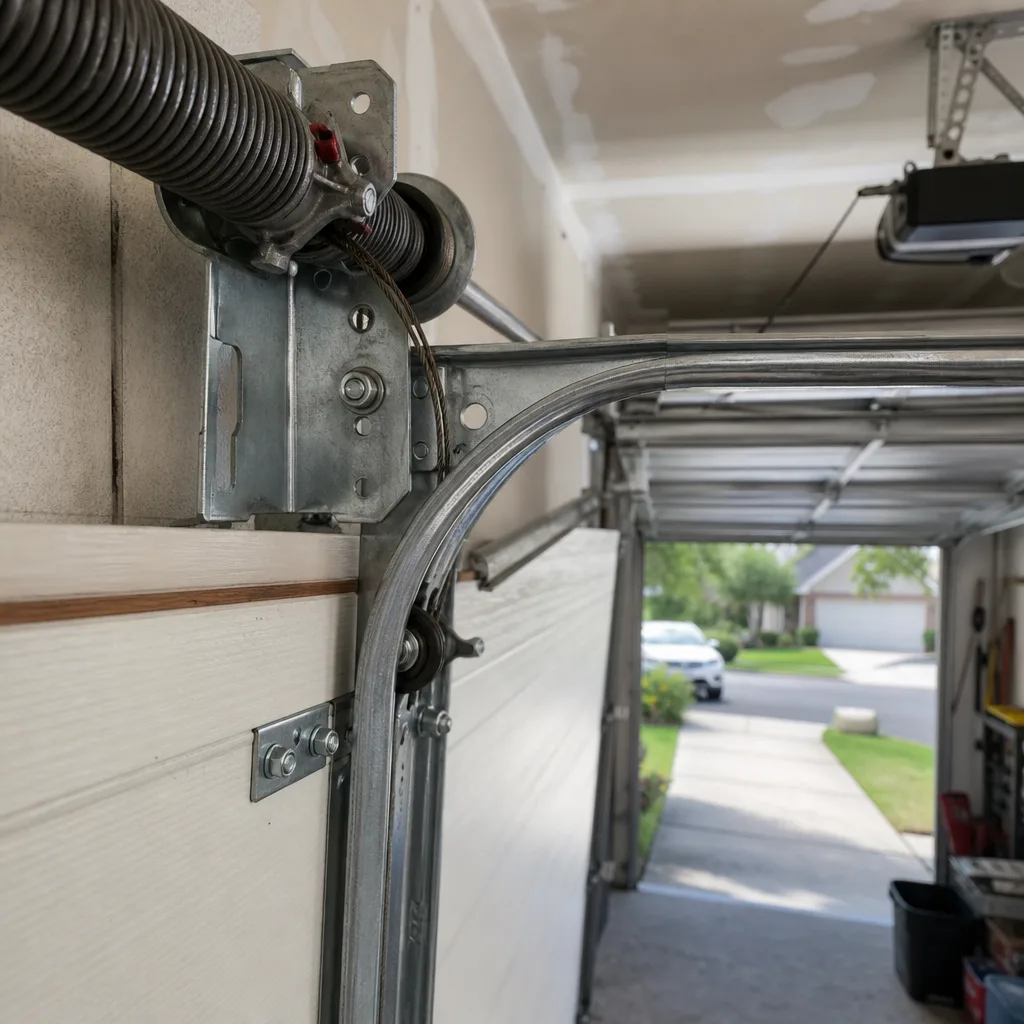
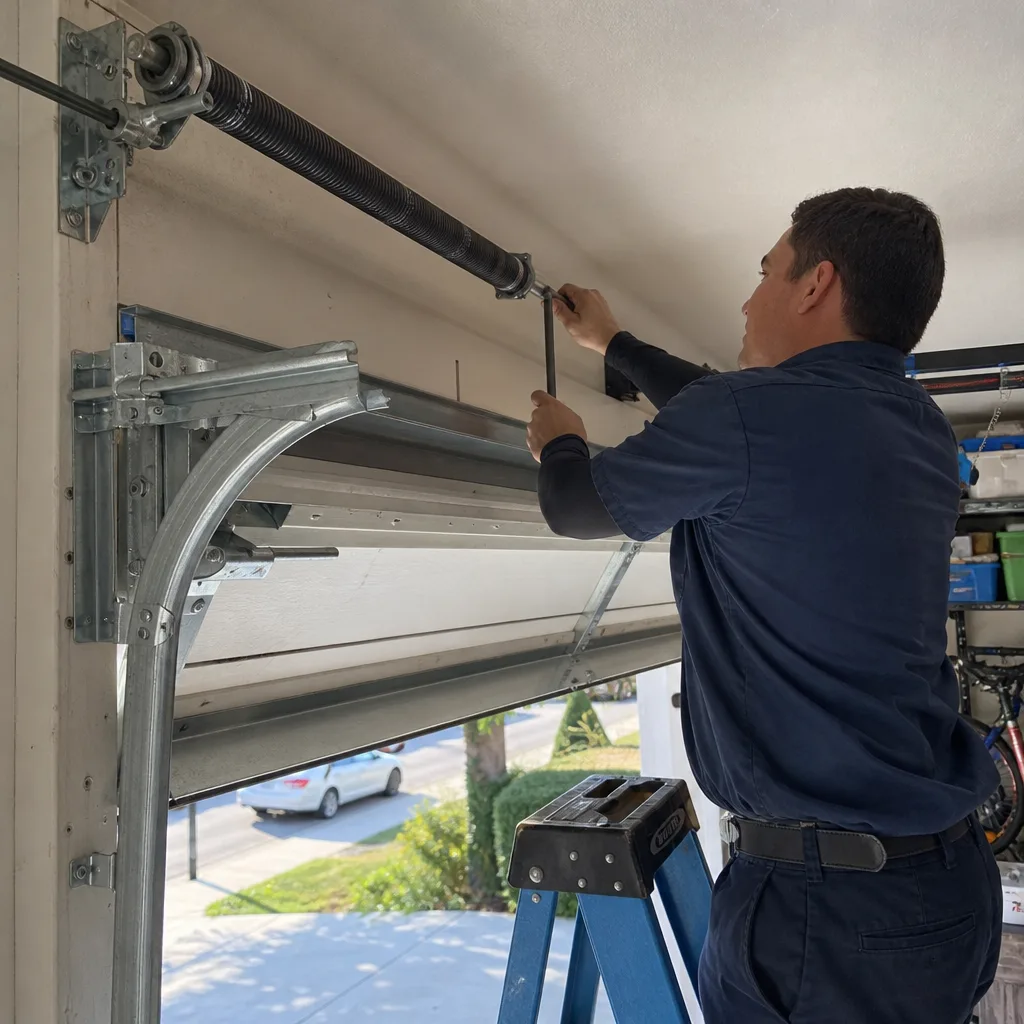
Every component on your Lighthouse Garage Door Service home page has a risk profile, but none compares to the torsion spring. When a torsion spring is wound to counterbalance a 150-pound garage door, it stores roughly 60 to 90 foot-pounds of torque. Release that energy suddenly, and it transfers to whatever is holding the winding bar. In our experience across Orlando, homeowners underestimate this because the spring looks static. It’s not. It’s loaded.
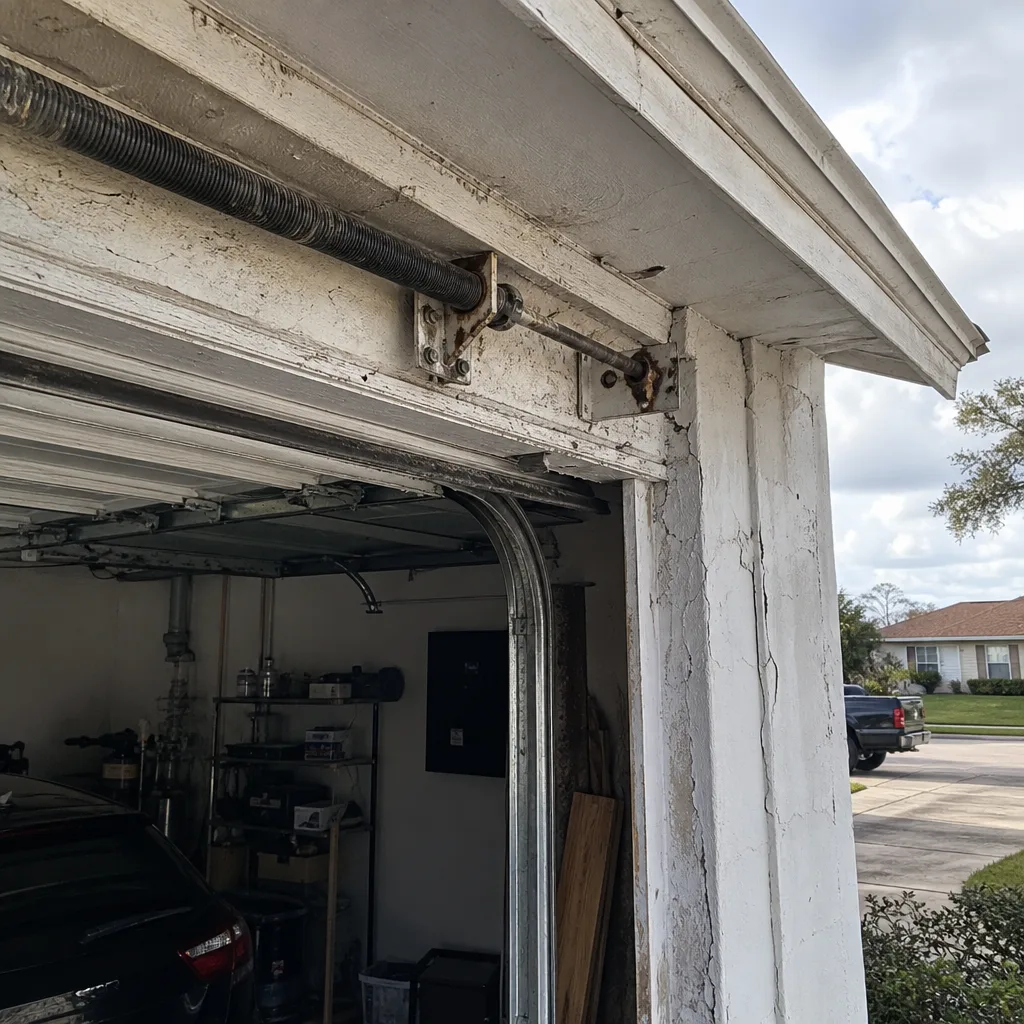
Extension springs work a little differently but carry the same injury potential. When an extension spring breaks, the cable attached to it becomes a whip. If you’re standing close to the track when that happens, the cable can cut through clothing and skin. The websites that tell you replacing a spring is a “20-minute Saturday project” are written by people who have never seen a winding bar slip. That’s not gatekeeping. That’s a warning from the repair side of the business.
The risk isn’t limited to cuts and bruises. According to the U.S. Consumer Product Safety Commission, garage door injuries requiring hospital treatment number in the thousands each year. The largest share involve springs, cables, and door sections falling. In Orlando’s dense residential neighborhoods, from College Park to Lake Nona, these injuries happen in attached garages where family members walk past the door multiple times a day. The door weighs as much as a small piano. When it falls, it falls fast.
The Task Matrix: What’s Safe, What’s Questionable, What’s Off-Limits
This is the section most online guides skip. They either tell you to call a professional for everything, which isn’t honest, or they imply you can replace a spring with a YouTube video and a socket set, which is dangerous. Here’s the actual breakdown.
Genuinely Safe for a Capable DIYer
- Lubricating rollers, hinges, and tracks with a lithium-based spray. Takes 15 minutes. Prevents the squeal that Orlando homeowners hear in garages during dry season.
- Tightening loose track bolts and hinge screws with a standard socket set. Door hardware vibrates loose over time.
- Cleaning and realigning photo-eye sensors at the bottom of the door track. Dirt, spider webs, and humidity-related condensation are the prime culprits in Orlando.
- Programming or reprogramming a remote or keypad. The steps vary by brand, but LiftMaster, Chamberlain, and Genie all publish clear instructions.
- Replacing a worn weather seal along the bottom of the door. Orlando’s daily summer rain makes this a high-value maintenance item.
- Testing the auto-reverse mechanism using a roll of paper towels laid flat on the floor. This is a safety check every homeowner should do monthly.
Questionable: Depends on Your Tool Kit and Patience
- Replacing rollers. The bottom roller brackets are attached to the lift cables under tension. If the roller bracket isn’t secured, the cable can release. Fixed-bracket rollers on the top and sides are doable. Bottom rollers are not.
- Tightening a torsion spring. By hand? No. With the right winding bars and a precise quarter-turn count? Still no for a first-timer. This goes in the no column for most people.
- Repainting a garage door. Safe, but Orlando’s humidity means prep work takes three times longer. Rust spots need phosphoric acid treatment, not just a wire brush.
Professional-Only: Do Not Attempt
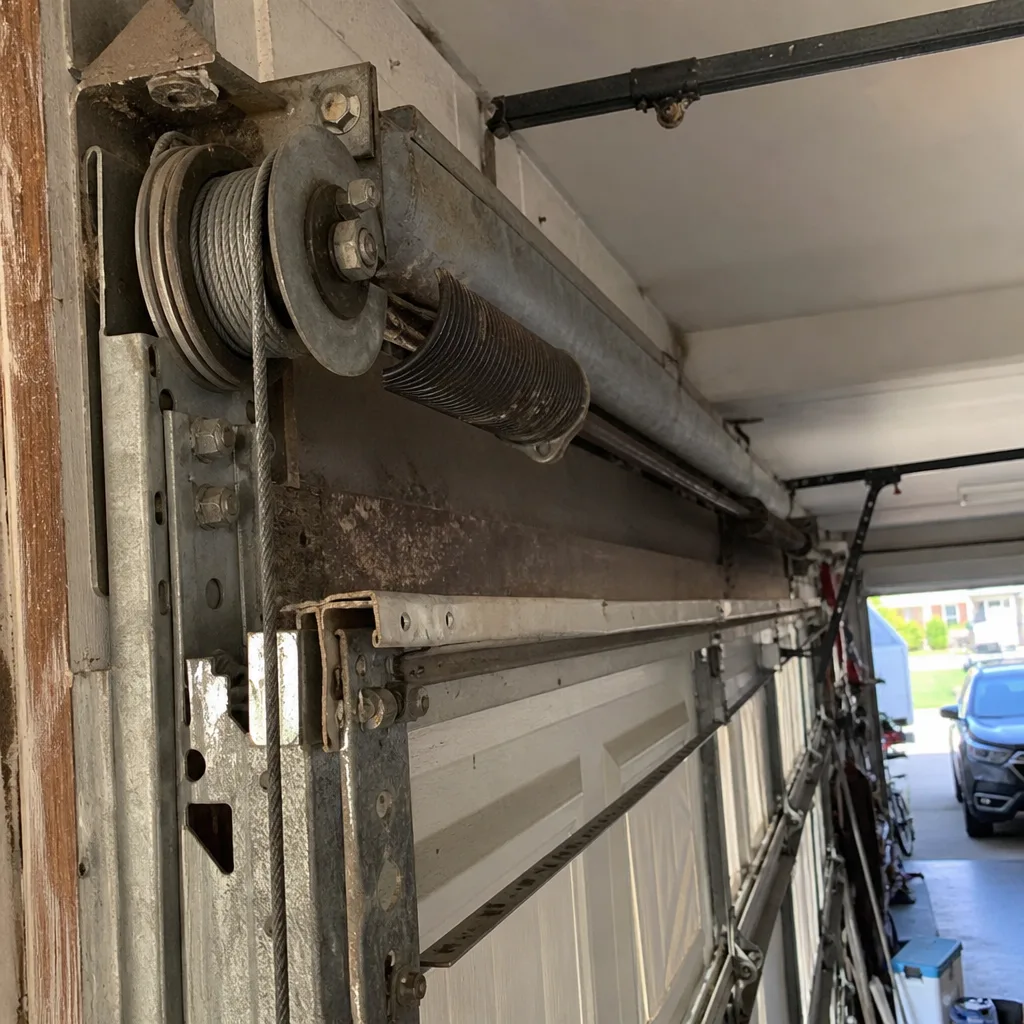
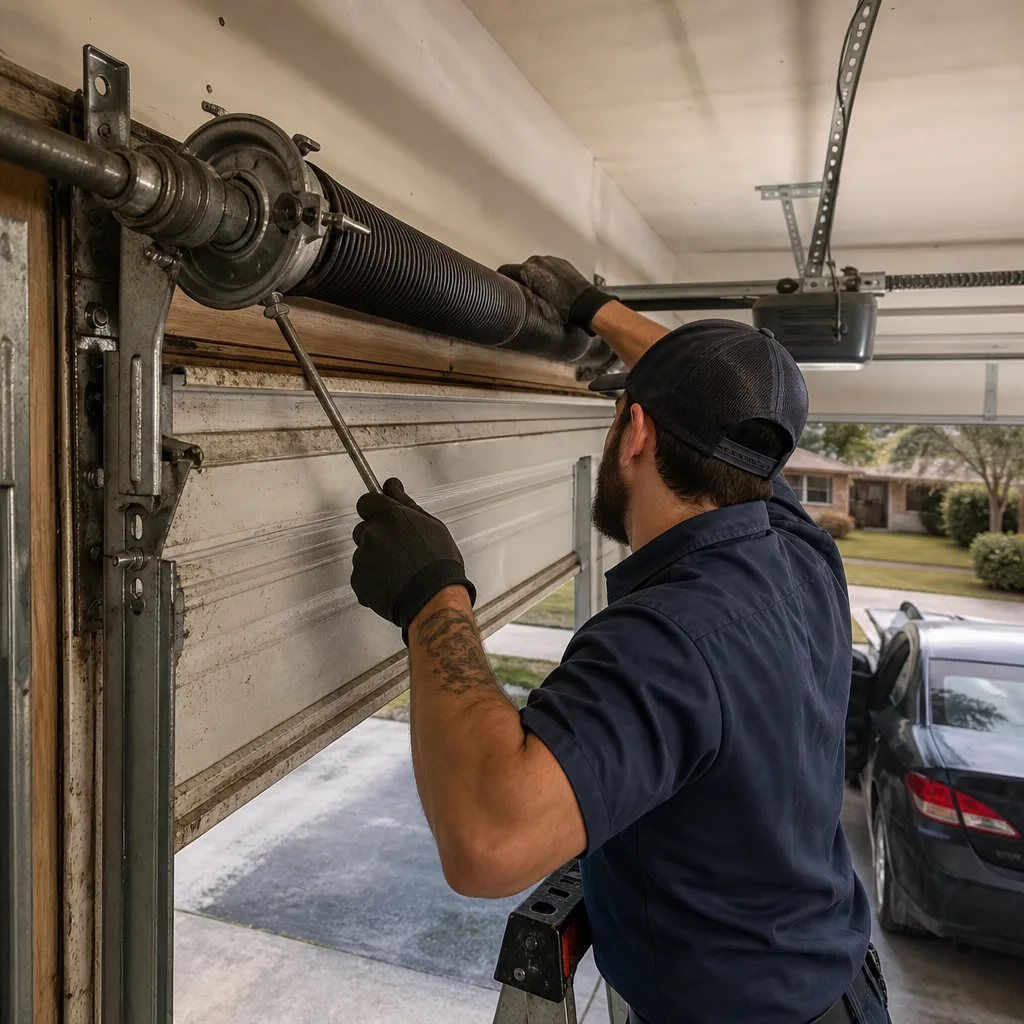
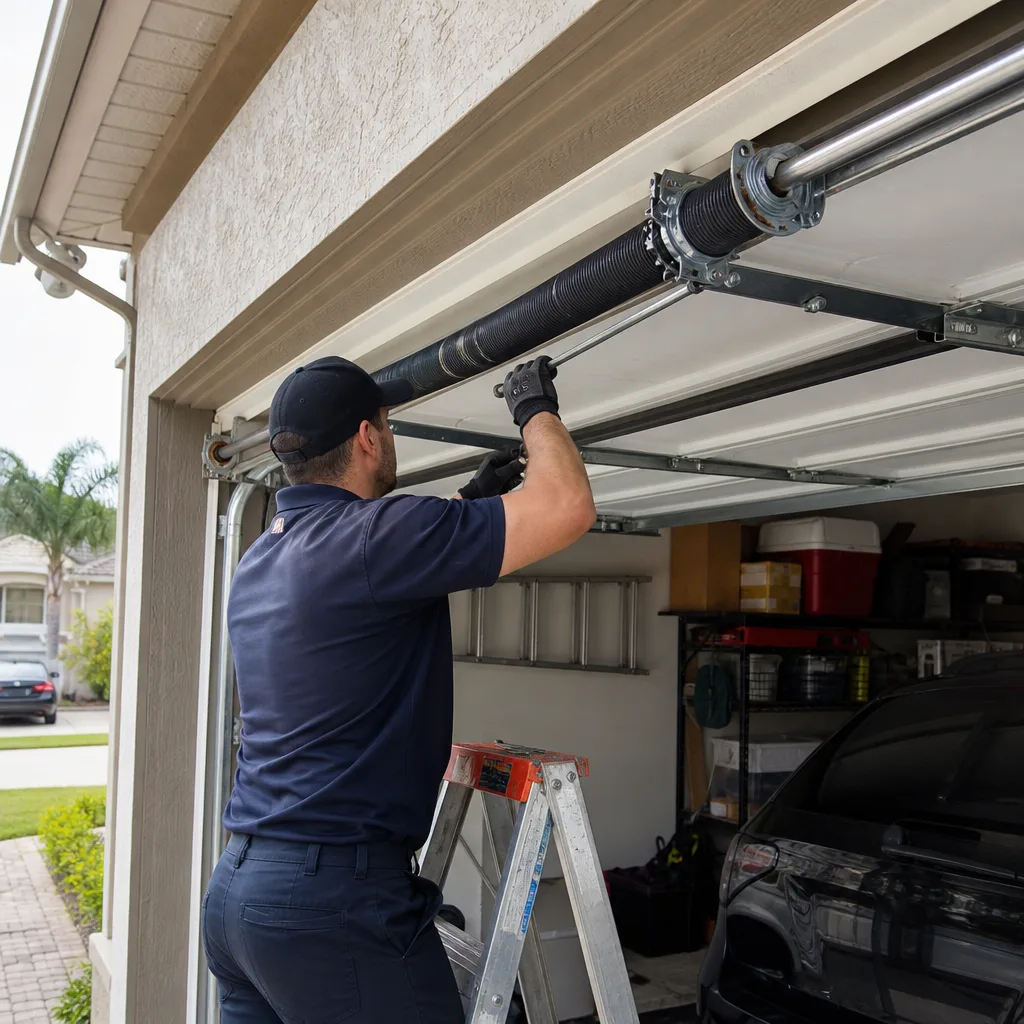
- Torsion spring replacement. Any torsion spring, any door, any time. The winding and unwinding process requires matched winding bars, precise counting, and an understanding of what the spring is doing on every quarter turn.
- Extension spring cable replacement. The cable runs through the spring itself. One wrong move and the spring releases its stored energy.
- Drum alignment and cable re-spooling. If the cables are uneven or jumped off the drum, the door is under asymmetric tension. This is how doors end up cocked in the tracks and falling off the rails.
- Full door section replacement. A sectional door is a system, not a part swap. The weight distribution changes when you remove a section.
- Opener motor replacement within an existing unit. The motor is integrated with the logic board and travel limits. A mismatched motor burns out the board.
Why Orlando’s Climate Changes the Calculation
Garage door advice written for a national audience misses the conditions that make Orlando different. The first is humidity. Wood garage doors in Orlando neighborhoods like Baldwin Park and Audubon Park swell noticeably from April through October. A door that opens smoothly in January may bind against the jamb by July. When a homeowner sees binding, the DIY impulse is to adjust the track. That’s the wrong fix. The right fix is to check the humidity-caused swelling and shave or seal the affected edge. Track adjustments done to compensate for swelling create misalignment that worsens when the door dries out.
Second, UV exposure. Orlando sits at 28 degrees north latitude with more than 230 sunny days a year. Plastic components, including sensor housings, weather seals, and opener gear sprockets, degrade faster here than in Atlanta or Charlotte. A weather seal that lasts five years in a temperate climate lasts two to three in Orlando. The good news: weather seal replacement is a safe DIY job. The bad news: waiting too long lets water pool along the door threshold, and that water wicks into the bottom panel, causing warping.
Third, lightning. Orlando is the lightning capital of the United States, with more than 80 thunderstorm days per year on average. Power surges from nearby strikes are a documented cause of logic board failure in garage door openers. Homeowners who do their own opener repair without surge protection often replace the same burnout part twice. A professional repair on a fried circuit board includes a surge-protector recommendation, which matters more in Orlando than almost anywhere else in the country.
Fourth, salt air near the coast. Homes in neighborhoods like Sodo and Thornton Park sit far enough inland to avoid most salt corrosion, but homeowners in areas closer to the Intracoastal or along the St. Johns River basin see accelerated rust on spring coils and cable ends. Rusted cables snap under load. In our experience, Orlando homeowners who live within a few miles of the coast should inspect their cables at least twice a year.
The Real Cost Comparison: DIY Parts vs. Professional Flat-Rate Pricing
DIY cost calculators online are almost always wrong because they price the part, not the part plus the incidentals, the second trip to the hardware store, and the risk-adjusted time. Here’s what the numbers actually look like in the Orlando market in 2025.
| Job | DIY Cost | Professional Cost (Orlando range) | Time for a First-Timer |
|---|---|---|---|
| Lubrication and bolt tightening | $12 – $18 | $79 – $120 as part of a tune-up | 30 – 45 minutes |
| Bottom weather seal replacement | $25 – $45 | $85 – $140 installed | 1 – 2 hours |
| Photo-eye sensor cleaning and realignment | $0 – $10 | $75 – $110 service call | 20 – 30 minutes |
| Remote programming | $0 | $45 – $75 per remote programmed | 15 minutes |
| Roller replacement (all rollers, non-bottom) | $35 – $60 in parts | $150 – $210 installed | 1.5 – 2.5 hours |
| Single torsion spring replacement | $60 – $110 in parts, plus $25 – $50 for winding bars | $180 – $340 installed | NOT recommended; injury risk is high |
| Full opener replacement | $180 – $350 for opener unit only | $450 – $800 installed with programming | 4 – 8 hours, plus troubleshooting |
The DIY savings on a torsion spring look tempting: you could theoretically save $150 to $250. But factor in the cost of the winding bars you’ll buy and never use again, the risk of a hospital co-pay, and the time spent watching tutorials and second-guessing yourself, and the real savings shrink to nothing. In Orlando, professional flat-rate pricing means you know the number before the tech starts. No surprise line items. That’s the standard at Lighthouse Garage Door Service and other reputable local shops. The price is quoted and agreed before any work begins. You’ll never get hit with a bigger invoice after the fact.
Pre-Diagnosis Work: How to Cut Your Service Call Time Before You Call
Here’s something almost no guide tells you: you can do legitimate pre-diagnosis work yourself without touching a single dangerous component. When you call a professional with accurate information, the tech arrives with the right parts on the truck, which reduces labor time and often the bill. Here’s the five-step process we recommend for any Orlando homeowner.
- Watch the door operate through a full cycle. Stand inside the garage, not outside. Note whether the door hesitates at the same spot each time, whether one side lifts faster than the other, whether you hear a grinding vs. a squealing sound. Write down the door brand, if visible. Clopay and Wayne Dalton doors have markings on the interior panel edges.
- Check the balance manually. Pull the red emergency release cord while the door is closed. Lift the door manually to waist height and let go. A balanced door stays roughly in place. A door that drops or shoots up has a spring tension problem. This test takes 30 seconds and tells the technician more than a phone description ever could.
- Inspect the rollers with a flashlight. Nylon rollers with cracked wheels or missing ball bearings signal a need for roller replacement. Worn rollers stress the entire system and shorten the life of new springs.
- Test the photo eyes. Check whether both sensor lenses have small indicator lights. If one is blinking or dark, you’ve found the issue. Clean the lenses with a dry cloth. If that doesn’t clear the blink, mention the blinking pattern when you call.
- Document with your phone camera. Shoot a 30-second video of the door operating from inside. Video of the sound it makes is far more useful than the word “noise” in a service request. Send it to the company before the tech arrives.
This pre-diagnosis work does more than save time. It builds a clearer picture of what’s actually wrong. Homeowners who walk through this checklist before calling often find their issue is something simple, like a misaligned sensor, and they save themselves a service call entirely. When the issue is not simple, the tech arrives knowing what to expect.
Insurance and Liability: What Happens When DIY Goes Wrong
The insurance conversation is the one most DIY guides ignore completely. So let’s talk about it directly. Your Florida homeowner’s insurance policy covers sudden and accidental damage to the home. It also covers personal liability if a guest is injured on your property. Here’s what changes when you take on a garage door repair yourself.
If a DIY spring replacement fails and the door falls, damaging your car or your wall, your insurer may cover the property damage under your homeowner’s policy, depending on your specific policy language and deductible. But if the failure is caused by negligent installation, which is exactly what a DIY spring job gone wrong looks like, the claim can be denied. Insurance adjusters are trained to identify improper spring winding, reused cables, and stripped set screws. A denied claim means the full cost of the damage, which could include a garage door, a car, and structural repairs, comes out of your pocket.
Liability is the bigger risk. If the door falls on a family member or neighbor and injures them, your insurance company will investigate whether the cause was a professional failure or a homeowner repair. In a professional repair scenario, the repair company’s general liability insurance is the first line of defense. In a DIY scenario, your homeowner’s liability coverage is it. And if the insurance company determines the injury resulted from improper maintenance, settlement leverage changes.
Professional Garage Door Repair in Orlando companies carry their own liability insurance. When the technician’s winding bar slips and the door falls, the company’s policy covers the damage. When the homeowner’s wrench slips, the homeowner’s policy and deductible are in play. This is the part of the DIY-versus-pro conversation that should give every homeowner pause.
Common Mistakes to Avoid
- Attempting a torsion spring replacement using screwdrivers instead of proper winding bars. Screwdrivers bend and slip under torque. When a screwdriver slips inside a wound spring, the spring unwinds violently. Winding bars are hardened steel and cost $25. If you’re considering this job, stop.
- Replacing a single spring on a two-spring door. Both springs wear at roughly the same rate. Installing one new spring leaves the old spring with less tension and a shorter lifespan. Professionals replace both. Homeowners trying to save money start here and end up paying for the job twice.
- Over-lubricating the track. Garage door tracks are meant to be dry. The rollers ride inside the track. Oil or grease in the track collects Orlando dust and pollen, forming a paste that bogs the rollers down. Lubricate the roller bearings and hinges, not the track groove.
- Ignoring a slow opener motor while it still lifts. By the time an opener motor starts humming without lifting, the logic board may already be damaged. Orlando power surges accelerate the timeline. A tune-up at the first sign of sluggishness is cheaper than a full opener replacement.
- Repainting a wood door without priming the bare spots first. Orlando humidity works its way under paint in exposed areas. Without a proper primer, the new paint peels within a season. The heat and moisture cycle makes paint jobs on garage doors a prep-heavy task.
- Disconnecting the emergency release while the door is up. The emergency cord exists to let you open or close the door manually during a power outage. Pulling it while the door is in the raised position lets the door close at full speed if the spring is broken. A falling door will crush anything in its path.
- Diagnosing a “broken opener” that is actually a dead wall-control battery. Many Chamberlain and LiftMaster wall controls have batteries that power the console. When the battery dies, the remote still works but the wall button doesn’t. Check the wall unit before calling for opener repair.
When to Call a Professional
Call a professional when any of these conditions exist: the door makes a sound like a gunshot and drops (spring broke); the cables are hanging loose or frayed; the door is crooked in the tracks; the opener hums but doesn’t move the door; the door falls faster than normal when closing; or you’ve already attempted a previous repair that didn’t resolve the problem. These are not clues to investigate further. They are the signal to stop using the door and call someone trained to handle the stored energy inside the system. A Garage Door Installation in Orlando specialist or repair technician can diagnose the full system in one visit. Lighthouse Garage Door Service offers free estimates in Orlando, call (833) 613-0599.
Frequently Asked Questions
Single torsion spring replacement in Orlando typically costs $180 to $340 installed, including the spring, labor, and balancing. Double spring replacement runs $280 to $450 for most residential doors. Most Garage Door Opener Repair in Orlando companies quote a flat rate before beginning work, so the number doesn’t change once the tech sees the door. Call (833) 613-0599 for an exact quote, estimates are free.
No. Torsion and extension springs are under extreme tension, and the winding process requires specialized bars and precise counting. The risk of serious laceration, broken bones, or eye injury is not theoretical. This is the one garage door task with a career-ending injury profile for untrained hands.
Lubricating rollers and hinges, tightening loose bolts, cleaning and realigning photo-eye sensors, programming remotes, replacing weather seals, and testing the auto-reverse function are all safe for a homeowner with basic tools. These tasks take under an hour and cost less than $50 in materials.
Every six months. Orlando’s humidity and dry-season dust combine to create a gritty film on rollers and hinges. Use a lithium-based spray, not WD-40. Apply to roller bearings, hinge pivots, and the torsion spring coil surface. Keep lubricant off the track groove.
Intermittent opener failure in Orlando is often caused by humidity-related sensor condensation, a failing logic board from power surge damage, or a dying capacitor. Orlando’s lightning activity makes surge-related board damage more common here than in most U.S. cities. A technician can test the capacitor and board in one visit.
No, as long as you’re working with a reputable company. The honest standard in the Orlando garage door market is flat-rate pricing agreed before work starts. The price you’re quoted is the price you pay when the work is done. No surprise line items added mid-job. Call (833) 613-0599 for a free estimate with upfront pricing.
The Bottom Line
The DIY-versus-professional decision for garage doors comes down to energy, not effort. A lubrication job takes a can of spray and fifteen minutes. A torsion spring replacement involves enough stored energy to break bone, and no amount of YouTube research changes that physics. In Orlando, where humidity, heat, lightning, and salt air add strain to every component, maintaining the safe parts of your door saves real money, and hiring a professional for the dangerous parts saves more than money. For the work that’s safe, this guide gives you the exact steps. For the work that’s not, call (833) 613-0599, get an upfront price, and let someone who does this work every day handle the energy in the system.
Written by the team at Lighthouse Garage Door Service, serving Orlando since 2014.
See the difference
 Before
 After
 Before
 After
 Before
 After