
Last updated October 30, 2026
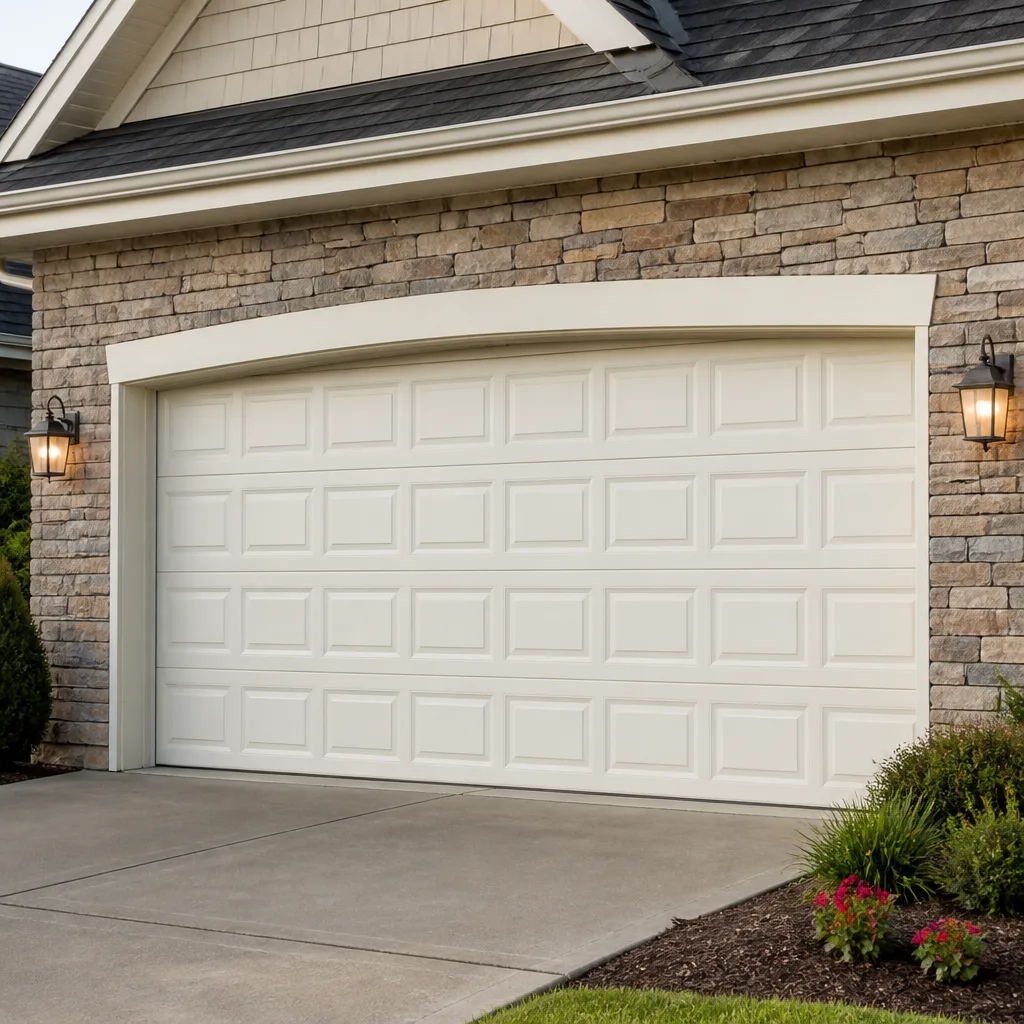 Raised-panel steel
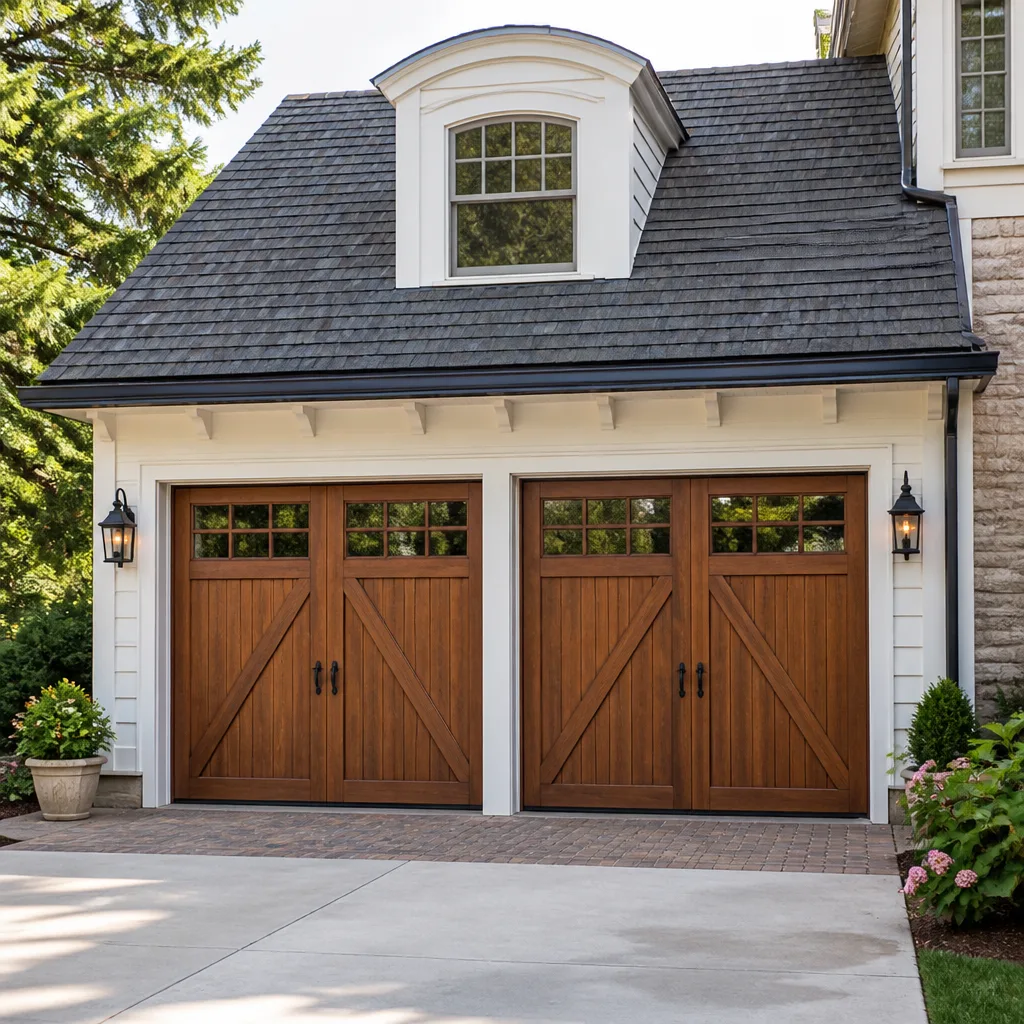 Carriage house
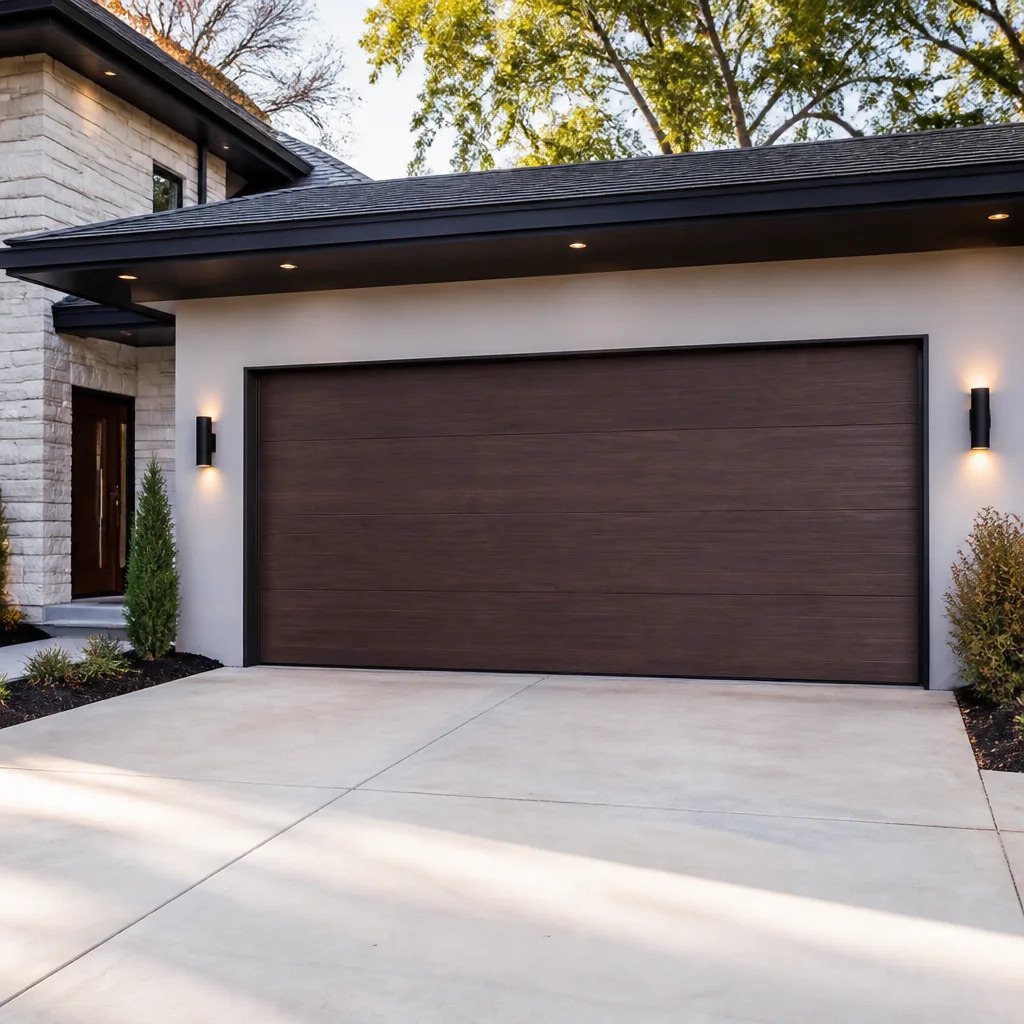 Modern flush
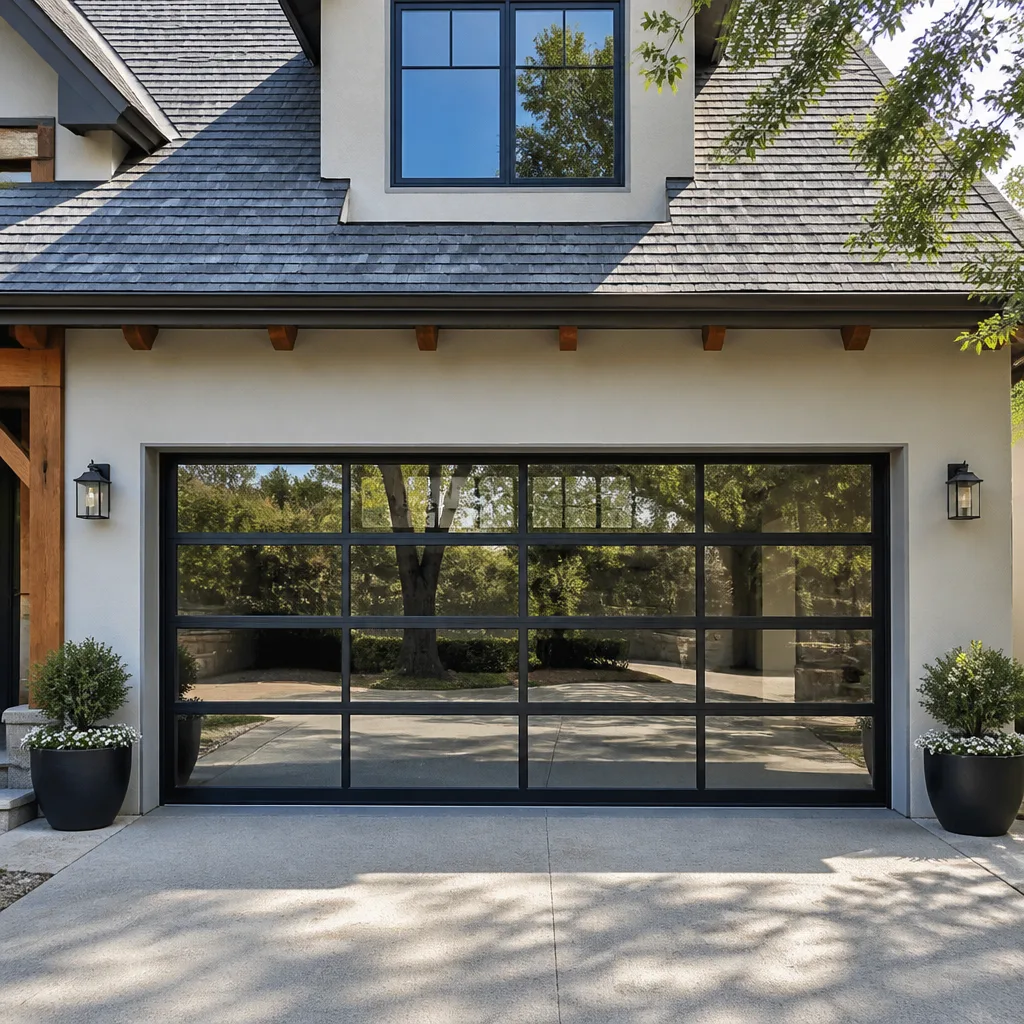 Full-view glass
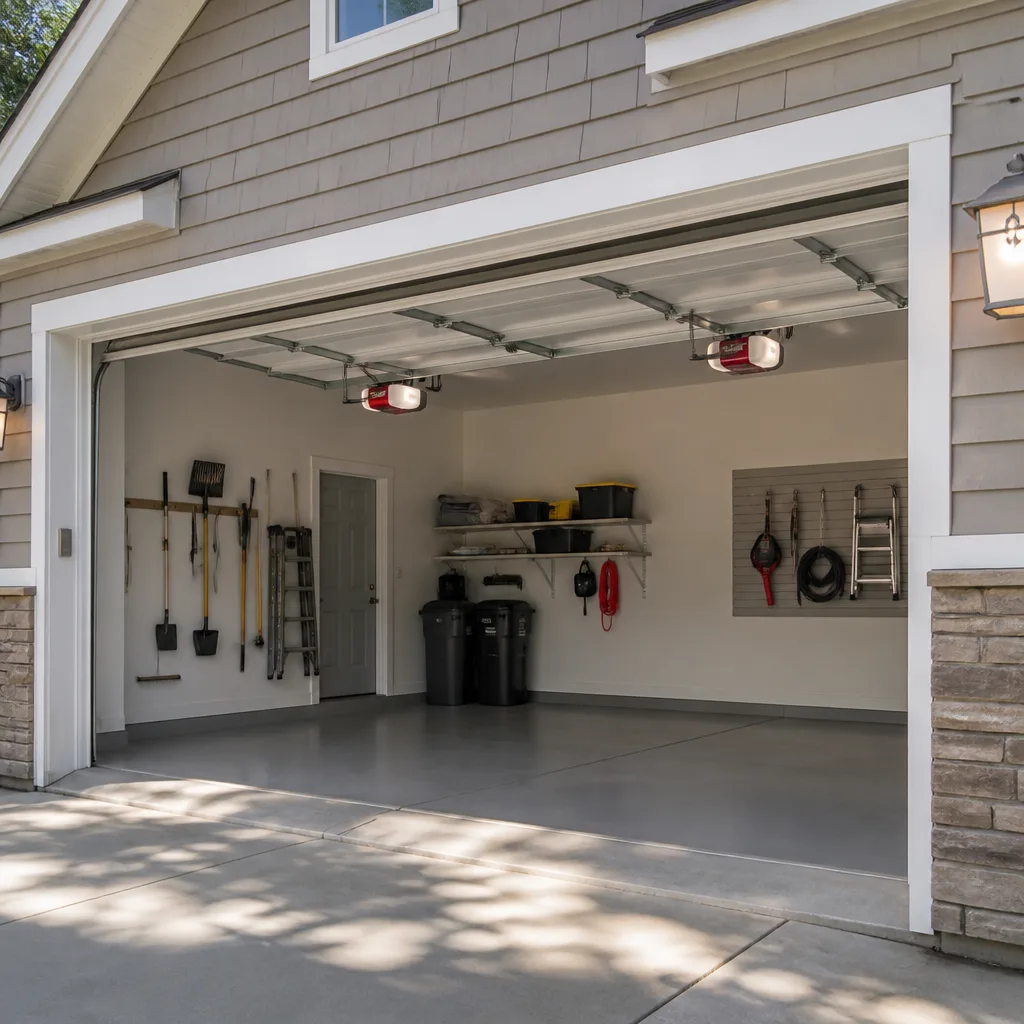 LiftMaster openers
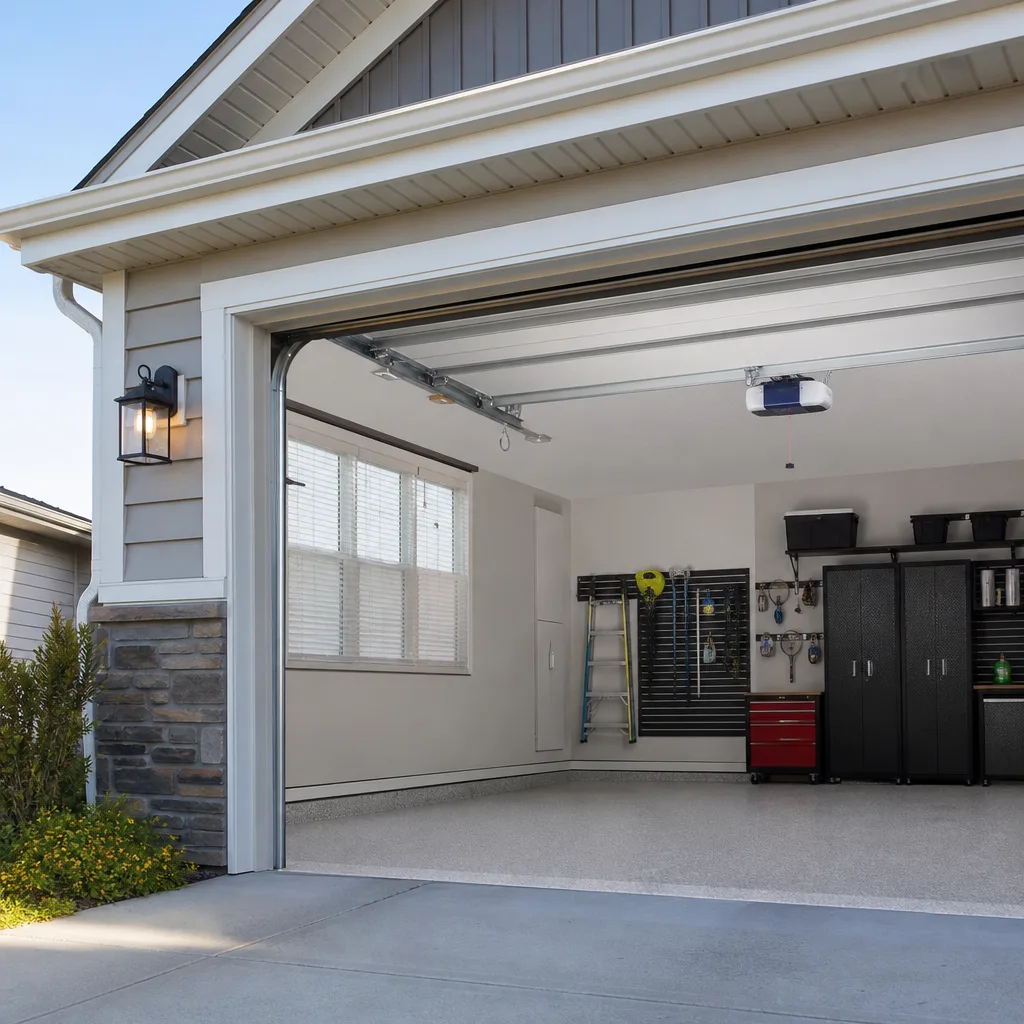 Chamberlain openers
Full 25-point door and opener safety check with every visit - springs, cables, rollers, tracks, and your LiftMaster or Chamberlain opener included
You get a price before we start. It does not change when the truck arrives.
Get your free estimateThe Complete Guide to Garage Door in Orlando
Orlando averages 53 inches of rain per year. That’s more than Seattle. Yet most garage door guides read like they were written for a door living in a climate-controlled vacuum somewhere in Arizona. They aren’t, and yours isn’t either. This guide is different because Orlando is different. We’re going to walk through what actually matters when you own, repair, or replace a garage door in Central Florida: humidity that never quits, afternoon thunderstorms that arrive like clockwork from June through September, hurricane season, salt air when you get closer to the coast, and a building code that has specific demands most other states never think about. By the end, you’ll know how to evaluate your current door, what to look for when you replace it, what the local market actually offers, and when a repair is smart versus when a replacement is the honest answer.
Styles & brands we work with
Quick Answer
A garage door in Orlando needs three things: corrosion-resistant hardware and rust-inhibited steel to handle year-round humidity, wind-load rating compliance with Florida Building Code (especially if you’re in a hurricane-prone zone), and an opener sized for a door that will expand and contract with the heat. Repairs on springs, cables, and openers are common here and typically handled same-week by local technicians. For most Orlando homes, a 24-gauge or thicker steel door with a polyester powder coat finish offers the best balance of durability, price, and hurricane resistance.
Table of Contents
- Why Orlando’s Climate Changes How You Should Think About Garage Doors
- Florida Building Code: What Orlando Homeowners Must Know
- Hurricane-Rated Doors: Worth It Even Inland?
- Door Materials: Steel, Aluminum, and Fiberglass in Central Florida
- The Garage Door Brands You’ll Actually Find in Orlando
- The Right Order to Make Decisions: Door Type, Material, Opener, Smart Features
- Repair vs. Replace: How to Decide in Orlando’s Conditions
- Common Mistakes to Avoid
- When to Call a Professional
- Frequently Asked Questions
- The Bottom Line
Why Orlando’s Climate Changes How You Should Think About Garage Doors
We tell every Orlando homeowner the same thing: your garage door is an outdoor appliance. It lives in the weather even though you think of it as part of the house. And Orlando’s weather is relentless in specific ways that show up as very predictable failures.
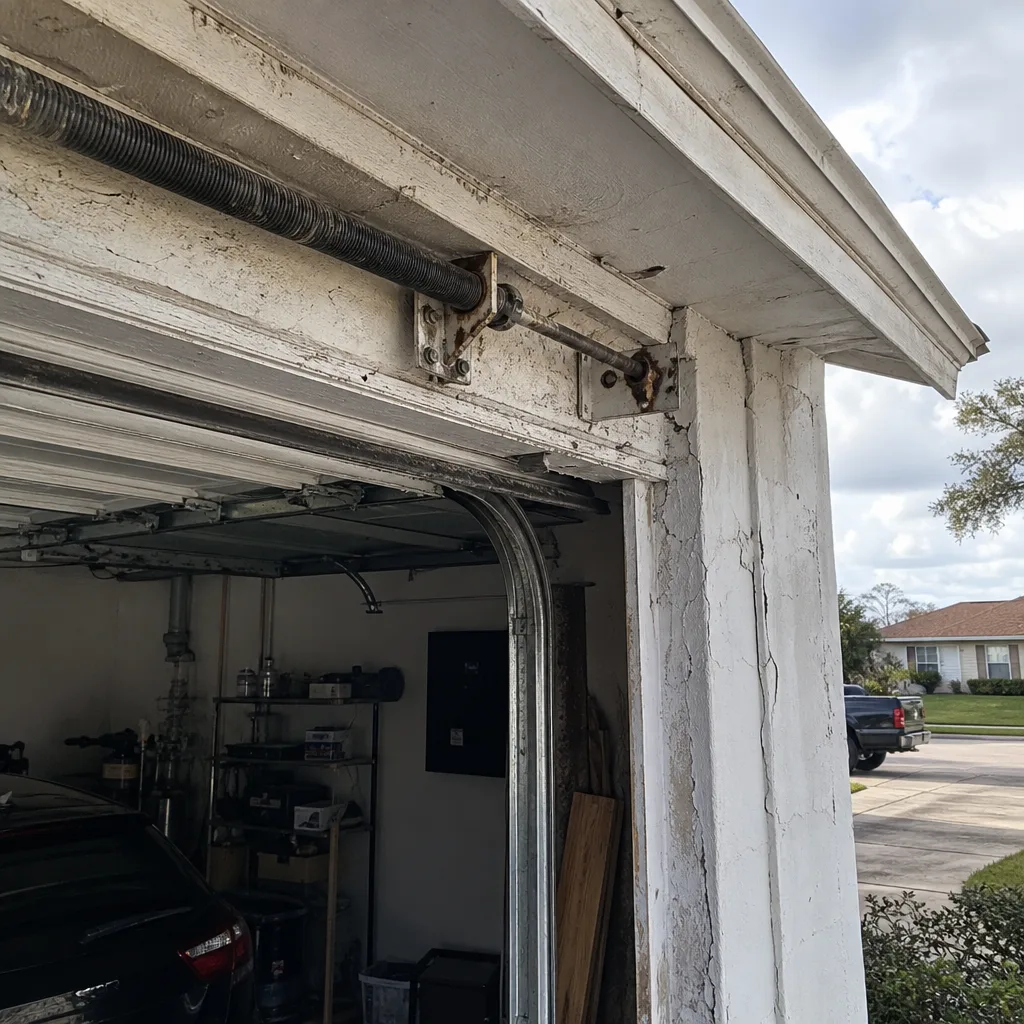
Humidity here averages above 70% for most of the year. That means bare steel rusts, torsion springs corrode, hinges bind, and opener circuit boards absorb moisture and fail in ways you don’t see in drier markets. We regularly see doors in neighborhoods like Conway or College Park where the springs snapped not because they were old, but because the coils had been quietly rusting for years. The spring that breaks in July usually started failing in March.
The daily summer thunderstorm cycle matters too. A garage door that faces west in MetroWest or Windermere catches the brunt of afternoon downpours. Water gets driven into the top seal, the bottom rubber weatherstrip wears faster, and the tracks collect grit. Then the sun comes back out and bakes everything dry. That wet-dry cycle, repeated daily for four months, is harder on a door than a Seattle drizzle that never dries.
If you’re within a few miles of the coast or in areas that get consistent easterly breezes, salt air adds another layer. It accelerates corrosion on exposed metal parts. That affects your hardware choices, which we’ll cover in the materials section below.
None of this means you need a special exotic door. It means the standard advice from a national guide, written for a house in Ohio or Texas, misses the actual failure modes we see in Orlando garages every single week.
Florida Building Code: What Orlando Homeowners Must Know
Florida has the strictest wind-load requirements for garage doors in the continental United States. This isn’t bureaucracy. It’s physics. A garage door is the largest opening in your home’s building envelope, and when wind gets inside a garage during a storm, it pressurizes the structure and blows the roof off. That’s the actual failure sequence FBC provisions are designed to prevent.
Here’s what the Florida Building Code requires for garage doors in Orange County and the surrounding Orlando metro, in plain language:
- Wind-load rating. Your door must be rated for the design wind speed for your specific address. Orlando sits roughly in the 130 – 150 mph wind zone depending on your exact location and whether you’re in a high-risk area. New doors must carry a product approval number showing they meet this rating.
- Impact protection or wind-borne debris protection. In the high-velocity hurricane zone (parts of Central Florida closer to the coast, plus areas designated by local amendment), doors must either be impact-rated or protected by a shutter system. Most homeowners choose impact-rated doors because they require no action before a storm.
- Product approval paperwork. Your installer should be able to produce the Florida Product Approval documentation for any new door. This isn’t optional. If a door is installed without the proper approval and you sell the house, it can flag on an inspection report.
- Reinforced jamb connections. The door frame must be anchored to the surrounding structure with specific fastener patterns. Old houses in neighborhoods like Audubon Park or Delaney Park often have original frames that don’t meet current code. When we install a new door, the track and jamb reinforcement is part of the job.
We mention this because many Orlando homeowners replace a door with a like-for-like unit from a big-box store and never realize the unit they bought isn’t rated for their wind zone. Then an inspector catches it later, or the door fails in a storm. It’s one of the clearest places where working with a company that understands local code, like Garage Door Installation in Orlando specialists who do this daily, saves real money and trouble.
Hurricane-Rated Doors: Worth It Even Inland?
Short answer: usually yes, but it depends on your exposure and your house layout.
The longer answer is that Orlando sits in an odd position. We’re far enough inland that storm surge isn’t a concern, but we’re still close enough to both coasts that a strong Cat 3 or Cat 4 can arrive here with serious wind. Hurricane Charley in 2004 came through Central Florida with 100+ mph gusts well inland. Homes in Winter Park, Maitland, and even downtown Orlando felt it.
An impact-rated door costs more, typically 20 – 40% over a standard door of the same material. But the difference buys you more than storm protection. Impact-rated doors use laminated glass, reinforced panels, and heavier gauge steel throughout. That makes them quieter, more dent-resistant, and better insulated. For an attached garage, that insulation matters for your energy bill and your comfort if you use the garage as a workshop or home gym, which plenty of Orlando homeowners do.
There’s also an insurance angle. Many Florida insurers offer wind mitigation credits if your garage door is impact-rated or wind-load certified. The discount varies by carrier and home, but it’s common to see reductions of 10 – 20% on the wind portion of the premium. Over five or six years, that often covers the price difference between a standard and impact-rated door.
The decision really comes down to this: if your garage is attached, your door faces an open exposure, or you plan to stay in the house for more than five years, an impact-rated door is the move. If your garage is detached and you’re on a tight budget, a code-compliant non-impact door with wind-load bracing is still perfectly legitimate. We’ll give you an honest recommendation either way, and it starts with a conversation about your specific house, not a catalog.
Door Materials: Steel, Aluminum, and Fiberglass in Central Florida
In Orlando, the material choice is the single biggest decision you’ll make, bigger than the brand. Here’s how the three main options actually perform in our conditions.
Steel. This is what we recommend for about 80% of Orlando homes. It’s the best value, it takes the wind-load ratings most easily, and modern steel doors are far more rust-resistant than their 1990s ancestors. The key specification is gauge and coating. Look for 24-gauge minimum (lower numbers mean thicker steel), a polyester powder coat finish, and rust-inhibited hardware. A 26-gauge builder-grade door in Orlando will dent, rust at the seams, and start looking worn within five or six years. A quality 24-gauge door from Clopay or Amarr with the right coating will go 15 – 20 years with basic maintenance.
Aluminum. Aluminum doors are lighter, won’t rust, and are popular for modern and full-view designs, especially in lakefront areas and newer builds around Lake Nona. The tradeoff is that aluminum is softer, dents more easily, and top-tier aluminum doors cost more than steel for the same wind rating. If you want the contemporary full-glass look, aluminum is your only real choice, and the good versions are excellent. Just don’t choose aluminum to save money, because you won’t.
Fiberglass. Fiberglass doors are relatively rare in Orlando but they do exist and they do solve one specific problem: coastal corrosion. If you’re in a salt-air environment, fiberglass doesn’t rust and doesn’t corrode. The downsides are fewer style options, fewer wind-rated models, and a higher price. For most inland Orlando homes, the salt exposure isn’t severe enough to justify fiberglass over a good coated steel door.
One more note that matters here specifically: garage door sections expand and contract with heat. In Orlando’s summer, a black door facing west can get surface temperatures over 150°F. That heat causes the metal to expand slightly, and if the door wasn’t installed with proper clearances, it binds or rubs. It’s a common cause of the “my door is noisy in the afternoon but fine in the morning” complaint. The fix is usually a track adjustment, and it’s one of the most common repair calls we make in the heat of summer.
The Garage Door Brands You’ll Actually Find in Orlando
Orlando’s market is dominated by a handful of brands, and knowing the landscape helps you evaluate any quote. Here’s the realistic breakdown.
Clopay is probably the most common door brand in Central Florida residential garages, sold through independent dealers and home centers. Their steel lineup ranges from basic to genuinely premium, and their wind-rated options are extensive. Amarr has a similar footprint and is known for good value in the mid-tier steel range, with solid Class 3 and Class 4 impact-rated models. On the opener side, Chamberlain and Genie dominate. LiftMaster, which is Chamberlain’s professional-install line, is the most common opener we service in Orlando, usually in the same footprint as the Chamberlain retail units.
What we tell homeowners is that brand matters less than the specific model’s wind rating, material gauge, and warranty. Every major brand makes good doors and mediocre doors. A Clopay door on a reinforced track system installed to FBC code will outperform a premium door that was never properly anchored. That’s the thing: the installation is the difference-maker. The brand is the starting point, not the conclusion.
Our company works on all the brands above plus LiftMaster, Wayne Dalton, Craftsman, and Raynor. That matters because when we evaluate a repair, we know the specific hardware on your door already, we’re not learning it from a manual on your driveway. If you have a Chamberlain opener paired with an Amarr door, we service both. One visit. That’s the whole point of being brand-fluent rather than brand-locked.
The Right Order to Make Decisions: Door Type, Material, Opener, Smart Features
Most Orlando homeowners start with the wrong question. They start with “which opener should I get?” or “is myQ worth it?” The answer is that the opener is the last thing you should choose, not the first. Here’s the sequence that prevents expensive mistakes.
- Door type first. Are you replacing a sectional door? Considering a carriage-house style? Staying with what you have? The door type determines the track system, the spring configuration (torsion vs. extension), and the headroom clearance. Everything else follows.
- Material second. Based on your location, your garage’s sun exposure, your proximity to salt air, and your budget. Steel is the default in Orlando. Aluminum for modern full-view. Fiberglass for coastal corrosion.
- Opener third. Only after you know the door’s weight and balance do you choose the opener. A heavy wood or insulated steel door needs a belt-drive or screw-drive opener with the right horsepower. A lightweight aluminum single-car door doesn’t need a 1.5-hp unit. Getting this wrong is how you end up with an opener that burns out its motor in three years.
- Smart features last. Battery backup, Wi-Fi controls, myQ compatibility, camera integration. These are nice-to-haves layered on top of a door and opener that are correct. They don’t fix a door that’s poorly balanced or an opener that’s undersized.
The step-by-step logic might sound obvious, but we regularly get calls from people who bought an opener online, had it installed, and then realized their door itself was the problem. An opener can’t cure a rusted spring or a door that’s out of balance. Sequencing decisions in this order keeps you from spending money twice. For more on the repair side, our Garage Door Repair in Orlando guide walks through what fails first and what it costs to fix.
Repair vs. Replace: How to Decide in Orlando’s Conditions
This is the question behind most of the calls we answer: fix it or replace it? The honest answer depends on which component failed, the age of the door, and whether the failure is a one-time event or a symptom of systemic wear.
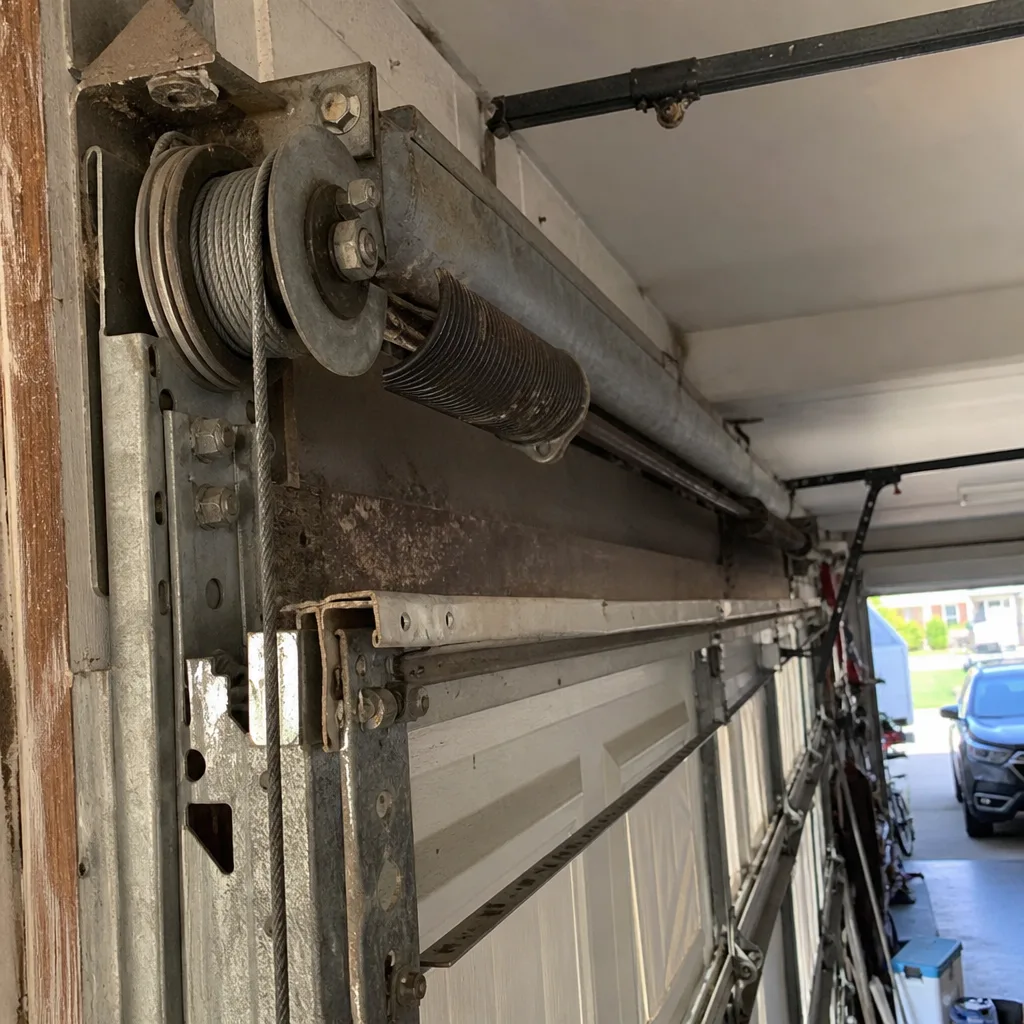
Repair is smart when: a spring snapped (springs are wear items, they break, you replace them and move on), a cable came off the drum, a panel is dented but the door’s structure is otherwise sound, or an opener logic board failed on a unit that’s under 10 years old. In Orlando, where corrosion is the silent killer, we also repair a lot of hinges and rollers that have rusted past the point of quiet. Those are isolated, and fixing them buys years.
Replacement is the better call when: multiple panels are rusting at the bottom, the door is 15+ years old and the tracks show wear, or you need a wind-rated door because your current one isn’t code-compliant. If the door itself has worked hard for two decades in humidity and heat, putting a new opener on it is like putting new tires on a car with a failing frame. It’s not unreasonable, but it’s not the best use of your money.
Here’s a simple rule we use: if the cost to repair is more than 50% of the cost of a new door, and the existing door is over 10 years old, replacement is the conversation. If it’s under $400 and the door is structurally sound, fix it. For a detailed breakdown of specific repair costs and what they cover in the Orlando market, see our Garage Door Repair in Orlando page.
And if your opener is the problem, the math is similar. Opener repairs under $200 on a unit under eight years old usually make sense. Older than that, especially with a DC motor showing signs of gear wear, and you’re likely better served with a new unit. Our Garage Door Opener Repair in Orlando page walks through common failure points and repair pricing for the brands we see most often.
Common Mistakes to Avoid
- Buying a door without checking the wind-load rating. In Orlando, a door that isn’t rated for your wind zone is a code violation and a genuine structural weak point. Always ask for the Florida Product Approval number.
- Choosing materials for the Arizona desert. A bare aluminum door or unprotected steel will look terrible in five years of Orlando humidity. Choose coated steel or appropriate hardware.
- Putting the opener before the door. If your door isn’t balanced, the best opener in the world won’t work properly and will wear out fast. Door first, opener second.
- Ignoring the bottom seal. The rubber weatherstrip along the bottom of the door is what keeps water, leaves, and tiny animals out of your garage. In Orlando’s daily summer storms, a worn seal means a wet garage floor and warped concrete over time.
- Assuming a new door fixes a bad track. The track system is separate from the door. If the tracks are misaligned, a new door will bind, rub, and wear prematurely. The tracks are part of the job when they need to be.
- Not asking about permits. In Orange County, replacement garage doors often require a permit, and your installer should handle it. We handle the paperwork as part of the installation process. If a contractor tells you permits aren’t needed, get a second opinion.
- Choosing a door purely on first cost. A cheap door in Orlando’s climate is a repeating expense. You’ll pay for it in repairs, energy costs, and replacement sooner than you expect.
When to Call a Professional
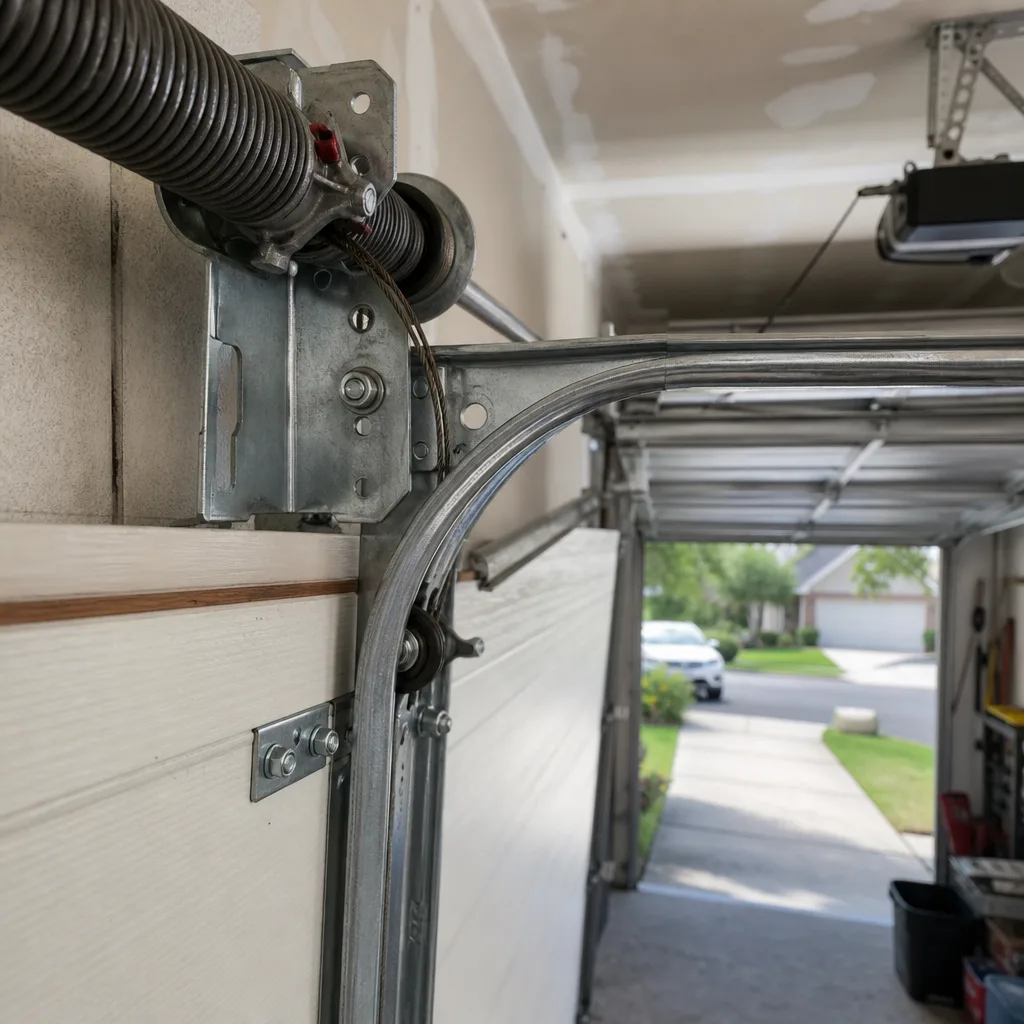
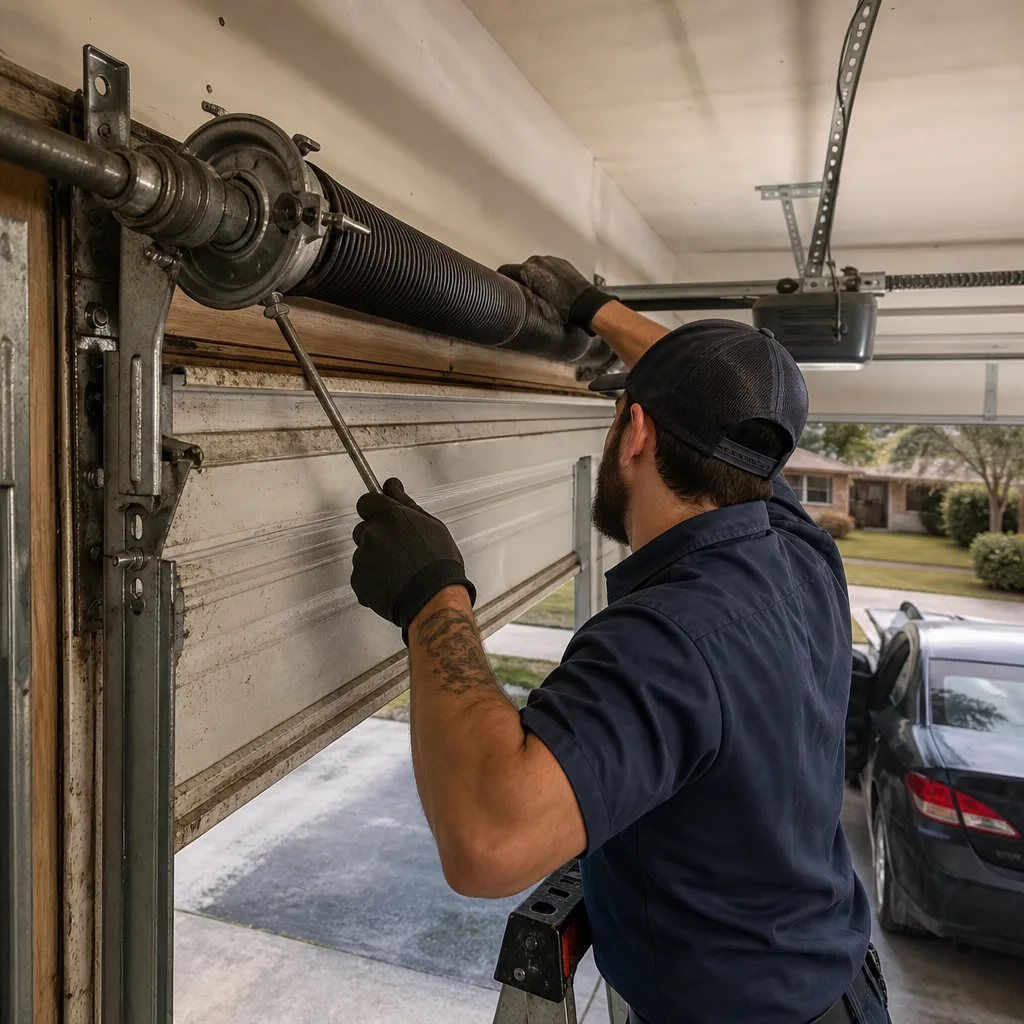
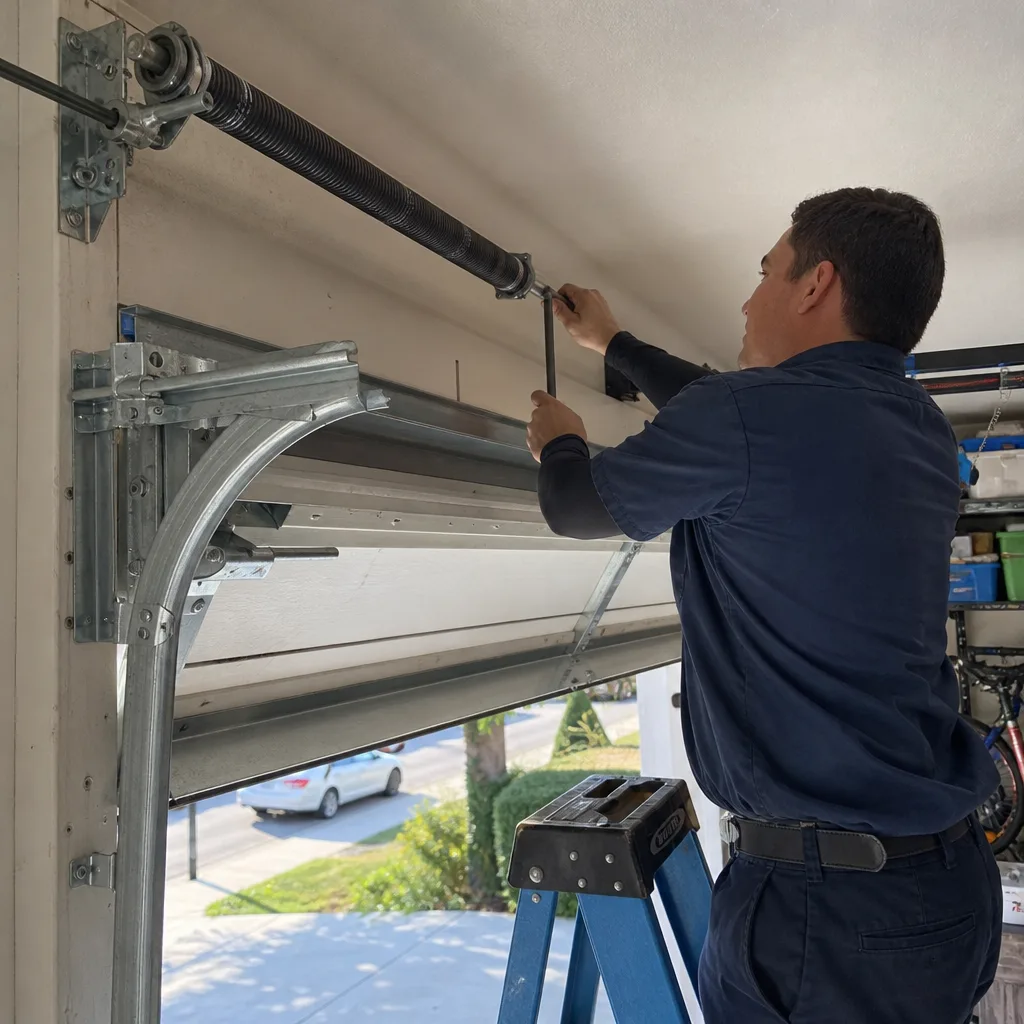
Some things are genuinely dangerous to repair yourself. Garage door springs under high tension can cause serious injury if they let go, and they do let go without warning. Cables, too. If your spring is broken, your cable is frayed, or your door is off-track, call someone who does this every day. This is not the place to learn by doing.
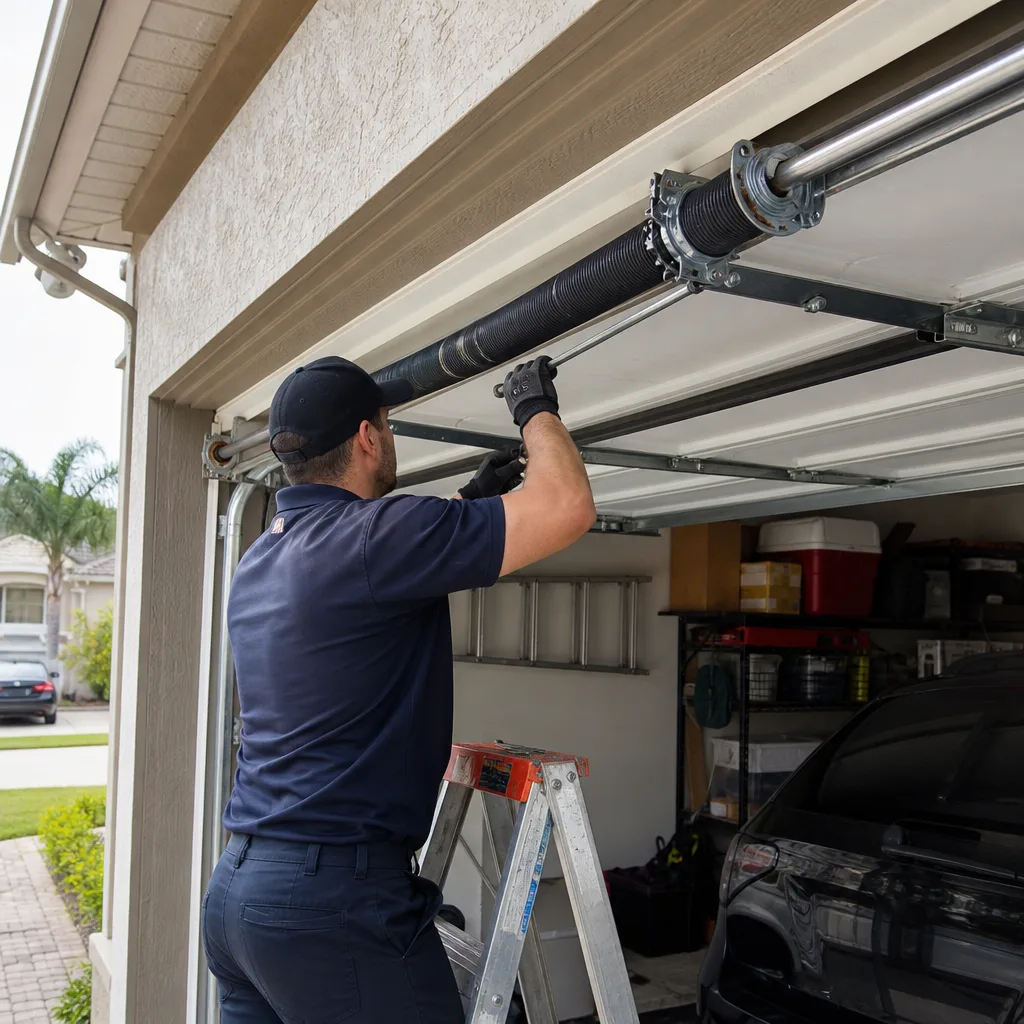
Other jobs are less dangerous but simply require equipment and experience you don’t have at home: torsion spring replacement, track realignment, opener motor replacement, and anything involving wind-load certification. If the job requires a ladder, a torque wrench, or reading the Florida Building Code, call a pro.
Lighthouse Garage Door Service offers free estimates in Orlando. Call (833) 613-0599 and we’ll give you a straight answer on what’s wrong and what it costs to fix, before any work starts. No obligation, no pressure.
Frequently Asked Questions
A new garage door in Orlando typically costs between $900 and $3,500 installed, depending on size, material, insulation, and wind-load rating. A basic single-car steel door with standard wind rating runs $900 – $1,500. A double-door with impact rating and insulation typically runs $2,000 – $3,500. The price is always quoted and agreed before any work begins. Call (833) 613-0599 for an exact quote on your specific door.
Yes, new garage doors in Orlando must meet Florida Building Code wind-load requirements for your specific address, and many parts of Central Florida also require impact-rated doors or equivalent protection. The exact requirement depends on your wind zone. An honest installer will show you the Florida Product Approval for any door they recommend. Call us and we’ll verify what your house actually needs.
Summer noise in Orlando is almost always heat expansion. Metal sections expand in high temperatures, and if the track clearances are tight, the door rubs or binds. The fix is usually a track adjustment or roller replacement, not a new door. This is one of the most common calls we answer from June through September.
You should not attempt to repair a torsion spring yourself. These springs are under hundreds of pounds of tension, and when they release, they can cause severe injury. Cable failures are similar. Have a trained professional handle spring and cable work. It’s a quick repair for someone with the right tools, but a dangerous one without.
The best opener is one properly sized for your door. For most Orlando homes, we see excellent long-term reliability from Chamberlain and Genie units, and we service LiftMaster more than any other brand because of its installer-only distribution. Choose based on door weight and drive type (belt drive is quietest), not brand loyalty. Our Garage Door Opener Repair in Orlando page covers the common failure points.
In Central Florida, a quality steel door with proper coating and hardware will last 15 – 20 years with basic maintenance. A budget door without the right coating will start showing wear in five to seven years because of the humidity. Springs last 7 – 12 years depending on use. Openers typically last 10 – 15 years. Regular lubrication and keeping the bottom seal intact extends all of these numbers.
A garage door is one of the highest-return home improvements in Central Florida, both for curb appeal and for passing inspection if the current door isn’t wind-rated. Buyers and inspectors notice a rusted, dented, or out-of-date door immediately. If your door is over 12 years old or doesn’t meet current wind-code, replacement before listing usually pays for itself in sale price and inspection smoothness. See our Garage Door Installation in Orlando page for options and pricing.
The Bottom Line
Orlando is a specific place with specific rules for garage doors. The humidity corrodes hardware. The summer storms soak seals and warp tracks. The building code demands wind ratings that most of the country never considers. And the daily heat cycles expand and contract your door in ways that a Colorado or Michigan door never experiences.
Your job as a homeowner is simpler than it might feel right now: choose the right material for this climate, verify the wind rating, sequence your decisions in the right order, and don’t DIY the dangerous stuff. When you need a straight answer, the team at Lighthouse Garage Door Service is a call away. We work on the brand you already have, we know what fails in Orlando, and we quote the price before the work starts. Call (833) 613-0599 and we’ll help you sort out exactly what your door needs.
Written by the team at Lighthouse Garage Door Service, serving Orlando since 2014.
See the difference
 Before
 After
 Before
 After
 Before
 After