
Last updated October 30, 2026
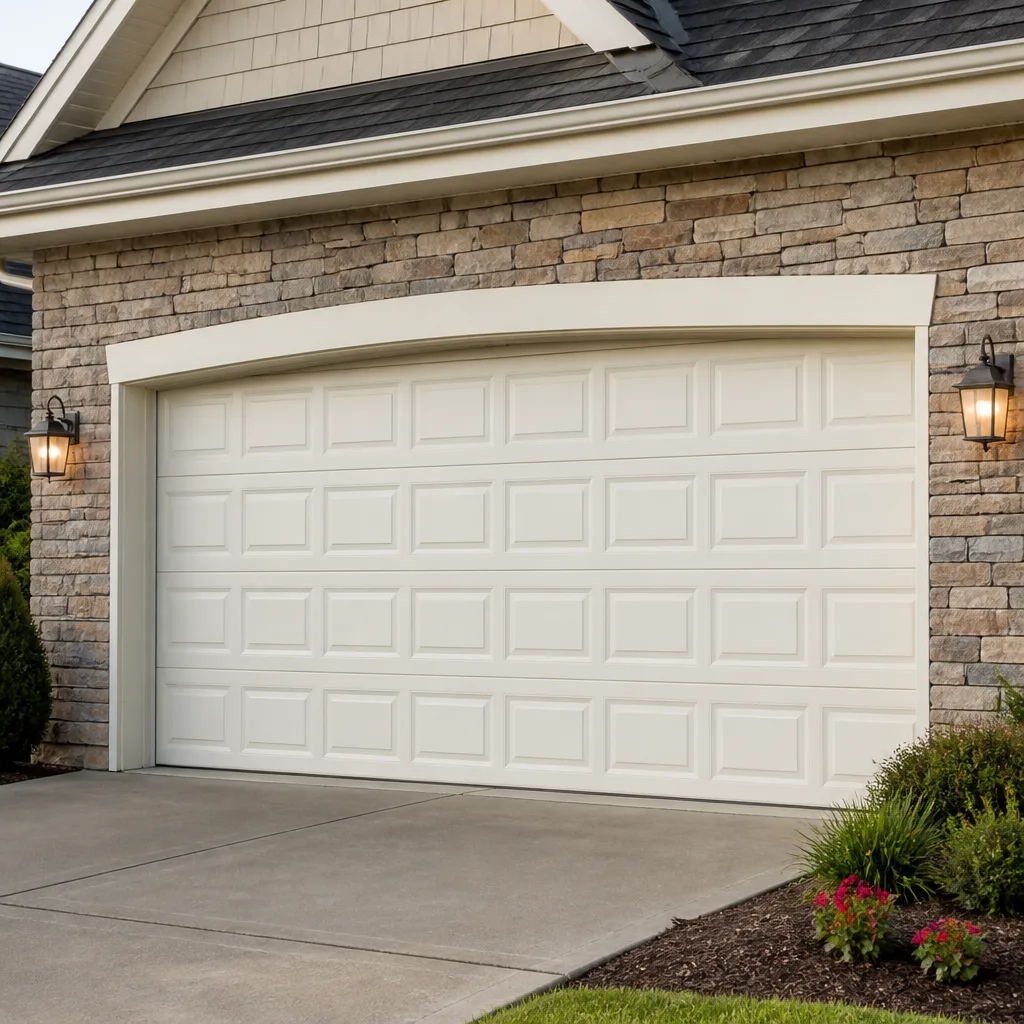 Raised-panel steel
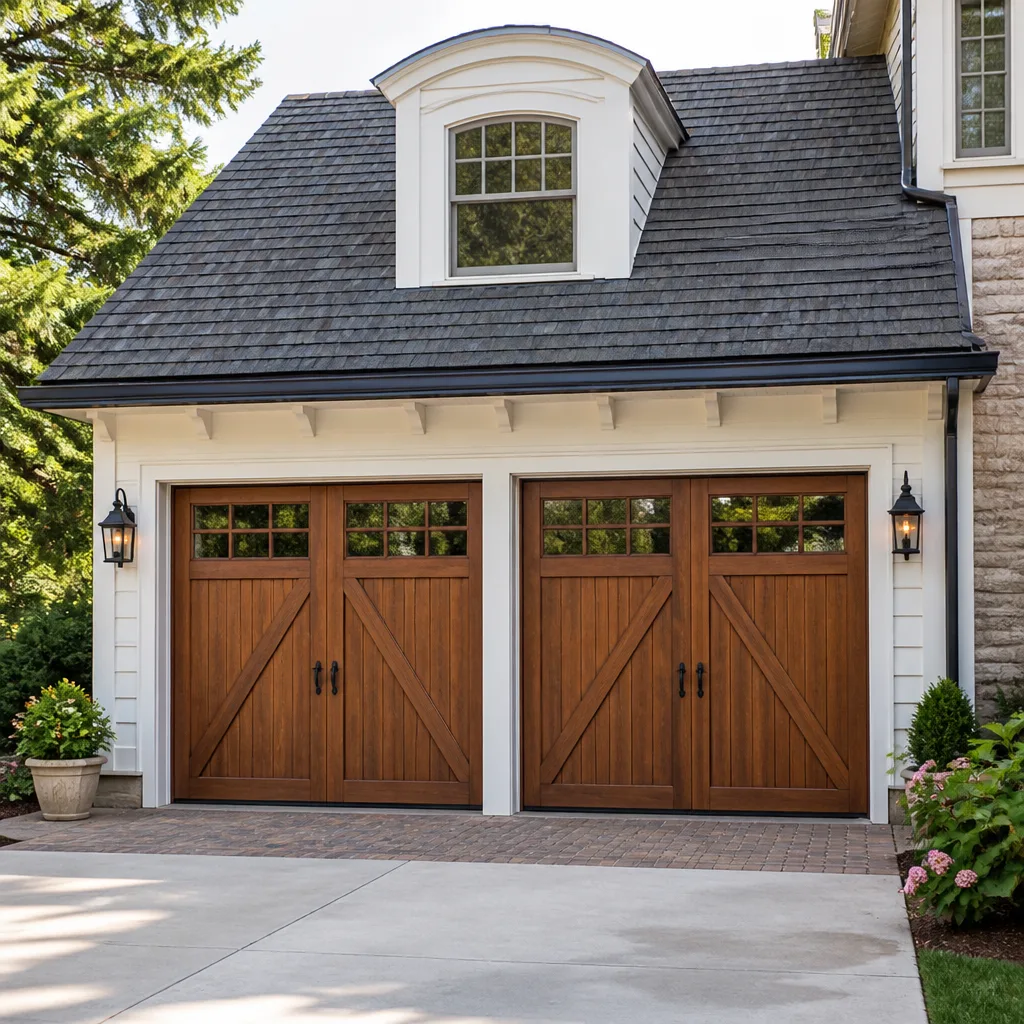 Carriage house
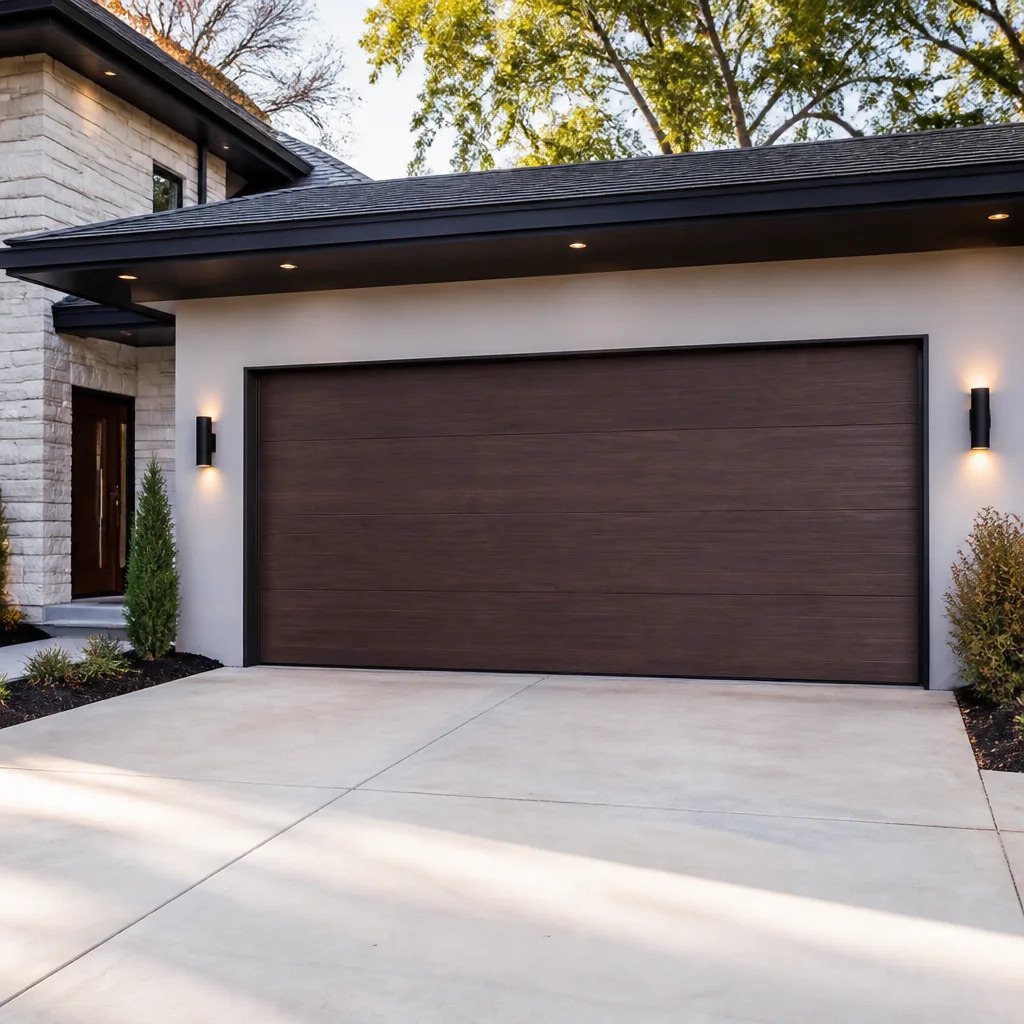 Modern flush
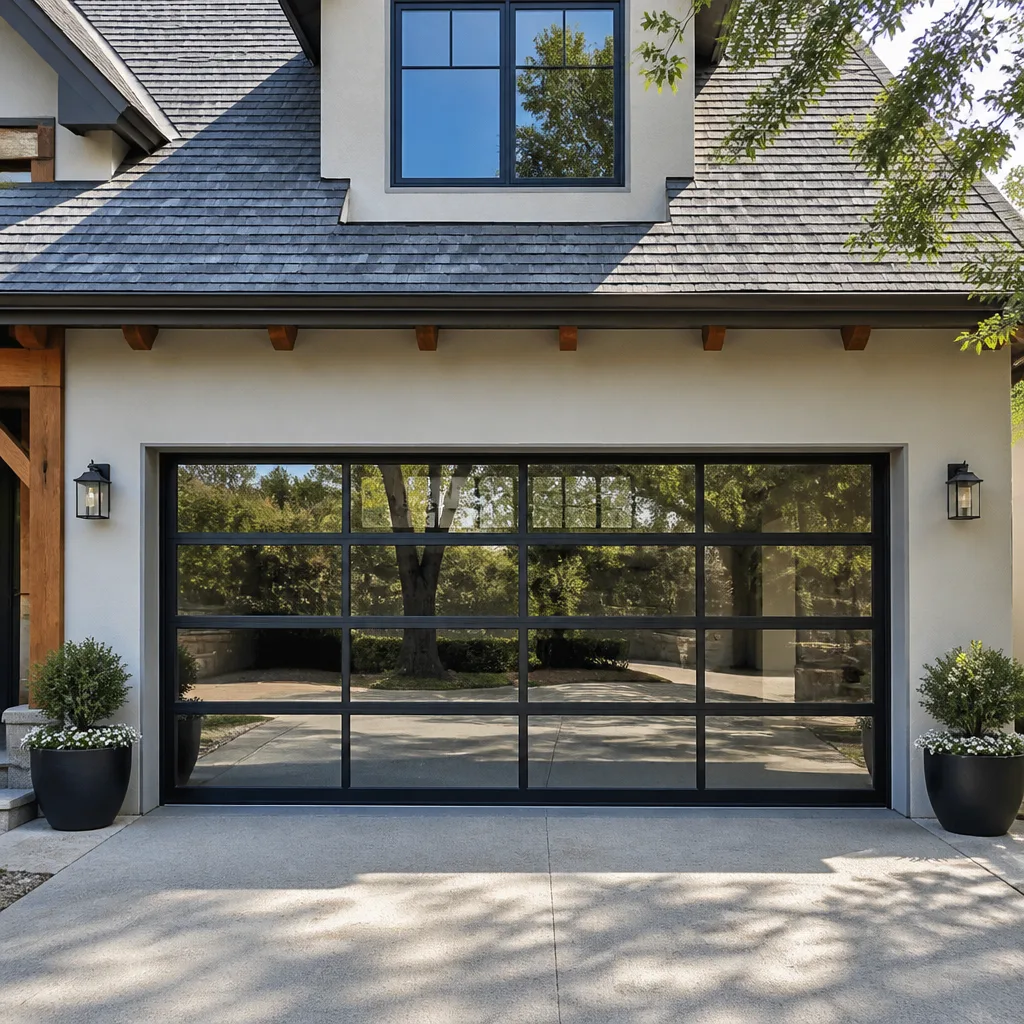 Full-view glass
 LiftMaster openers
 Chamberlain openers
Full 25-point door and opener safety check with every visit - springs, cables, rollers, tracks, and your LiftMaster or Chamberlain opener included
You get a price before we start. It does not change when the truck arrives.
Get your free estimateThe Complete Garage Door Repair Guide for Orlando Homeowners
Florida’s average relative humidity sits above 74% year-round, and in Orlando that number climbs even higher during the June-to-September stretch. That single data point explains why garage doors in this city rust faster, swell more, and break torsion springs on a timeline that surprises homeowners who moved here from drier climates. A garage door that would last 15 years in Phoenix or Denver often needs major component replacement within 8 to 10 years in Orlando. This guide explains what actually fails on Orlando garage doors, why our climate accelerates those failures, what you can safely handle yourself, and when the smarter move is a phone call. For a deeper dive, see The Complete Guide to Garage Door in Orlando.
Styles & brands we work with
Quick Answer
Garage door repair in Orlando typically costs between $125 and $350 for common fixes like spring replacement, cable repair, or panel realignment, with opener repairs running $100 to $250. Most repairs in the Orlando area can be completed the same day a technician arrives because the failures here follow predictable, climate-driven patterns that experienced local companies stock parts for. The single most important step for any Orlando homeowner is to stop using the door the moment it sounds or moves differently, then call a repair service that offers Garage Door Repair services and knows the specific ways Florida humidity and heat stress these systems.
Table of Contents
- Why Orlando’s Climate Is Harder on Garage Doors Than Almost Anywhere Else
- Torsion Springs: The Part That Fails First in Central Florida
- Cables, Rollers, and Tracks: What Heat and Humidity Do to Moving Parts
- Garage Door Opener Problems That Show Up More Often in Orlando
- Hurricane Prep and Storm-Damage Repairs: What Orlando Homeowners Need to Know
- DIY vs. Professional: What’s Safe to Fix Yourself in Florida
- How to Document Repairs for Florida Homeowner’s Insurance Claims
- Common Mistakes to Avoid
- When to Call a Professional
- Frequently Asked Questions
Why Orlando’s Climate Is Harder on Garage Doors Than Almost Anywhere Else
Orlando gets about 51 inches of rain per year, concentrated in afternoon downpours between June and September. Combine that with average summer highs in the low 90s and humidity that rarely drops below 70% even on a dry day, and you have an environment that attacks garage door components from three directions at once.
First, there’s rust. The galvanized steel used in standard tracks, hinges, and brackets develops corrosion faster here than in most of the country. We’ve pulled rollers out of Orlando garage doors where the bearings had seized completely, not from wear but from rust blooming inside the raceway. Salt air isn’t the issue this far inland, but persistent moisture is just as effective over time.
Second, there’s expansion and contraction. Wood garage doors, especially carriage-style doors popular in neighborhoods like College Park, Thornton Park, and Winter Park, absorb moisture during the wet season and release it during the drier months from October through April. That cycle causes stiles and rails to swell, warp, and eventually crack. A wood door that operated smoothly in March can bind against the jamb in July because the door itself has grown a quarter-inch wider.
Third, there’s heat stress on lubricants. The grease inside torsion spring coils and the oil in opener gearboxes gets cooked by attic-level heat radiating through an uninsulated garage ceiling. In August, the air inside a closed Orlando garage can exceed 110°F for hours. Standard lithium grease breaks down, thins out, and drips away, leaving metal parts running dry. That’s why Orlando garage doors often develop grinding noises in late summer that never appeared during the cooler months.
None of this appears in generic garage door repair guides written for a national audience. It’s Orlando-specific, and it’s the difference between a repair that lasts two years and one that lasts five.
Torsion Springs: The Part That Fails First in Central Florida
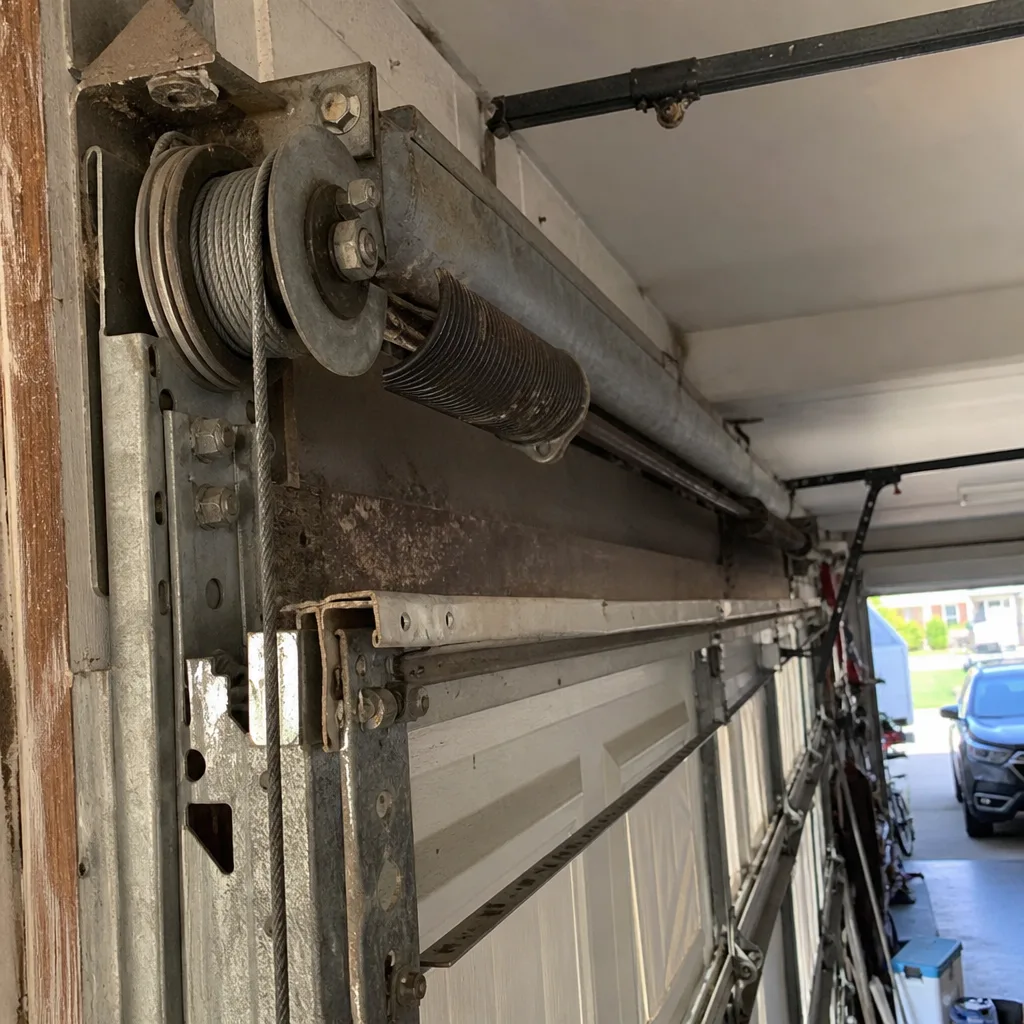
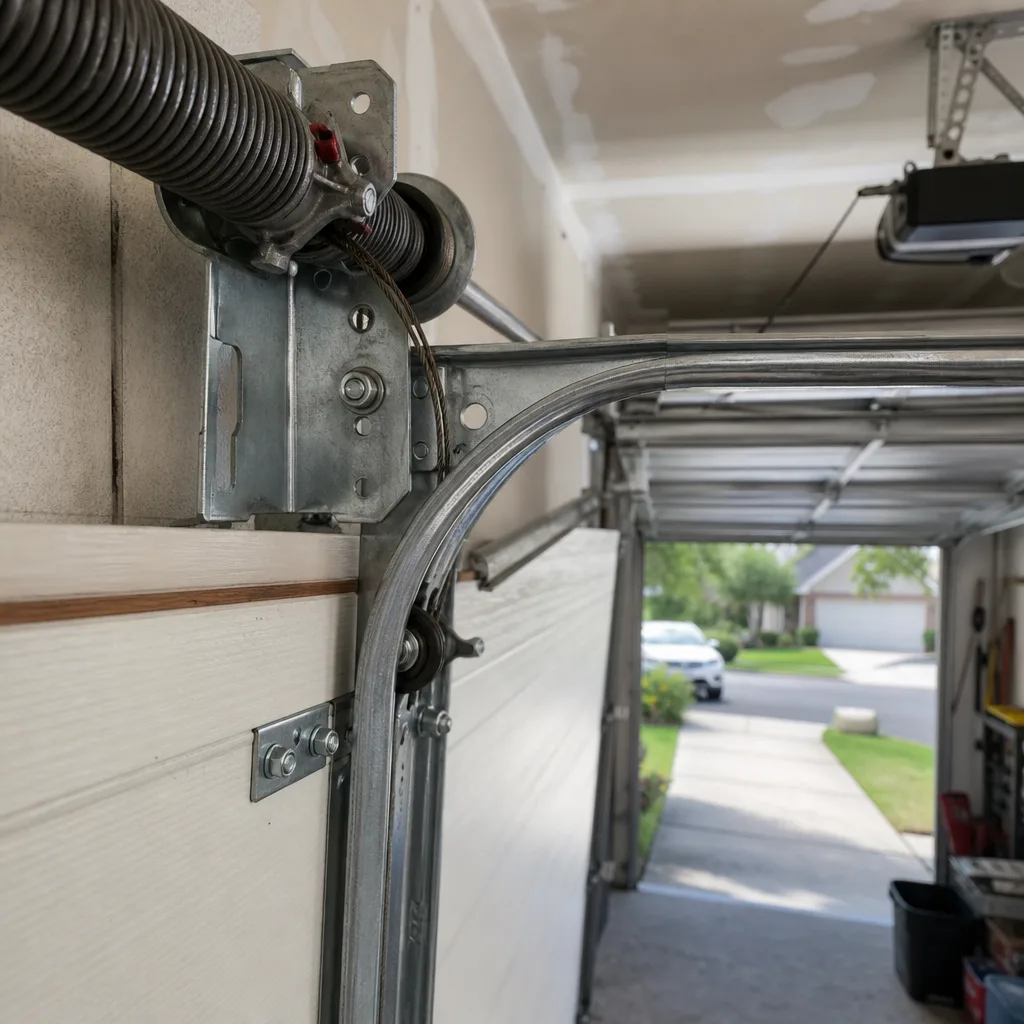
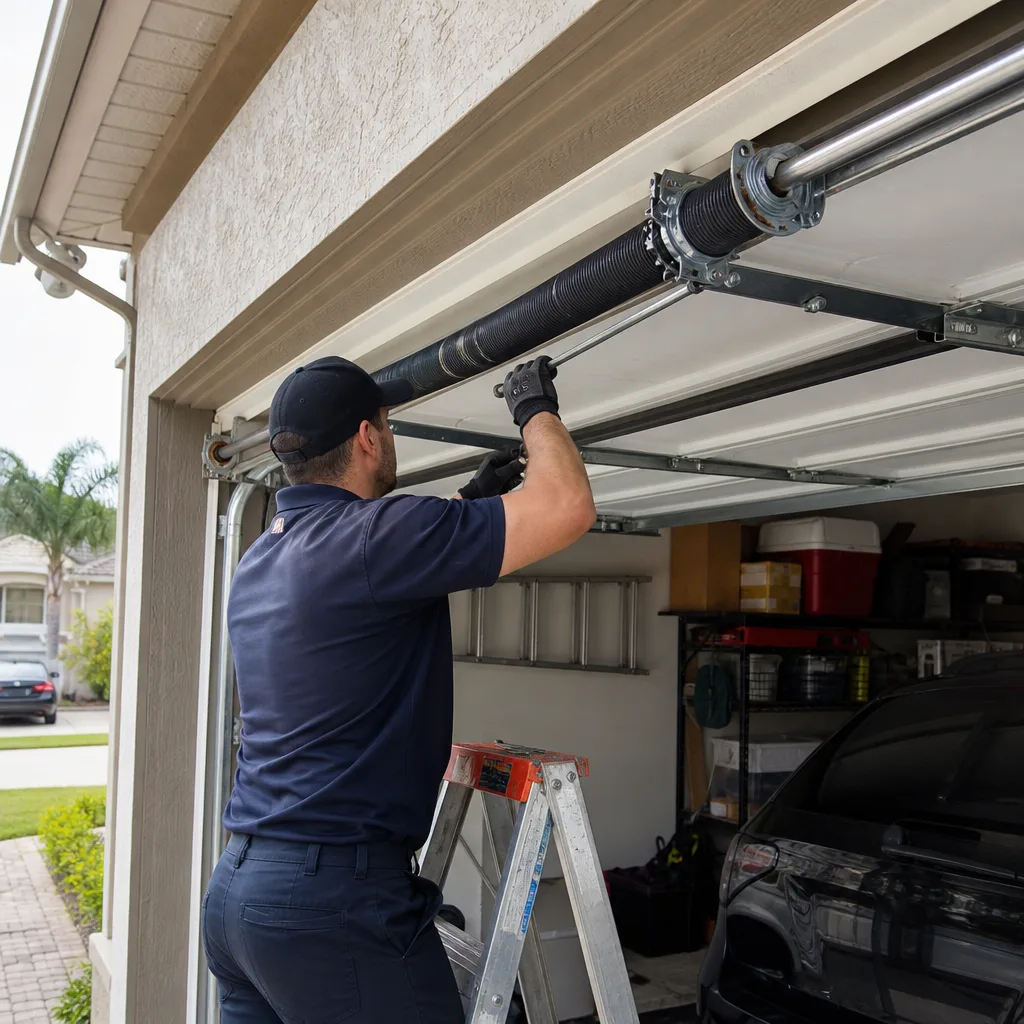
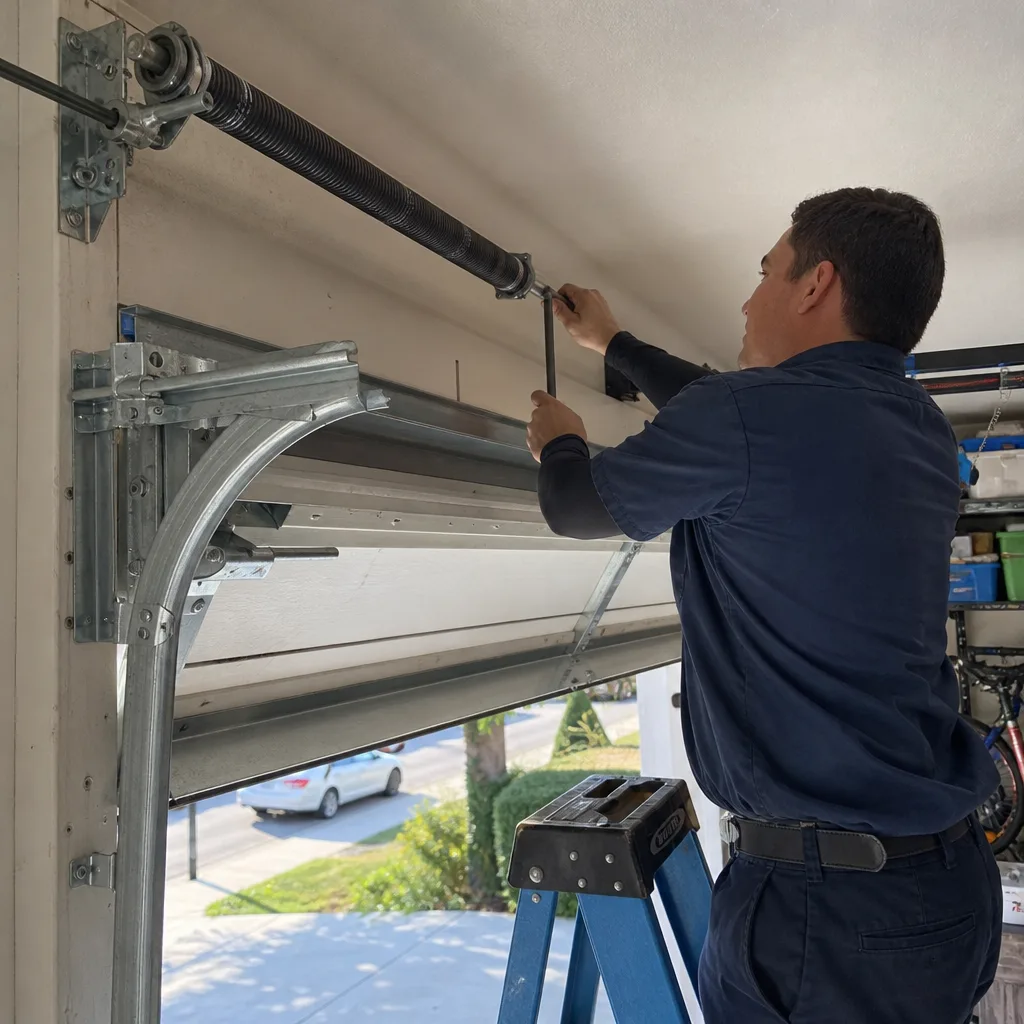
Most residential garage doors in Orlando use torsion springs, mounted on a shaft above the door opening. These springs counterbalance the door’s weight, which for a typical 16-by-7-foot steel door is somewhere between 150 and 250 pounds. When you hear a loud bang from the garage, like a firecracker going off inside a metal box, that’s almost always a torsion spring snapping.
Springs are rated for a certain number of cycles, one cycle being a full open-and-close. Budget springs last about 10,000 cycles. Premium springs last 20,000 to 30,000. In a climate with mild, consistent temperatures, a 10,000-cycle spring might survive 7 to 9 years on a door used three to four times daily. In Orlando, that same spring often fails in 5 to 7 years, and the reason is corrosion.
Galvanized vs. Oil-Tempered Springs: What Actually Matters Here
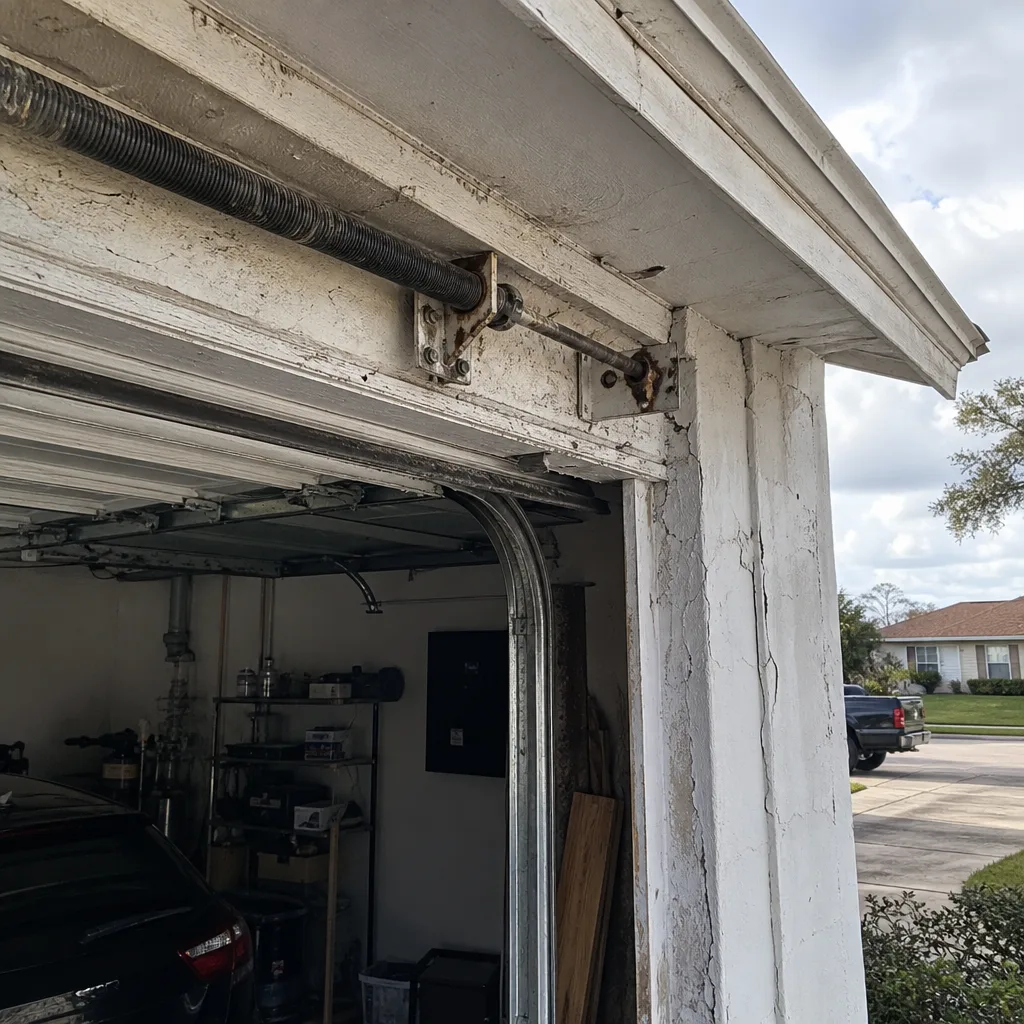
There are two common finishes on torsion springs: oil-tempered and galvanized. Oil-tempered springs are the industry standard, coated with a thin oil film that protects the steel during shipping and early use. That oil film burns off or evaporates quickly, especially in a hot, humid garage. Once bare steel is exposed to Florida humidity, surface rust begins within weeks. Rust creates microscopic pits on the spring surface, and those pits become stress concentrators every time the spring coils and uncoils. Eventually, one of those pits deepens into a crack, and the spring fails early.
Galvanized springs have a zinc coating that resists corrosion much longer, which makes them a better match for Orlando’s climate. They cost roughly 20% more than oil-tempered equivalents, but when the failure mode in your city is humidity-driven rust, that premium buys real lifespan. Any reputable Orlando garage door company should offer galvanized springs as an option and explain the trade-off honestly. If a technician quotes you a spring replacement and never mentions the corrosion issue, you’re not getting local expertise.
What Spring Replacement Costs in Orlando
Spring replacement is the most common repair call in Orlando. Here’s what you should expect:
- Single spring replacement: $180 to $280 installed
- Double spring replacement (recommended on most two-spring doors): $280 to $450 installed
- Galvanized spring upgrade: Add $30 to $60 per spring
- Springs on oversized or carriage doors: Add $50 to $100 due to heavier hardware
These numbers reflect Orlando-area pricing as of 2025. Companies that charge significantly less are usually installing the cheapest oil-tempered springs available, which means you’ll likely be replacing them again sooner than you should.
A Safety Note Worth Reading Twice
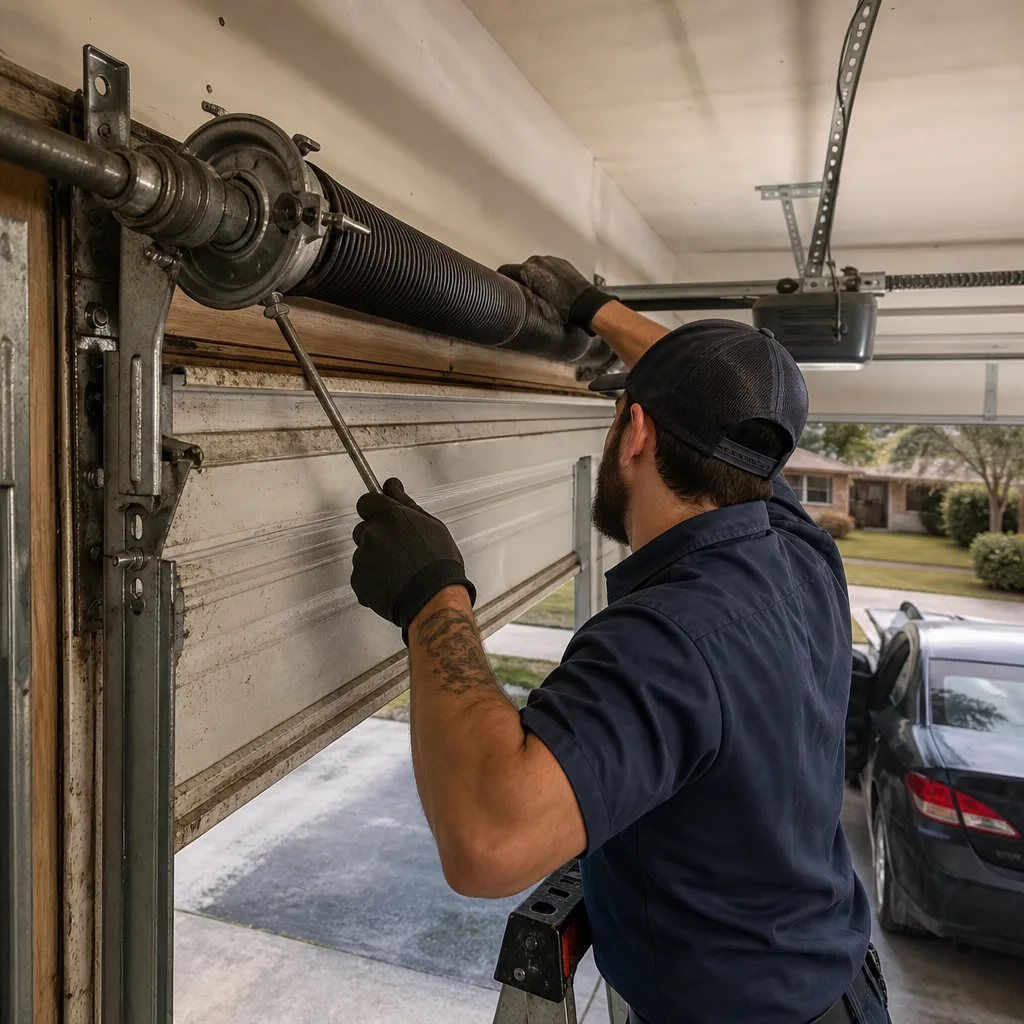
Torsion springs hold enormous tension, even when the door is closed. A spring that snaps releases energy violently enough to break bones or worse if you’re standing in the wrong place. Replacing one requires winding bars, specific technique, and an understanding of how the tension interacts with the cable drums on both sides. This is not a YouTube tutorial situation. The danger is real, and in Orlando’s climate, the components you’d be working around may already be compromised by rust. Leave spring work to someone who does it weekly.
Cables, Rollers, and Tracks: What Heat and Humidity Do to Moving Parts
Beyond the springs, the rest of the mechanical system wears faster in Orlando than in most of the country. Understanding what fails and why helps you catch problems before they turn into a door off its tracks or a cable snapped at 7 a.m. on a workday.
Lift Cables
Lift cables are the braided steel wires that connect the bottom brackets to the cable drums, transferring the spring’s lifting force to the door itself. In Orlando, cable failures usually happen one of three ways. The most common is rust: moisture attacks the steel strands, especially near the bottom bracket where water from a wet car or a flooded driveway drips onto the cable. The second is fraying from rubbing against a misaligned track or a rusty pulley. The third is the cable jumping the drum when a spring breaks, which leaves the door cocked and jammed.
Cable replacement in Orlando typically runs $100 to $180 per cable. If one cable has failed, the other is usually close behind because both have been exposed to the same conditions. Ask your technician to inspect both even if only one snapped.
Rollers
Nylon rollers with sealed ball bearings are now standard on new doors, and they’re the right choice for Orlando. Steel rollers, especially zinc-plated ones, rust quickly here and grind against the track. If you can hear the door from inside the house when it opens, you probably have worn rollers. Replacing ten rollers costs $80 to $150 installed, and it’s one of the best value repairs in an Orlando garage because new rollers reduce strain on every other component, including the opener motor.
Tracks
Vertical and horizontal tracks rarely fail outright, but they bend and shift. In Orlando, two situations bring track problems to the top of the repair list. The first is a door that’s been hit by a car, which is a year-round issue but spikes during summer storm season when drivers rush into the garage to beat a downpour. The second is hardware loosening due to the heating and cooling cycle of the garage wall. Lag screws slowly back out of the studs, the track drifts, and the door starts binding. When a door works fine in the morning but sticks in the afternoon heat, loose track hardware is the usual cause.
Garage Door Opener Problems That Show Up More Often in Orlando
Garage door openers in Orlando face the same heat and humidity as the mechanical door, plus one additional threat: electrical storms. Florida leads the nation in lightning strikes per square mile, and Orlando sits in the middle of the state’s storm alley. A nearby strike can induce a voltage spike that damages opener circuit boards even when the power never goes out entirely.
Common Opener Failure Patterns Here
- Logic board failure after storms: The opener runs, but the door doesn’t move, or the opener operates on its own. This is a classic post-storm failure. Board replacement costs $100 to $200, depending on the brand.
- Gear wear from heat: The nylon drive gear inside chain-drive openers gets brittle from constant heat exposure and strips. Replacing the gear kit costs $80 to $150.
- Capacitor failure: The motor hums but won’t start. Capacitors age faster in heat. Replacement is $50 to $100.
- Sensor misalignment: The safety sensors at the bottom of the track get bumped or shifted, often after the door was manually released during a power outage. Realigning them is usually a quick fix, sometimes free with a service call.
Smart Opener Upgrades Worth Considering in Orlando
If your opener is more than 12 years old and needs a board replacement, you’re often better off replacing the whole unit. Newer openers from brands like LiftMaster and Chamberlain include battery backup, which matters in a city where afternoon thunderstorms knock out power regularly. That battery backup lets you open the door during an outage, which is the difference between driving to work and standing in your driveway.
We work on the brand you already have, whether that’s a Craftsman opener from 2008 or a Raynor door from the 90s. Multi-brand experience means we diagnose the actual problem rather than steering you toward whatever brand happens to carry the highest margin this month.
Hurricane Prep and Storm-Damage Repairs: What Orlando Homeowners Need to Know
Orlando sits far enough inland that storm surge isn’t a threat, but wind is. Hurricane-force gusts hit the city regularly during major storms, and even tropical-storm-force winds cause real damage to garage doors. A garage door is the largest opening in most homes, and when it fails during a hurricane, the pressure differential can lift the roof. That’s not an exaggeration; post-storm damage assessments from agencies like FEMA repeatedly identify garage door failure as a primary cause of structural roof loss in Central Florida.
Pre-Storm Maintenance Checklist
- Inspect the bottom seal: A cracked or missing seal lets wind-driven rain enter the garage. Replace it if visible cracks appear. Cost: $60 to $120.
- Check reinforcement struts: Hurricane-rated doors have horizontal metal struts across each panel. Verify they’re securely bolted. Rusted or loose struts compromise wind resistance.
- Test the balance: Disconnect the opener and lift the door manually. It should stay at waist height on its own. If it drops, the springs are weakening and need attention before storm season.
- Secure the emergency release: Make sure the red release cord isn’t dangling where it could be pulled accidentally.
- Document the door’s condition: Take dated photos from inside and outside. If storm damage occurs, these photos prove the door was in good condition before the event.
Storm-Damage Repairs Common in Orlando
After a storm passes, repair calls in Orlando spike for: bent tracks from wind-driven impacts, panels dented by flying debris, snapped cables from doors that twisted under wind load, and openers that failed due to power surges. If your door has visible damage after a storm, don’t force it open. The components were already under stress during the storm, and forcing a bent track or a cocked panel makes the repair more expensive.
DIY vs. Professional: What’s Safe to Fix Yourself in Florida
There’s a legitimate list of garage door maintenance tasks any Orlando homeowner can handle, and there’s a list you should never attempt. See our DIY vs Professional Garage Door: The Orlando Homeowner’s Decision Guide for the full breakdown. The line between the two is drawn by stored energy and fall risk, not by mechanical difficulty.
Safe DIY Tasks
- Lubricating moving parts: Use a garage door-specific lubricant, not WD-40. Apply to hinges, rollers (the bearings, not the wheel surface), and the torsion spring coils. Do this every six months in Orlando’s climate.
- Testing the auto-reverse feature: Place a roll of paper towels under the door and close it. The door should reverse when it contacts the object. Test monthly. This is a safety feature, not a convenience feature.
- Cleaning the photo-eye sensors: Wipe the lenses with a dry cloth. Cloudy sensors cause phantom reversals. Do this quarterly.
- Tightening visible hardware: Use a socket wrench on the track brackets and hinges. Heat cycling loosens them over time. Do this every spring.
- Replacing the bottom seal: Slide out the old seal, slide in the new one. This is a 20-minute job that keeps water and insects out of the garage.
Never Attempt These Yourself
- Torsion spring replacement or adjustment: The stored energy in a wound spring can kill you. This is the single most dangerous repair in residential construction.
- Cable replacement: Cables are under tension whenever the springs are wound. A snapped cable under load becomes a steel whip.
- Track realignment requiring removal: If the track has come loose from the wall or ceiling, the door is no longer supported safely. This is a two-person job with specialized tools.
- Opener gear or board replacement: These require opening the motor housing, which exposes capacitors that hold a charge even when unplugged.
In Orlando’s heat, some of these dangers compound. Metal surfaces inside an August garage are hot enough to burn skin on contact. Rusty components are more likely to fail suddenly under load. The frustration of a door that won’t open is real, and so is the risk of a rushed DIY repair on a 110°F afternoon. Clear answers, not upsells, means telling you when the right move is to call someone.
How to Document Repairs for Florida Homeowner’s Insurance Claims
Storm damage to garage doors is one of the most common homeowner’s insurance claims in Central Florida, and it’s also one of the most frequently denied. The difference between approval and denial often comes down to documentation. Here’s the sequence that gives you the best shot at a covered claim.
Documentation Steps for Storm Damage
- Take immediate photos: Capture the damage from multiple angles, including wide shots that show the door in context and close-ups of specific damage points. Do this before any repair work begins.
- Photograph the surrounding area: Show the storm’s effects around your property, such as downed branches or debris. This establishes that the damage event actually occurred.
- Locate your pre-storm photos: The photos you took during pre-season maintenance become your evidence that the door wasn’t already damaged.
- Get a written repair estimate: Ask the technician for a detailed line-item estimate that specifies what’s damaged, what needs replacement, and whether the damage is consistent with wind or impact.
- File the claim before authorizing work: Most policies require the insurer to inspect before repairs begin, unless the damage creates a safety hazard or ongoing exposure. If the door is off its tracks and the garage can’t be secured, document that clearly and note it in the claim.
One Orlando-specific issue: many policies have separate hurricane deductibles that run 2% to 5% of the dwelling coverage. That means you might pay $4,000 to $10,000 out of pocket before insurance kicks in. Knowing your deductible before you file helps you decide whether a claim makes sense. A $600 repair against a $5,000 hurricane deductible is a financial loss if the claim causes your premium to rise.
For more on the mechanical side of these systems, see our Garage Door Repair in Orlando guide, which covers specific repair scenarios and what they cost. If the issue is the motor rather than the door itself, our Garage Door Opener Repair in Orlando page breaks down opener diagnostics by brand. And if the damage is beyond reasonable repair, our Garage Door Installation in Orlando guide walks through replacement options, including hurricane-rated models.
Common Mistakes to Avoid
- Lubricating with WD-40: WD-40 is a solvent and water displacer, not a long-term lubricant. It strips existing grease and leaves parts dry. Orlando’s humidity finishes the job with surface rust within weeks.
- Replacing one spring when both are worn: On doors with two springs, both springs have the same number of cycles. If one snapped, the other is near failure. Replacing both now avoids a second service call and another moment of inconvenience.
- Ignoring a noisy door: A garage door that grinds, squeals, or pops is communicating. Every week of ignoring it in a humid climate accelerates the underlying problem. A squeak in January becomes a seized roller by August.
- Forcing a door that’s binding: When a wood door swells in Orlando’s wet season and starts sticking, forcing it with the opener strains the motor, the cables, and the springs simultaneously. The original problem might be a $150 panel adjustment. The caused problem is a $400 spring replacement.
- Skipping pre-storm photos: We covered this above, but it bears repeating. If you don’t have dated photos of your door before hurricane season, your claim is weaker. This is free insurance.
- Hiring based on price alone: Orlando has plenty of one-truck operations that quote low and install the cheapest parts available. A $149 spring replacement sounds great until it fails in 18 months. Ask what springs they’re installing, whether they’re galvanized, and what cycle rating they carry.
When to Call a Professional
Call a professional if your garage door has a snapped spring, a frayed or broken cable, a bent track, or visible damage from a storm. Call if the opener runs but the door doesn’t move, if the door reverses for no reason, or if you notice the door hanging unevenly. Call if you’re not sure what’s wrong and the door simply stopped working; diagnosing over the phone based on a description usually beats guessing wrong. From a snapped spring to a full smart-opener upgrade, Lighthouse Garage Door Service handles the mechanical door and the motorized opener in one visit. We work on the brand you already have, and we quote and agree on the price before any work starts. Lighthouse Garage Door Service offers free estimates in Orlando, call (833) 613-0599.
Frequently Asked Questions
Spring replacement in Orlando typically costs $180 to $280 for a single spring and $280 to $450 for both springs on a standard two-car door. Galvanized springs, which hold up far better in Central Florida humidity, add $30 to $60 per spring. Call (833) 613-0599 for an exact quote, estimates are free.
Repair calls in Orlando can usually be scheduled the same day or next business day, depending on call volume and the time of the request. Storm-season afternoons fill up quickly, so calling in the morning improves your odds of same-day service. Call (833) 613-0599 to check the current schedule.
No. A reputable Orlando garage door company quotes a firm price after inspecting the door and before starting any work. If additional problems are discovered mid-repair, the technician should stop and get your approval on the revised price first. You should never receive a surprise invoice.
Florida’s year-round humidity causes surface rust on torsion springs, and that rust creates stress points that lead to premature cracks. Oil-tempered springs are especially vulnerable because their protective coating wears off quickly. Galvanized springs resist this corrosion and typically last several years longer in Orlando’s climate.
Current Florida building code requires new and replacement garage doors in Orlando to meet wind-load standards for the region. If your door predates those standards or has visible rust on the reinforcement struts, you may want to upgrade before storm season regardless of code requirements. A door that fails during a hurricane can cause structural damage to the entire home.
If the opener is more than 12 years old and the repair requires a new logic board or motor, replacement is usually the smarter financial move. A new opener with battery backup also solves the problem of being locked out of your garage during Orlando’s frequent thunderstorm power outages. Repair bills on old openers tend to arrive in clusters, so the apparent savings of a repair often evaporate within six months. Call (833) 613-0599 and we’ll give you straight advice on your specific opener.
The Bottom Line
Garage doors in Orlando fail differently than garage doors anywhere else in the country. The humidity corrodes springs, cables, and rollers. The heat degrades lubricants and opener components. The storm season demands preparation and documented maintenance. If you remember three things from this guide, make them these: install galvanized springs when replacement time comes, photograph your door before hurricane season, and never force a door that’s binding or off its tracks. The rest is just maintenance on a schedule that matches the climate. Explore more guides & resources on our blog. If you need help, call (833) 613-0599, a Lighthouse Garage Door Service technician will give you a straight answer and a firm price before any work begins.
Written by the team at Lighthouse Garage Door Service, serving Orlando since 2014.
See the difference
 Before
 After
 Before
 After
 Before
 After