
Last updated October 30, 2026
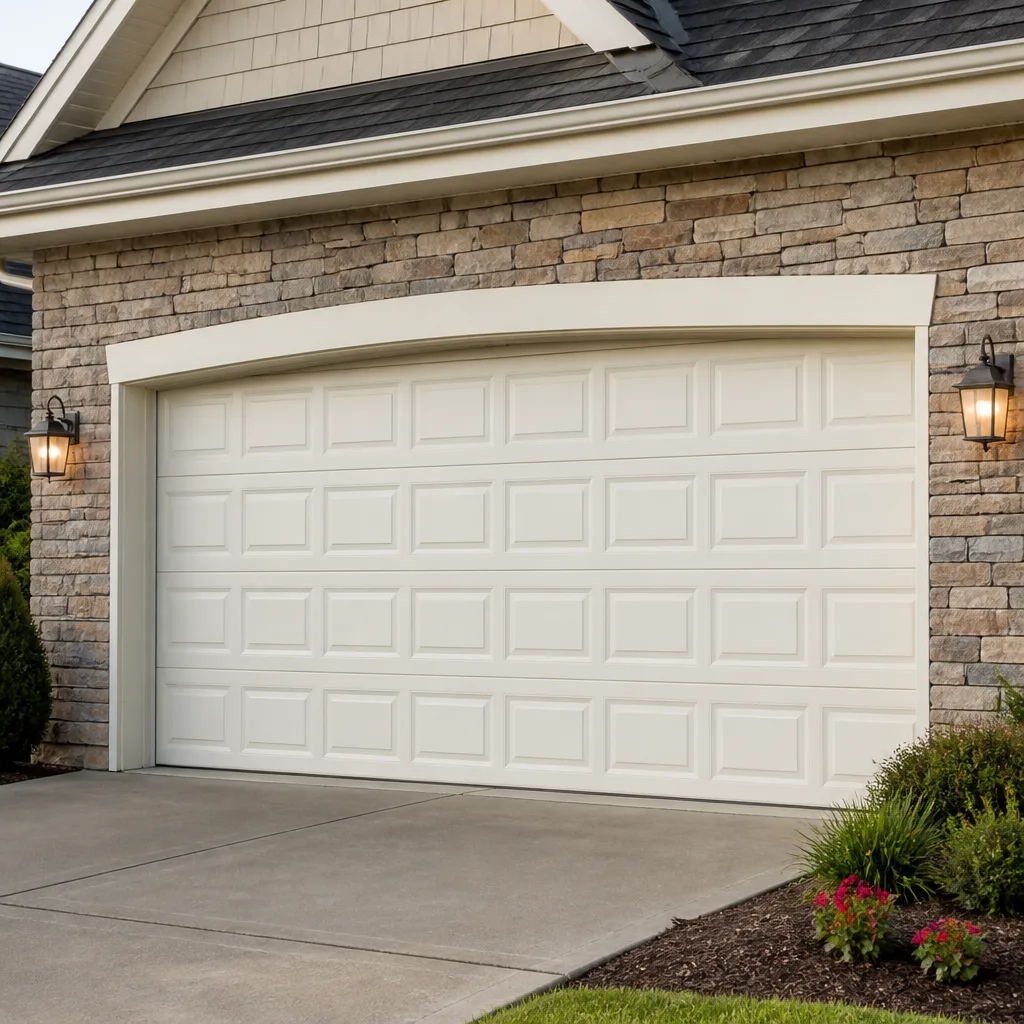 Raised-panel steel
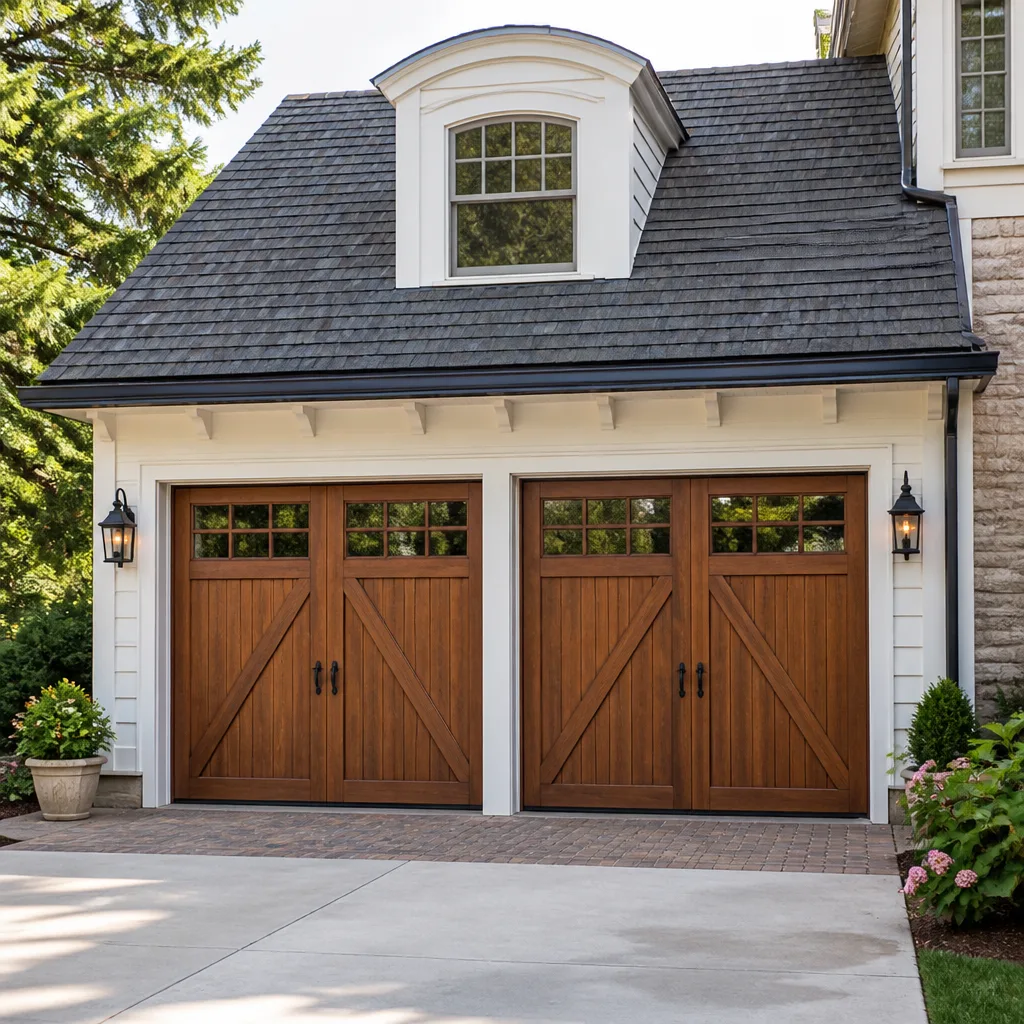 Carriage house
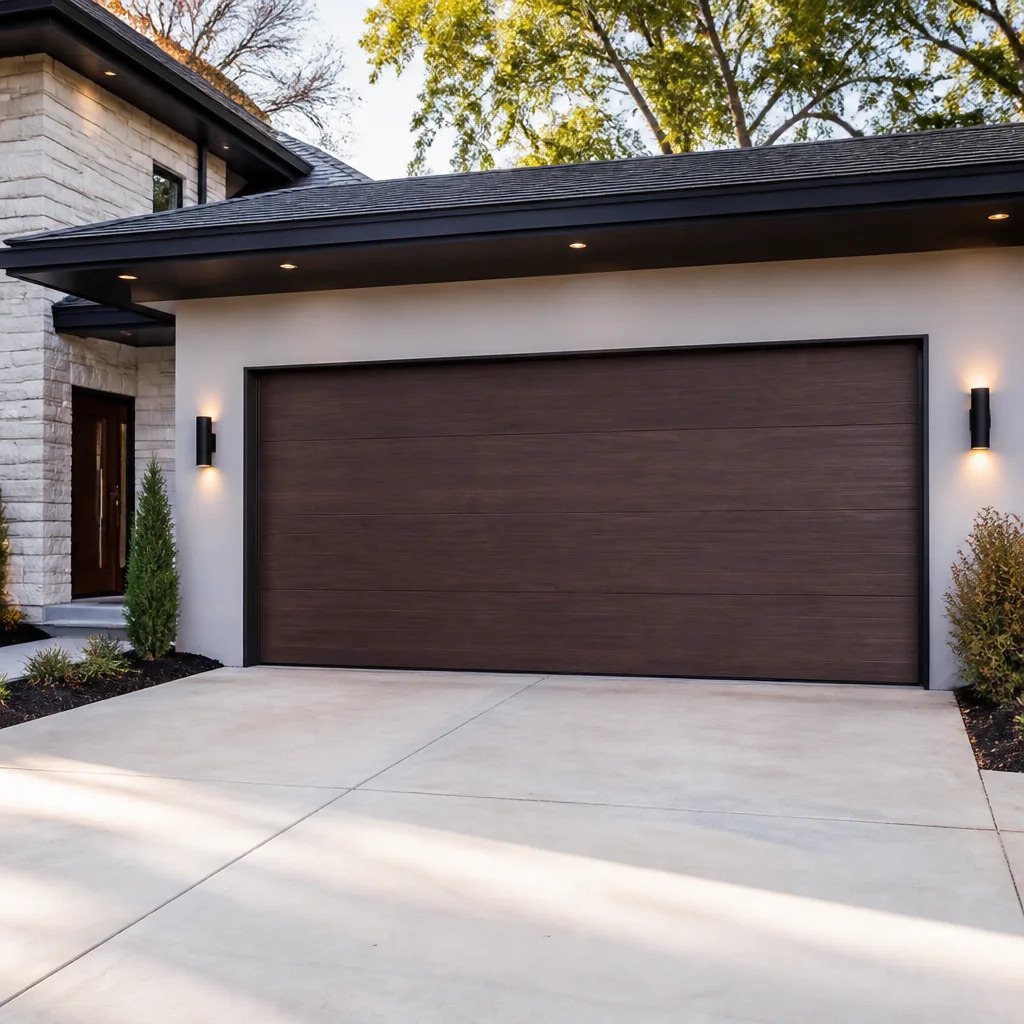 Modern flush
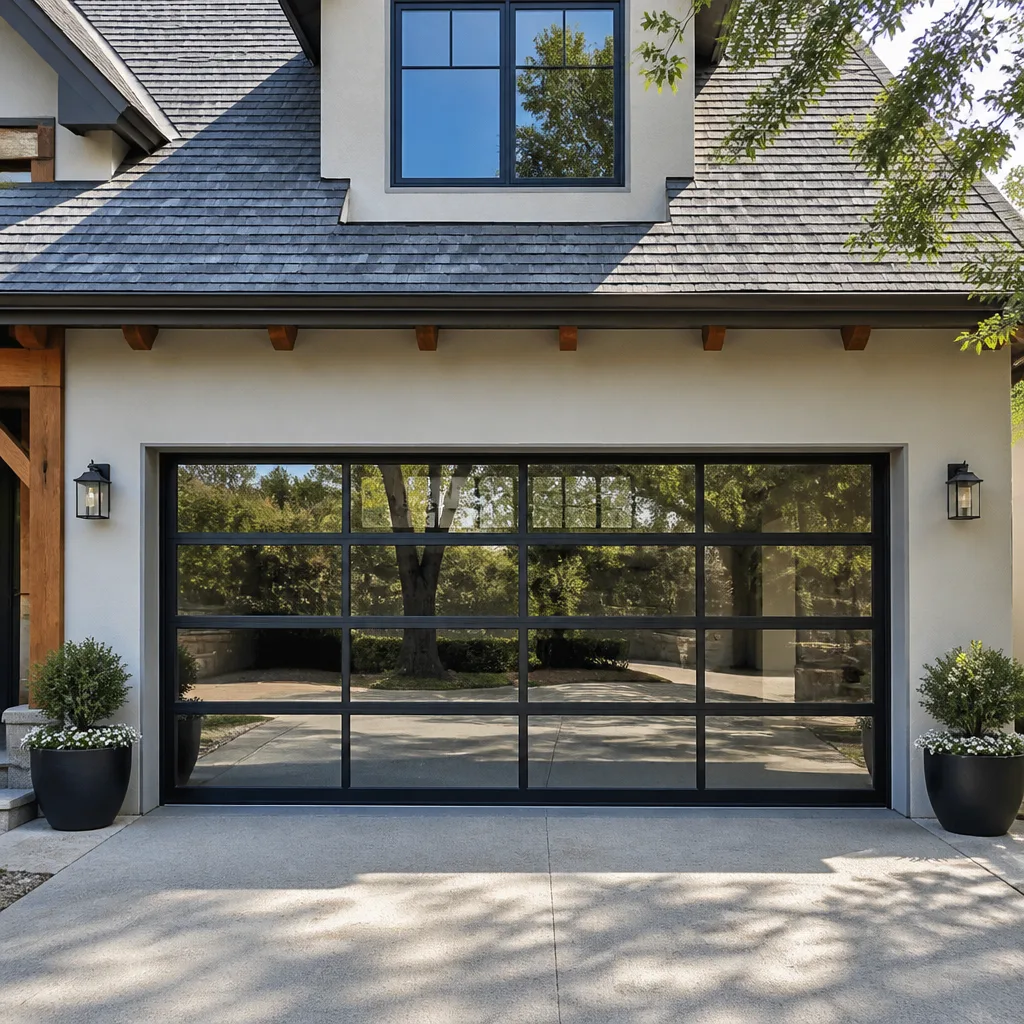 Full-view glass
 LiftMaster openers
 Chamberlain openers
Full 25-point door and opener safety check with every visit - springs, cables, rollers, tracks, and your LiftMaster or Chamberlain opener included
You get a price before we start. It does not change when the truck arrives.
Get your free estimateGarage Door Repair Maintenance Checklist for Orlando Homeowners
A garage door spring rated for 10,000 cycles in Minnesota will often fail noticeably sooner in Orlando. Not because it works harder, but because thermal expansion from 90°F daily highs and saturated humidity puts constant, unrelenting stress on metal components that were never designed for this climate. This guide gives you a maintenance checklist built around how Orlando actually wears down garage doors: humidity thresholds, storm patterns, and the specific failure modes we see across Orange County every week. You’ll learn which components fail first here, what to lubricate with in high heat, and which warning signs mean you’re past maintenance and into repair territory.
Quick Answer
A garage door maintenance checklist for Orlando homeowners should be condition-triggered rather than purely seasonal: inspect springs, cables, and weather seals quarterly; lubricate rollers and hinges with a high-heat-rated silicone or lithium spray after every 90°F stretch; and check the bottom rubber seal for UV cracking and warping monthly during summer. The most common Orlando-specific failures we see are spring fatigue from thermal cycling, rust on cables from humidity, and weather seal breakdown from UV exposure. Most homeowners need professional service once every 12 to 18 months, even with diligent maintenance.
Styles & brands we work with
Table of Contents
- Why Orlando Breaks Garage Doors Differently
- The Quarterly Orlando Maintenance Checklist
- Post-Storm Inspection: A 15-Minute Protocol
- Lubrication for High Heat and Humidity
- Weather Seals: The UV and Water Double Threat
- Springs and Cables: What Thermal Cycling Does
- Signs Maintenance Has Crossed Into Repair
- The Printable Condition-Triggered Checklist
Why Orlando Breaks Garage Doors Differently
Most garage door maintenance guides are written with a four-season climate in mind. They tell you to lubricate in spring and check seals before winter. That’s useful in Chicago or Denver, but it misses what actually destroys garage doors in Orlando. Our climate has two dominant stress factors: sustained heat and sustained moisture. Both operate year-round, and both accelerate wear in ways that a calendar-based checklist won’t catch.
The physics is straightforward. Metal expands when heated. A steel torsion spring installed in January at 65°F will expand measurably at 95°F in July. Over hundreds of daily thermal cycles, that expansion and contraction creates micro-fatigue at the molecular level. The spring doesn’t break on the hottest day. It breaks on a Tuesday in November when the accumulated stress finally exceeds the metal’s tolerance. This is why Orlando homeowners often report spring failures during mild weather: the damage was done during summer.
Humidity adds a second mechanism. Orlando averages 70% to 80% relative humidity for much of the year. Uncoated steel cables, hinges with worn lubrication, and roller bearings all suffer from accelerated oxidation. Rust isn’t just cosmetic on a garage door. A rusted cable has reduced tensile strength. A rusted hinge binds rather than pivots. A rusted bearing grinds instead of rolling. Each of these failures produces the same symptom: a door that strains, sticks, or eventually stops moving entirely.
The good news is that condition-triggered maintenance, the kind we recommend to every Orlando customer, catches these problems before they become breakdowns. You don’t need a season. You need a trigger: a storm, a heat streak, a visible change in the door’s behavior, or a specific calendar interval. The sections below give you exact protocols.
The Quarterly Orlando Maintenance Checklist
Four times a year, regardless of what the thermometer says, run through this sequence. It takes about 20 minutes and requires no special tools beyond a flashlight, a step stool, and a clean rag. This is the same baseline inspection our technicians perform on every service call in Orlando, adapted for homeowner use.
- Visual sweep of all moving parts. Stand inside the garage with the door closed. Look at the springs, cables, hinges, rollers, and tracks. You’re looking for anything that wasn’t there before: rust bloom, fraying, gaps, bends, or debris. Pay closest attention to the torsion spring above the door. If you see a visible gap in the coil, that spring is already broken and needs replacement before the door moves again.
- Balance test. Pull the emergency release cord (with the door closed) and manually lift the door to waist height. A properly balanced door stays in place without help. If it drops or feels heavy, you have a spring tension problem. If it flies upward, you have the opposite problem: too much tension, which is equally dangerous. Either way, stop using the opener and call a professional. Reconnect the release cord after testing.
- Track alignment check. Look at the vertical tracks on both sides. They should be plumb (perfectly vertical) and the same distance from the door along their full length. Use the door itself as your reference. If the gap between door and track varies, or if you see fresh metal shavings at the bottom of the track, the door is out of alignment and forcing its way through every cycle.
- Fastener check. Grab a 7/16-inch socket and gently tighten any visible bolts and lag screws on the track brackets and hinges. Don’t over-torque: these are threaded into metal or pre-drilled wood, and stripped threads mean a bracket replacement. If a lag screw turns without tightening, the hole is stripped and needs repair.
- Lubrication refresh. Apply lubricant to the rollers, hinges, and spring (see the lubrication section below for exact products). Wipe away excess. Lubricant attracts dust and in Orlando’s humidity that dust becomes paste.
- Safety sensor test. Place a roll of paper towels or a 2×4 in the door’s path and close it. The door should reverse immediately. If it doesn’t, the sensors are misaligned or failing. This is a non-negotiable safety check, especially in homes with children or pets.
Run this quarterly and you’ll catch most problems during the cheap phase. Skip it for a year and you’ll meet us during the expensive phase, which is what our Garage Door Repair in Orlando page gets called for most often.
Post-Storm Inspection: A 15-Minute Protocol
Orlando’s afternoon thunderstorms and occasional tropical systems create a specific set of garage door problems. After any storm with winds over 40 mph or heavy rain, run this 15-minute check. Storms don’t just damage doors directly; they drive water under seals, push debris into tracks, and slam doors that weren’t fully closed.
- Check for water intrusion. Look at the floor line where the door meets the concrete. Water staining, warped cardboard boxes, or visible daylight under the bottom seal means the seal has failed or shifted. In Orlando, a failed bottom seal during rainy season isn’t just a maintenance issue: it’s an invitation for water damage to everything stored on the floor, plus increased humidity that feeds mold.
- Inspect the top panel for wind damage. Walk outside and look at the top of the door where it meets the header when closed. Wind-driven rain often seeps in here. If you see water stains on the interior ceiling of the garage near the header, the top weather strip needs replacement.
- Look for debris in the tracks. Storms blow leaves, twigs, and small branches into the bottom track sections. Even a single twig lodged in a track can derail a roller. Use the visual sweep: anything that doesn’t belong gets removed by hand, not by operating the door.
- Test the door operation twice. Run a full open and close cycle, watching and listening for anything unusual: a jolt at a specific point, a grinding noise from one side, a hesitation. New sounds after a storm mean something shifted.
- Check exposed hardware for rust bloom. After heavy rain, inspect cables and springs for new rust spots. Humidity in Orlando means that small rusty patches become big ones within weeks if the protective coating is compromised.
If a storm caused visible damage to the panels or the door seems misaligned, that’s not maintenance anymore. That’s repair, and you should have it looked at before the door fails completely.
Lubrication for High Heat and Humidity
The most common lubrication mistake we see in Orlando is using the wrong product. Standard white lithium grease, which works fine in cooler and drier climates, becomes a sticky mess in our heat. At 90°F, white lithium grease breaks down and thickens. It attracts dust and grime, which turns into an abrasive paste inside rollers and hinges. This actually accelerates wear rather than preventing it.
For Orlando conditions, we recommend two categories of lubricant:
- Silicone-based spray lubricant. This is the best general-purpose garage door lubricant for high-heat environments. It remains stable through wide temperature ranges, doesn’t attract dust, and repels moisture. Apply it to rollers, hinges, the torsion spring, and the lock mechanism. Look for a product labeled for high-temperature use; some silicone sprays are rated to 400°F or higher.
- High-heat rated lithium spray (not grease). If you prefer a lithium product, use the spray form, not the paste. Aerosol lithium spray penetrates better than grease, dries to a light film, and tolerates heat far better than its paste cousin. It’s a good second choice for rollers and hinges. Never apply it to the spring itself; spring coils need something thinner.
What not to use: WD-40 is a solvent, not a lubricant. It’s fine for freeing up a stuck part temporarily, but it provides no lasting lubrication. Motor oil and vegetable oil are worse: they gum up and attract dirt by design. And never apply anything to the cables. Cables should remain dry. Lubricating them invites slippage on the drums.
How often to lubricate in Orlando: every three months as a baseline, plus after any period where the door has been unusually noisy or after a heat wave of consecutive 90°F-plus days. The heat doesn’t create the need so much as burn through the lubricant faster. If you hear the door getting louder, that’s the lubricant telling you it’s gone.
Weather Seals: The UV and Water Double Threat
Orlando weather seals fail from two directions at once: UV radiation from above and water intrusion from below. The bottom rubber seal, also called the astragal or bulb seal, takes the worst of both. It sits directly on concrete that bakes in the sun, and it gets hit with afternoon downpours that force water against it with real pressure.
UV degradation shows up as cracking, brittleness, and in advanced cases, crumbling. Run your hand along the bottom seal monthly during summer. If the rubber feels stiff and hard or if pieces flake off, the seal is past its useful life. A UV-degraded seal doesn’t flex properly against the concrete anymore, which means water gets under the door even before you see visible cracking.
Water intrusion is the more insidious problem. In Orlando’s rainy season, a bottom seal that seals “mostly” becomes a leak. The floor may not flood, but moisture creeps in and is trapped inside the garage. That trapped moisture causes rust on stored items, feeds the humidity cycle that accelerates spring and cable corrosion, and eventually damages drywall and framing at the garage’s interior.
Check the seal both visually and physically. Close the door and look at the bottom edge from outside. The seal should make continuous contact with the concrete across the full width of the door. If you see daylight under any section, or if the seal is dented from being compressed too long, replace it. Bottom seals are an inexpensive part that prevents a disproportionately expensive problem.
The side and top weather stripping, typically vinyl or rubber, has a simpler failure mode. UV fades and cracks the exterior surface, and age compression means the strip no longer presses against the door when closed. Look for gaps. In Orlando, ants and roaches find those gaps quickly, which is another reason to stay ahead of the seals.
Springs and Cables: What Thermal Cycling Does
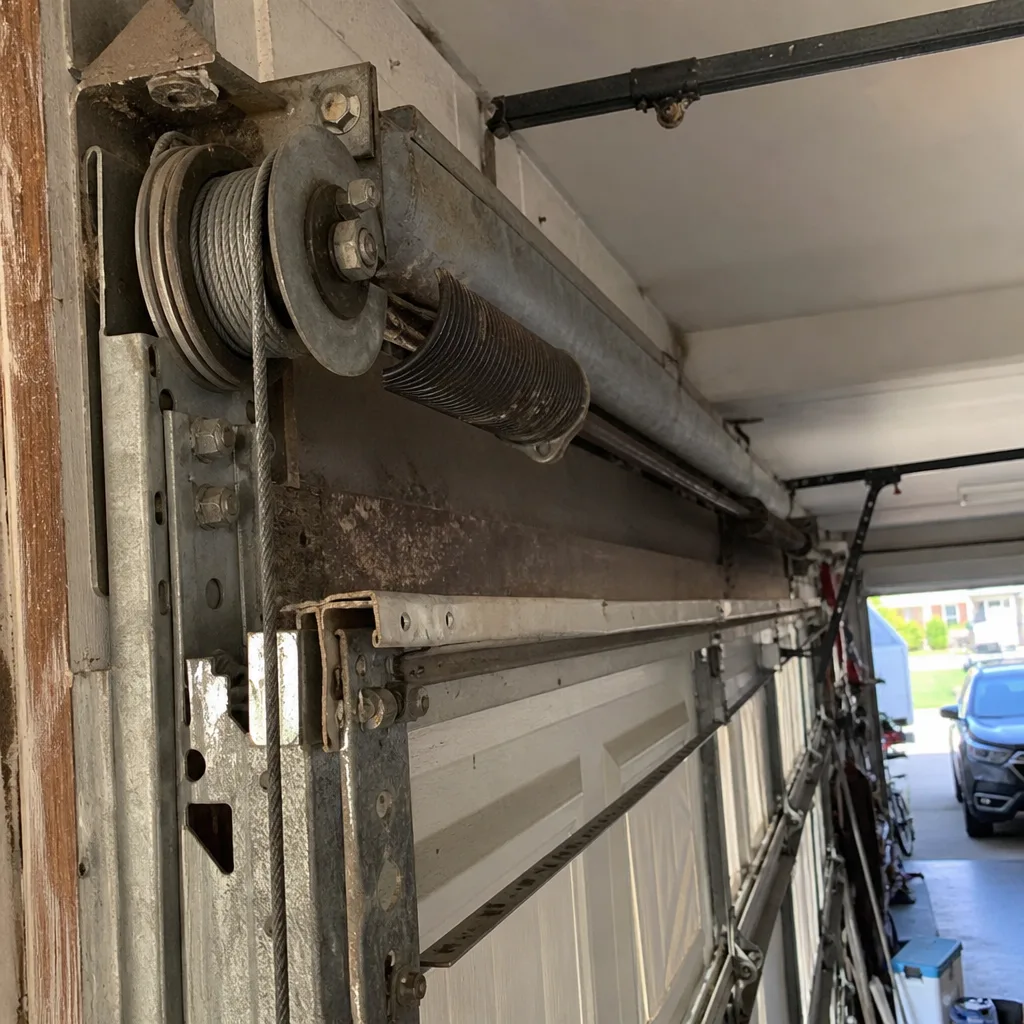
Torsion springs are the single highest-failure component on garage doors in Orlando. It’s not close. The thermal cycling we described earlier, repeated daily for years, creates a type of metal fatigue that drastically shortens spring lifespan compared to more temperate climates.
A standard torsion spring is rated in cycles, typically 10,000. That’s the theoretical lifespan under ideal conditions. Orlando conditions are not ideal. The spring on an average Orlando two-car garage door, opened and closed four times daily, accumulates 1,460 cycles per year. In theory, a 10,000-cycle spring should last nearly seven years. In practice, we see Orlando springs failing in four to five years. The gap between theory and reality is the heat.
The failure mode matters for your maintenance routine. Springs rarely fail visibly in advance. There’s no rust bloom or thinning you can spot from the floor. What you can watch for is behavioral: the door feels heavier during manual operation, the opener strains and slows, the door stops at the wrong height, or you hear a subtle creaking from the spring area that wasn’t there before. Any of these indicates declining spring tension, and a spring under declining tension is a spring approaching failure.
Cables are the second component in this system. They work with the springs to lift the door, and in Orlando, they rust. Cable rust is visible: look for reddish-brown oxidation, particularly where the cable wraps around the drum. A rusted cable can still function for months, but its breaking strength is reduced. When a cable snaps, the door can drop violently or jam in the tracks. If you see rust on your cables, replace them proactively.
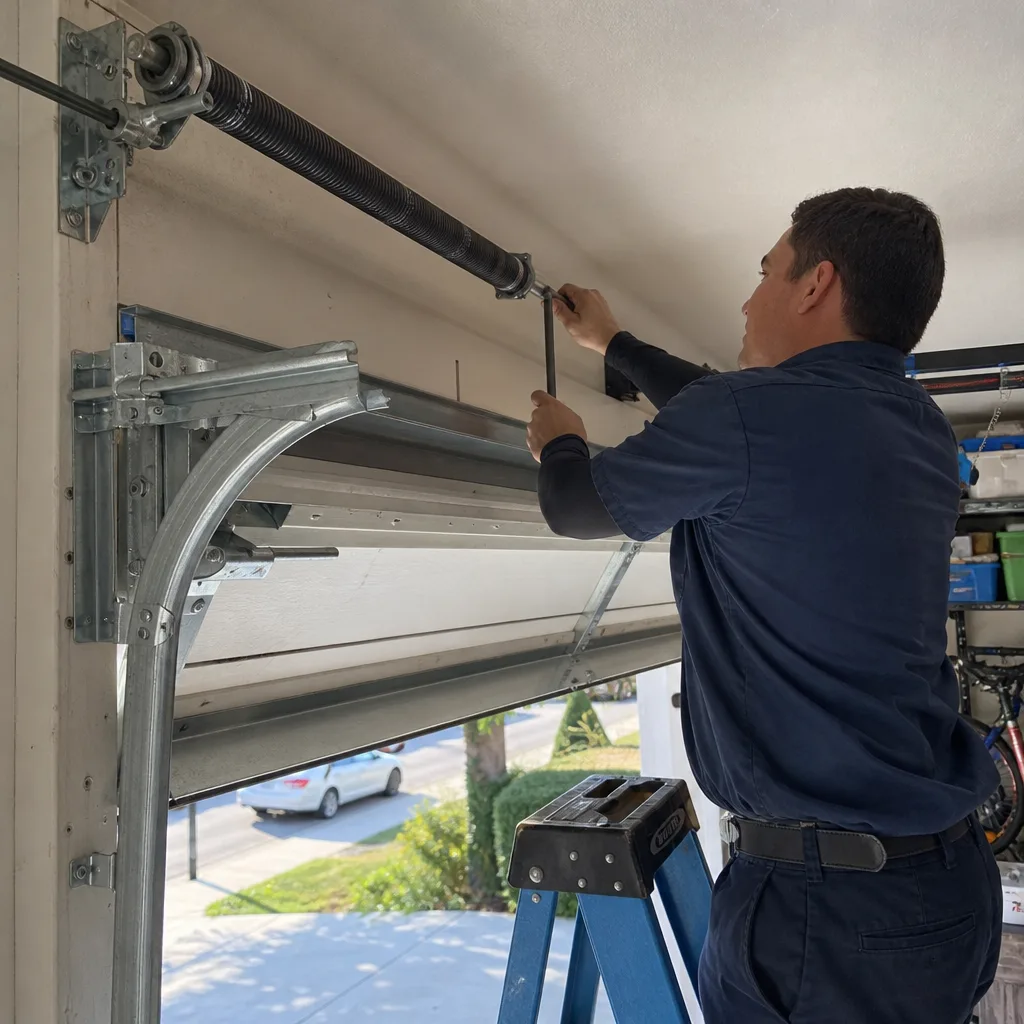
Safety note: torsion springs are under extreme tension at all times, even when the door is closed. A spring that lets go releases enough stored energy to cause severe injury. Never attempt to remove, adjust, or replace a torsion spring yourself. Cables under tension present the same hazard. These are the components where a professional service call is not optional, and where the cost of the call is always lower than the cost of the injury.
Signs Maintenance Has Crossed Into Repair
Maintenance prevents problems. It doesn’t fix them. Recognizing the line between the two saves you from an emergency call during a storm or on a Monday morning when the car won’t come out. Here are the signs that mean you’ve crossed from maintenance territory into repair territory, along with what they indicate:
- The door opens a few inches, stops, and reverses. This is usually a safety sensor issue, but it can also indicate a failing logic board in the opener. If cleaning and re-aligning the sensors doesn’t fix it, the opener needs professional diagnosis.
- The door makes a loud bang and stops moving. That’s a spring. It broke, and now the door is dead weight. Stop using the opener immediately. Continuing to use it burns out the motor and risks a dangerous cable failure.
- The door opens unevenly, one side higher than the other. This is a cable or track problem. The door’s weight is no longer distributed evenly, which puts stress on every other component. It won’t self-correct.
- The opener runs but the door doesn’t move. This could be a broken coupler, a stripped gear inside the opener, or a detached trolley. On LiftMaster and Chamberlain units, a stripped gear is the most common cause, and it’s a standard repair for a trained technician.
- Visible rust through the cable or a gap in the spring coil. Both are imminent failures. Replace now, not after the failure happens.
- The door is 20 years old or older and needs its second major repair. At this point, repair economics shift. When the cost of multiple repairs approaches a meaningful fraction of a new door’s price, Garage Door Installation in Orlando becomes the financially sounder choice, especially given the energy-efficiency and hurricane-rating improvements in modern doors.
One more Orlando-specific note: if your garage door is your home’s primary entrance, which is common in many Orlando neighborhoods, a dead door means you’re not getting into your own house. That’s the scenario where proactive repair beats emergency repair every time.
The Printable Condition-Triggered Checklist
This is the checklist version of everything above, organized by trigger rather than by calendar month. Print it, tape it inside the garage door track or on the wall by the door button, and run it whenever the trigger occurs.
Monthly (or after any 90°F-plus week during summer):
- Inspect bottom seal for cracking, stiffness, or gaps
- Check side and top weather stripping for gaps or brittleness
- Look for rust bloom on cables and springs
- Listen for new noises during one full open/close cycle
Quarterly (every three months):
- Run the full 6-step Quarterly Orlando Maintenance Checklist above
- Lubricate rollers, hinges, and torsion spring with silicone spray
- Test the auto-reverse safety mechanism
- Check and tighten track bolts and hinge fasteners
Post-storm (after winds over 40 mph or heavy driving rain):
- Run the 5-step Post-Storm Inspection Protocol above
- Check for water intrusion at floor and header
- Remove any debris from tracks
- Test door operation twice
Annually (or before hurricane season if you have a hurricane-rated door):
- Have a professional perform a full system inspection, including spring tension measurement
- Replace bottom and side weather seals if any degradation is found
- Have cables professionally inspected for internal wear and rust
- Consider upgrading to higher-cycle springs (20,000+ cycle rating) if you’ve replaced springs in the last three years
This condition-triggered approach is what we recommend to every homeowner we work with across Orlando, from Baldwin Park to Dr. Phillips to Winter Park. The trigger is the reminder. You don’t need to remember a season; you need to notice a condition.
Common Mistakes to Avoid
- Using WD-40 as a lubricant. WD-40 is a water displacer and light solvent, not a lubricant. It evaporates and leaves metal dry within days. In Orlando’s humidity, dry metal rusts. Use silicone or lithium spray instead.
- Ignoring a slow or straining door. A door that opens slower than it used to is telling you something. Usually it’s declining spring tension or a failing opener gear. Both are cheaper to fix before the failure than after.
- Lubricating the cables. Cables are designed to run dry against the drums. Lubricating them causes slippage on the drum, which throws the door out of balance and can cause the cable to jump the drum entirely. Never lubricate cables.
- Replacing springs with the cheapest option. Low-cycle springs are cheap for a reason. In Orlando’s heat, a 10,000-cycle spring fails fast. We always recommend upgrading to at least a 20,000-cycle spring when we replace one, because the labor cost is identical and the spring lasts twice as long.
- Skimping on weather seals because they’re “just rubber.” A bottom seal costs under $40 and takes twenty minutes to replace. The water damage and rust it prevents cost far more. This is the single highest-ROI maintenance item on an Orlando garage door.
- Attempting DIY spring or cable work. This bears repeating because we’ve seen the damage. Torsion springs injure people. Every year, homeowners end up in Orlando emergency rooms having tried to save $150 on a spring replacement. That’s the wrong trade, every time.
See the difference
 Before
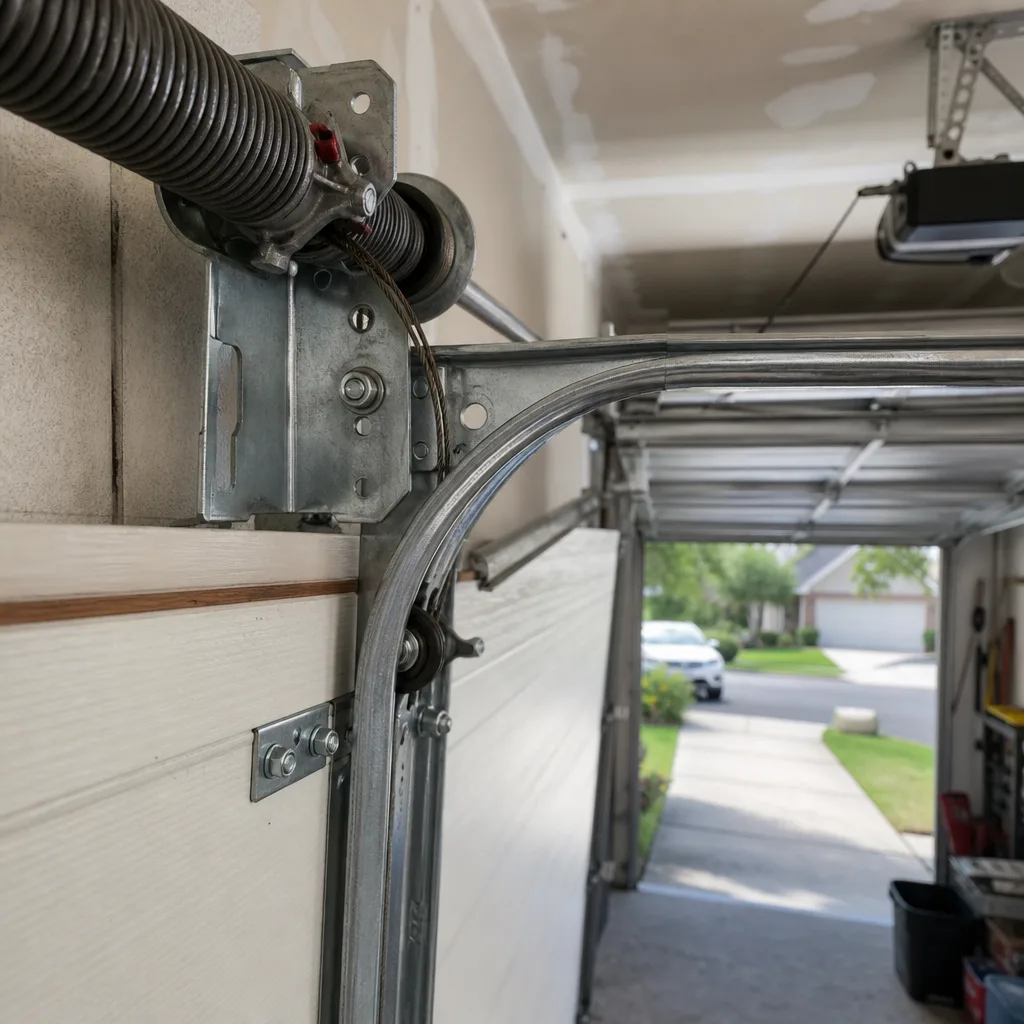 After
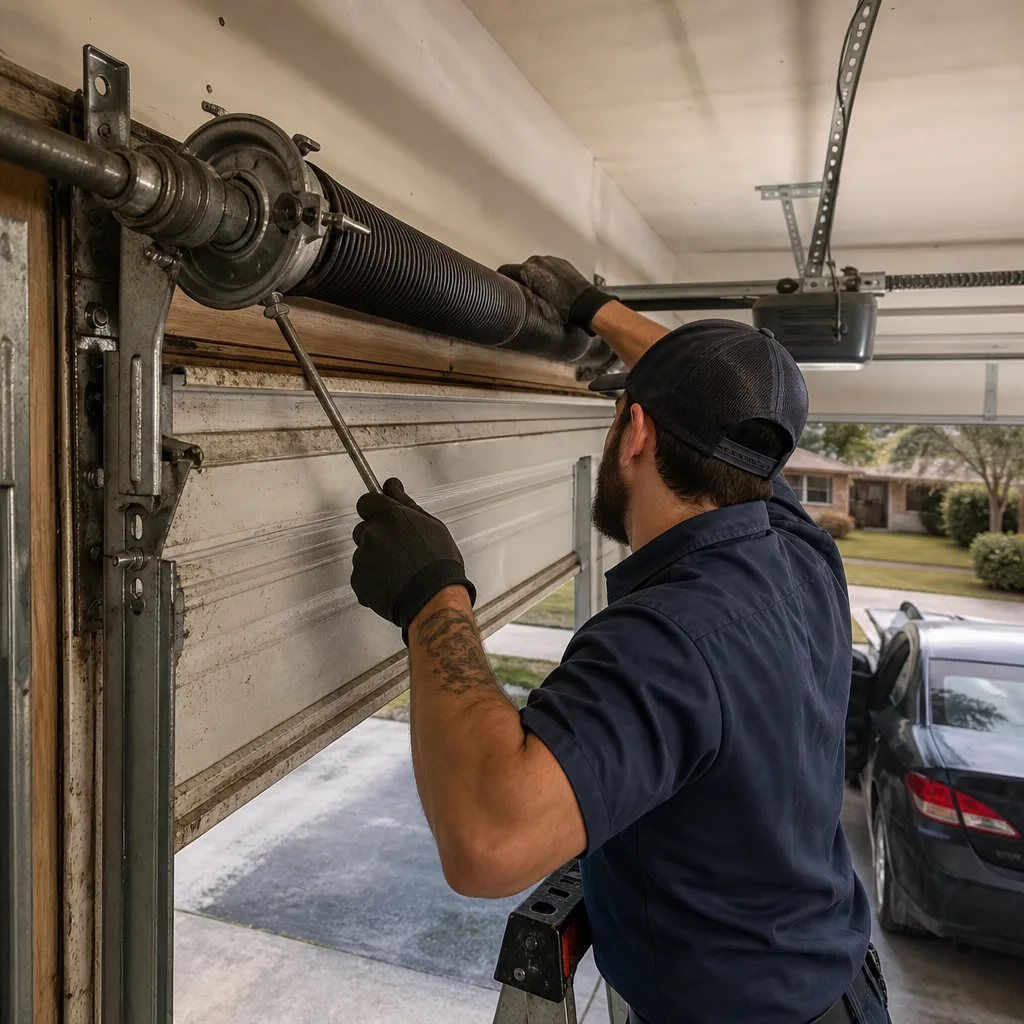 Before
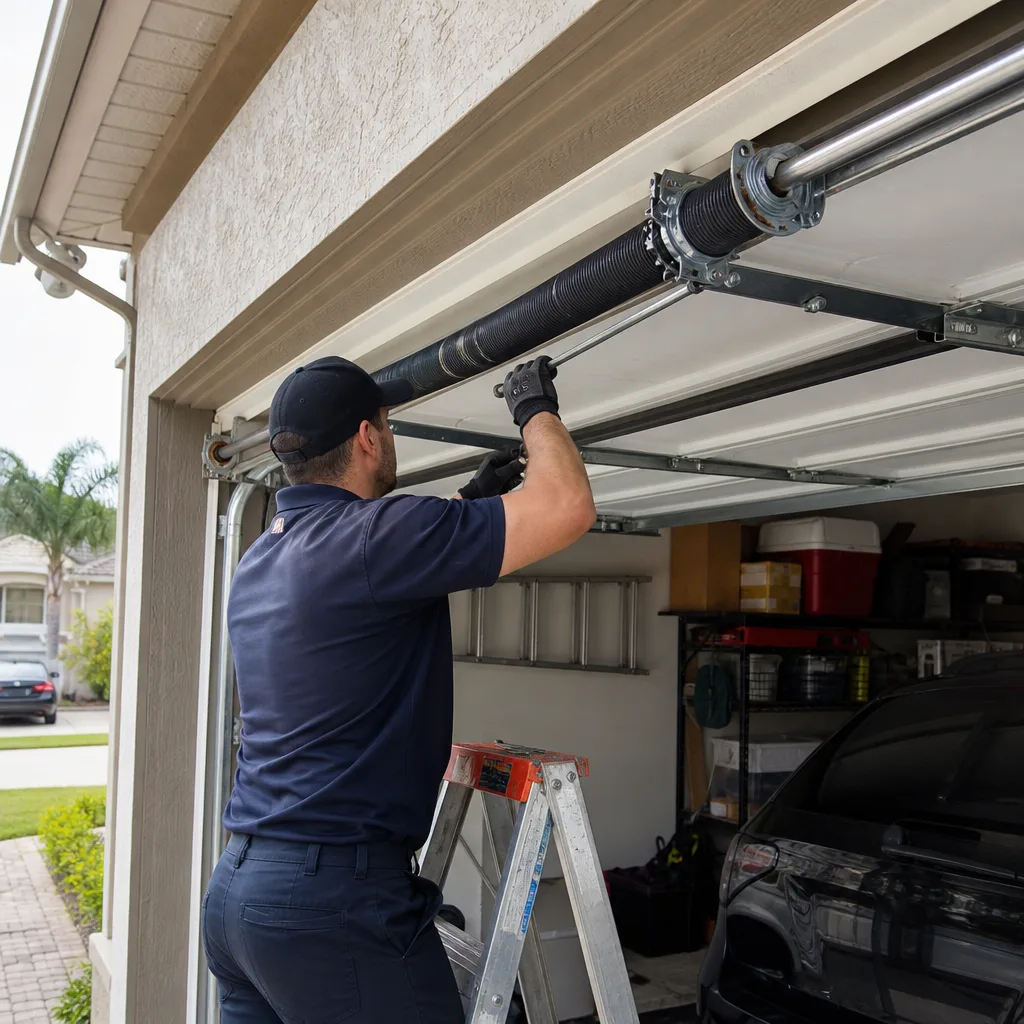 After
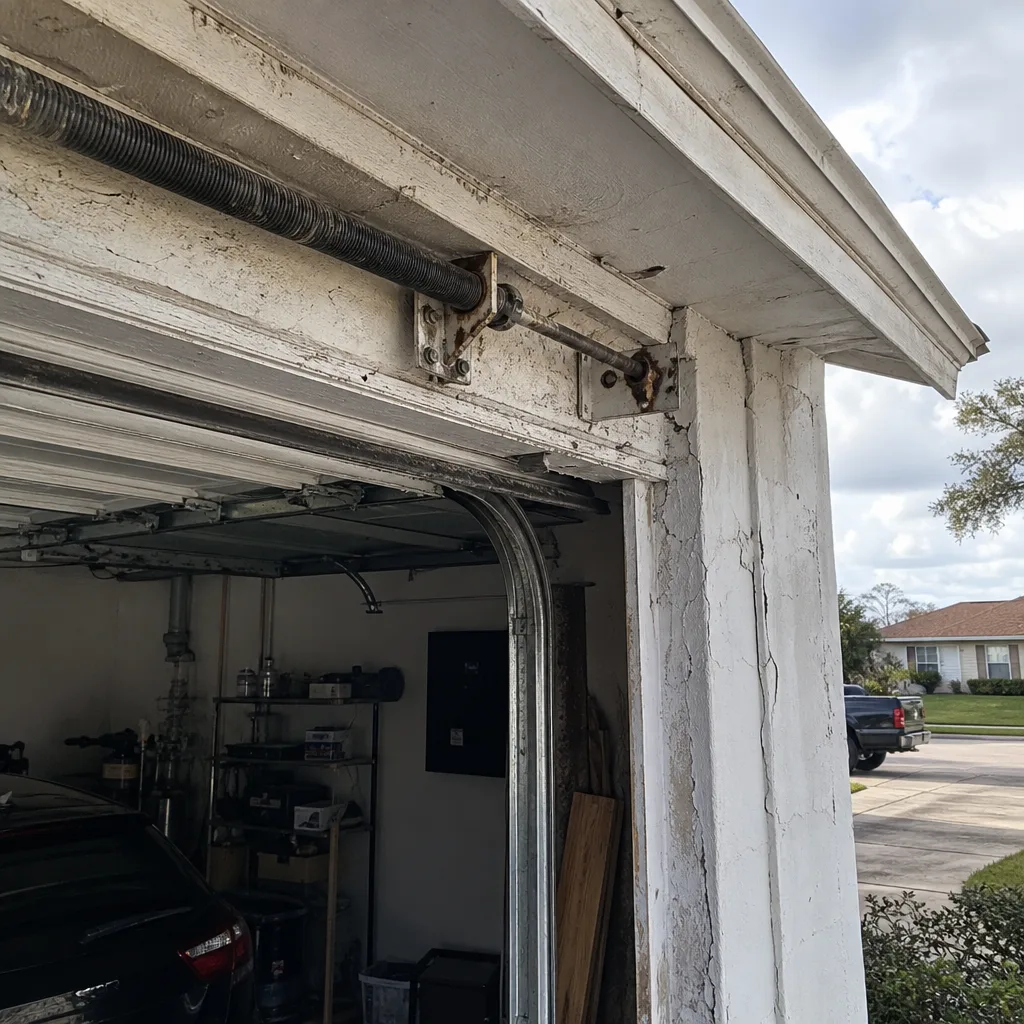 Before
 After
When to Call a Professional
Some tasks are built for homeowner maintenance. Lubricating rollers, checking seals, clearing debris, and running safety tests are all reasonable DIY work. Other tasks are not. Any work involving torsion springs should be done by a professional with the right tools and training. Same for cable replacement, track realignment, and opener logic board diagnosis. The line is simple: if the component is under tension or electrical voltage, or if your diagnosis is uncertain, make the call.
Lighthouse Garage Door Service offers free estimates in Orlando, covers both the mechanical door system and the opener in one visit, and works on eight major brands including LiftMaster, Chamberlain, Genie, Craftsmaster, and Raynor. If you’re not sure whether your door needs maintenance or repair, call (833) 613-0599 and describe what you’re seeing. We’ll tell you honestly whether it’s a task you can handle yourself or something we should look at. That clear answer, not an upsell, is how we work.
Frequently Asked Questions
Every three months is the baseline in Orlando, with an extra application after any stretch of consecutive 90°F-plus days. The heat burns through lubricant faster than in cooler climates. Use a silicone-based spray on rollers, hinges, and the spring, and never lubricate the cables.
A DIY maintenance session costs about $10 to $15 in lubricant and supplies. Professional maintenance, if you prefer to have it done during a service call, typically ranges from $75 to $150 for a full inspection and lube. Call (833) 613-0599 for an exact quote, estimates are free.
The thermal cycling from Orlando’s daily heat, combined with constant high humidity, creates metal fatigue and corrosion that shortens spring lifespan measurably compared to cooler climates. A 10,000-cycle spring that would last seven years in Minnesota often fails in four to five years in Orlando.
No. Torsion springs are under extreme tension even when the door is closed, and the stored energy is enough to cause severe injury. This is the one repair where Garage Door Repair services are genuinely non-negotiable. The same applies to cables.
Run your hand along the bottom seal. If it feels stiff, brittle, or you can see visible cracks or flakes, replace it. Also look for daylight under the door when closed. In Orlando, UV and humidity break down seals faster than in most climates, so check monthly during summer—our Garage Door Warning Signs: A Orlando Homeowner’s Reference Guide covers other seasonal checks.
We work on eight of the most widely installed brands: LiftMaster, Chamberlain, Genie, Clopay, Amarr, Wayne Dalton, Craftsman, and Raynor. We’re not a single-brand dealer, which means we can give you an unbiased recommendation for your specific door and budget. See our Garage Door Opener Repair in Orlando page for details on opener services.
The Bottom Line
Orlando garage doors don’t fail on a schedule, and neither should your maintenance. The checklist that works here is built around triggers: a heat wave, a storm, a quarterly mark, a visible change. Run it consistently and you’ll catch most problems in the cheap phase. Skip it and the heat and humidity will find the weak points for you, usually at the worst possible moment. The components that matter most in this climate are the springs, the cables, and the weather seals. Watch those closely, lubricate with the right product, and know where the DIY line is. When something crosses that line, Lighthouse Garage Door Service is available at (833) 613-0599 for a free estimate. See Lighthouse Garage Door Service home for more on what we cover.
Written by the team at Lighthouse Garage Door Service, serving Orlando since 2014.